For twelve years, Tamara commuted to work using three different buses. She took the number forty-seven from her home to the town ring, then a minibus from the ring to the train station, and finally the seventeen to the road management office. It was an hour and ten minutes one way if she was lucky, an hour and a half if not. In winter, she would wait at the stop near the town ring, shifting from foot to foot, and count the cars passing by. Gray. White. Black. Red. In each car was one person, warm inside, with the radio playing.
“Once we buy a car,” Ivan would say, “you’ll ride like a queen. I’ll drive you every morning.”
He said this for twelve years.
The apartment belonged to Tamara. It was a two-room place in a five-story brick building by the park, inherited from her grandmother. Her grandmother gave it to Tamara when she turned twenty-three, a year before the wedding. “So that you have something of your own,” her grandmother had said. “Men come and go, but the walls remain.”
Ivan moved in with her right after the wedding. At the time, he was renting a room from friends and was delighted to move. They lived in that apartment for twelve years. Ivan never paid rent or a mortgage during that time. They split the utility bills. Everything else, as Ivan would say, went into the ‘shared pot.’
But somehow, there never seemed to be anything in the shared pot.
The apartment was old, and most of their money always seemed to go to repairs. Sometimes the pipes leaked and they had to replace the riser. Another time, the wiring started sparking, and the electrician told them it all needed to be replaced. The window frames warped so much in the winter that snow would collect on the windowsill. Every time they managed to save a little, another problem would pop up.
Tamara worked as a cost estimation engineer at the road management office and earned sixty-five thousand. Ivan worked as a manager at a building supply store, earning about the same, sometimes a bit more with bonuses. Together, they made decent money. Tamara couldn’t figure out why they were always left with nothing.
“Ivan, let’s try to save something—even just five thousand a month. For the car,” she would say.
“Of course, Tamara. We’ll start with the next paycheck.”
But they never did start with the next paycheck. Ivan always had a reason why it didn’t work out this month. Sometimes his bonus was cut. Other times, they had to chip in for the boss’s anniversary at work. Then he urgently needed new winter boots. Tamara would sigh and try to save on her own. Little by little. And then it would be pipes, wiring, or windows again.
They didn’t have children. At first, they put it off, then it just didn’t happen. Tamara stopped bringing it up about five years ago.
Ivan had a mother, Valentina Petrovna, and a younger sister, Zoya.
Valentina Petrovna lived in a one-room apartment on the other side of the city. She had worked as a cashier in a department store for forty years and still kept track of everyone’s money. How much Tamara made. How much Ivan made. The cost of Tamara’s new boots. How much they paid for window repairs.
Zoya was six years younger than Ivan, at thirty-five. She worked as a hairdresser in a salon, raising her eight-year-old son Artyom on her own, and rented a one-bedroom apartment near the train station. For the past five years, Zoya had been saving up for her own place. The whole family knew about her dream. At every family celebration, Valentina Petrovna would proudly say, “Our Zoyenka is so clever, saving for her own apartment, doing it all without a man, raising her child alone.” Tamara respected Zoya. She understood what it meant to want something of your own.
That spring, Tamara lost her Aunt Lyuba.
Aunt Lyuba was her mother’s older sister. She never had any children of her own and loved Tamara like a daughter. She spent her whole life working as a nurse in the regional hospital. When Tamara was in technical school and living in a dormitory, Aunt Lyuba visited her every Friday with a bag full of food. When Tamara broke her leg at twenty-five, Aunt Lyuba took time off work and stayed with her for two weeks, cooking, cleaning the floors, and taking her to the trauma clinic by taxi. Whenever Tamara and Ivan had a hard time with money, Aunt Lyuba would quietly slip her an envelope and say, “No arguments. I have nowhere else to spend it anyway.”
It took Tamara a long time to recover. She kept going to work, staring at the budgets, not really seeing the numbers. Ivan stayed close to her then, holding her at night, bringing her tea. Tamara was grateful to him.
In September, the notary handed her a certificate of inheritance. Aunt Lyuba had left her everything she had saved in her lifetime. Two million one hundred thousand rubles in her bank account. Tamara sat in the notary’s office and cried. Not because of the money, but because Aunt Lyuba had been saving her whole life. Every ruble. For her.
She remembered how, about three years ago, Aunt Lyuba had once been sitting in her kitchen, watching Tamara get ready for work, pulling on her puffy coat and wrapping her scarf.
“Tamara,” Aunt Lyuba had said then. “You should have a car. You freeze for an hour and a half every day.”
“Oh, come on, Aunt Lyuba. I couldn’t handle it.”
“You can handle it. You’ll see. You’ll buy a car, drive around, and remember me.”
Tamara had laughed back then. But now, as she sat in the notary’s office, she realized: of course. Aunt Lyuba just knew. She always knew what would happen before anyone else.
The decision was instant. She would buy a car. A good, reliable family car. Something to drive to work in the warmth. Something to take her mom to the dacha with plants, instead of hauling heavy boxes on the train. Something to finally visit the Volga in the summer, to see Aunt Lyuba’s friend who had been inviting her for years.
She spent three weeks searching. Visiting dealerships, reading reviews, test-driving cars. She settled on a silver crossover. Not too big, practical, with a roomy trunk and a good heater. One million nine hundred fifty thousand rubles. She paid the full amount from the account where the notary had transferred Aunt Lyuba’s inheritance. The extra sixty thousand for insurance and winter tires came from their joint card, because there was very little left in the inheritance account after the purchase, and she wanted to save what was left.
Ivan went with her to the dealership to pick up the car. He hugged her on the steps as the manager handed her the keys.
“Congratulations, Tamara! You’re a car owner now! Our queen!”
He climbed into the passenger seat, and the whole ride home was filled with laughter. Tamara drove carefully, slowly, gripping the wheel so hard her knuckles turned white because she wasn’t used to it. Ivan fiddled with the radio, trying to find a good station, joking, “Well, now we’ll really live it up.”
That first week, Tamara was truly happy. Every morning, she’d walk out of her building, press the key fob, and her car would respond with a soft beep and a flash of its headlights. She’d get in, turn on the heater, and in ten minutes the car was cozy and warm. It took her just twenty-five minutes to get to work instead of an hour and ten. She arrived feeling fresh and rested. Her colleagues joked, “Tamara Nikolaevna, you look years younger!”
But after a week, Ivan brought up Zoya.
At first, he was cautious, bringing her up in passing. Over dinner.
“Listen, Tamara. Zoya found an apartment. A two-bedroom, not far from Artyomka’s school. It’s nice, renovated. The owner is selling urgently, moving to her daughter in Petersburg. The price is great. But Zoya doesn’t have enough.”
“How much is she short?”
“Well… About one million eight hundred. She can’t get approved for a mortgage—her income isn’t official, you know, she works at the salon. And as for a down payment, forget it.”
Tamara nodded. She felt sorry for Zoya.
“That’s rough,” she said. “Maybe the owner can wait? Or maybe Zoya can keep looking?”
“The owner won’t wait. Other people are already looking at it.”
The next evening, he brought it up again. And the next. Then on Friday, he said it outright.
“Tamara. Listen. What if you sell your car for now? Just for a year or two. Help Zoya buy the apartment. She needs it more, she’s got a kid, and nowhere to live. You could ride the bus for a while, just like you used to. Nothing will happen, really. You took buses for twelve years. Zoya will pay you back little by little, and then you can get a new car.”
Tamara slowly put down her fork.
“Ivan. That was my aunt’s money. Aunt Lyuba told me herself: buy a car. I spent twelve years on three different buses. I’m not selling it.”
“Come on, Tamara. She’s my sister, after all.”
“No, Ivan. I’m sorry. I get that things are hard for Zoya. But no.”
Ivan was upset. He didn’t yell. He just stopped talking to her. He’d come home from work, eat dinner in silence, then retreat to the room to watch TV. He replied with one or two words. He slept facing the wall. Tamara tried to start conversations, but he brushed her off. This went on for five days.
On the sixth day, Ivan suddenly came home in a good mood, holding a cake.
“Tamara, listen. How about we invite Mom over for dinner on Saturday? It’s been too long. She’s starting to feel hurt that we forgot about her. Let’s have a family night together.”
Tamara was glad. She was tired of the silence and thought Ivan had moved on, hoping he wanted to make up. Dinner with his mother felt like a step in the right direction.
“Absolutely,” she said. “Let’s do it. I’ll bake a pie.”
On Saturday, Valentina Petrovna arrived at five. She was short and sturdy, wearing a burgundy sweater and sporting a fresh salon hairstyle. Tamara greeted her at the door and took her coat. Valentina Petrovna looked over the entryway, the kitchen, the table all set. Then she sat down.
The pie was stuffed with cabbage and egg—her favorite. Her mother-in-law ate a slice and complimented it. Then she had a second. After that, she set her plate aside.
“So, Tamara. I hear you got an inheritance.”
“Yes, Valentina Petrovna. From my aunt.”
“Two million, Ivan said.”
“A little more.”
“And you spent it all on a car?”
Tamara glanced at Ivan. He was just sitting there, staring into his plate.
“I bought a car,” Tamara said. “Aunt wanted me to, she insisted. I’ve spent twelve years commuting to work on three different buses.”
“Well, you could have kept taking those buses,” said Valentina Petrovna. “You’re not some lady of leisure. I’ve been riding the bus all my life and I’m fine—still alive. Imagine, wasting so much money on a chunk of metal. On a selfish whim. When people in the family don’t even have a roof over their heads.”
“The car is already bought, Valentina Petrovna. I paid for it in full. There’s nothing left to discuss.”
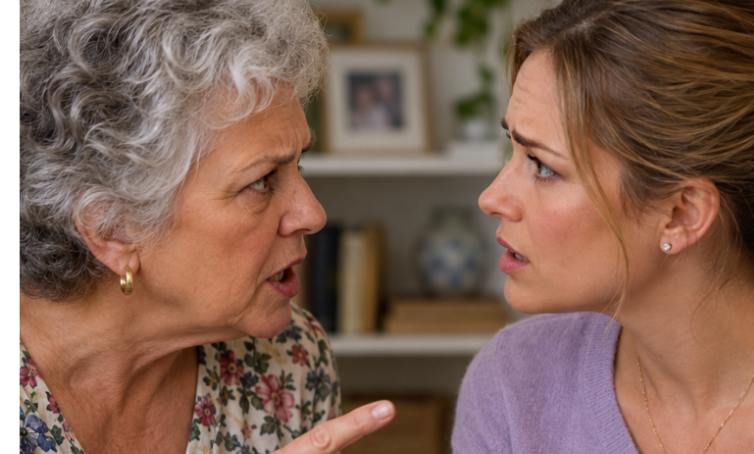
“Nothing to discuss?” Her mother-in-law straightened up. “Oh, there’s plenty to discuss. You should sell it. Immediately. List it right away while it’s still brand new. It’ll easily go for 1.8 million, maybe even more. That’s just enough for Zoenka to get an apartment.”
“Mom’s right, Tamara,” Ivan finally spoke up. “Seriously. It’s a luxury—an unnecessary one. You’re the only one driving it. But Zoya’s got a child and nowhere to live.”
Tamara sat there in disbelief that this was actually happening. She looked at her mother-in-law. Then at her husband.
“I’m not going to discuss my car,” she said. “Not selling it, not anything else. It’s my car, bought with my aunt’s money. That’s it.”
Valentina Petrovna raised her eyebrows. Her face turned red and blotchy.
“Why are you clinging to that car?” she shouted. “Sell it—your husband’s sister needs a home! Don’t you get it? She’s got a child! The boy is eight! They’re bouncing from rental to rental! And you’re sitting on that metal thing like a hen on an egg. You should be ashamed!”‘
Tamara turned to Ivan. She waited. For something. Even just ‘Mom, stop it.’ Anything—like ‘Mom, it’s Tamara’s money.’ Just something.
Ivan nodded.
“Mom’s right, Tamara. Think about it. It really is selfish. Pure selfishness.”
He nodded at every word his mother said. Calmly, as if it had all been decided long ago.
“Vanya,” Tamara said. “Are you serious?”
“Serious. Besides, I already promised Zoya.”
“Promised what?”
Ivan hesitated. Valentina Petrovna answered for him.
“He promised that he’d help! That you’d give the money from the car. Zoya already made a deal with the landlord. Put down a fifty-thousand deposit. The deal is in three weeks. She’s already shown Artyom his new room—he picked out the wallpaper. So, Tamara, don’t drag it out. The ad needs to go up today.”
Tamara slowly placed her palms on the table.
A deposit. The deal is in three weeks. Artyom already picked out the wallpaper. Everything’s decided—without her. They had practically sold her car before she even bought it. Probably right after Ivan found out about her inheritance.
“Wait a minute,” she said. “Ivan. You promised Zoya my money? Aunt’s money? Without even asking me?”
“Well, I told you. You refused, anyway. And I’d already promised.”
“So you, Zoya, and your mom decided how to spend my aunt’s inheritance. The three of you. Without me. Strangers are deciding what I should do with my aunt’s money.”
Ivan jumped up from his seat.
“Strangers? Are you calling my mother and sister strangers? Are you out of your mind? They are my family! And yours too! You’re obligated to help my family! You’re my wife!”
“I’ve been your wife for twelve years, Ivan,” Tamara said quietly, her voice steady. “For twelve years, we’ve lived in my apartment—my grandmother’s apartment. You have never paid for housing. Not rent, not a mortgage. You never once thought about where we would live. I handled the pipes here, the wiring, the windows—mostly with my own money. You promised you were saving up for a car. Twelve years you promised. Where’s that money, Ivan? Where is anything?”
Ivan opened his mouth, but Valentina Petrovna jumped in before he could speak.
“What does his money have to do with it?” she exclaimed, throwing up her hands in outrage. “Vanechka helped Zoia! Every month, for five years, he put aside fifteen thousand for her apartment! He’s a good brother, unlike some wives! If it weren’t for him, Zoia wouldn’t even have the down payment!”
Tamara froze.
“Every month?” she asked. “For five years?”
“Of course!” Her mother-in-law didn’t notice Tamara’s face. “That’s what family is for! Ivan is golden. He gives nearly his entire salary to his sister, keeps nothing for himself.”
Tamara looked at her husband.
Ivan stood by the window, eyes downcast. His face was red. He didn’t argue. He didn’t say, ‘Mom, that’s not true.’ He stayed silent.
Fifteen thousand a month. Five years. Nine hundred thousand.
And suddenly, everything made sense. Why they never had anything leftover. Why every month it just ‘wasn’t possible’ to save. Why his bonus was ‘cut,’ why there were always office collections. Why Tamara paid for groceries more often than he did. Why fixing pipes, wiring, and windows always fell almost entirely on her. Why, after twelve years of dreaming about a car, she was still riding three buses.
He wasn’t saving with her. He was saving with Zoia. For Zoia’s apartment. And their life together, their home, their repairs in her apartment—Tamara managed it all. And Ivan just took it as a given. As if that was how things were supposed to be. As if she was just supposed to do it.
Tamara remembered all the times she held back. Three winters in the same old coat. Not going to Kazan with her friends because ‘we need window money.’ Saving five thousand at a time, only to hand it over to electricians, plumbers, roofers. Ivan would say, ‘It’s okay, Tamara, we’ll start next paycheck.’ And she believed him.
He knew this whole time. And never said a word. And now he wants her car too.
“Enough,” Tamara said. “The discussion about my car is over. I am not selling it. Not now, not next month, not ever. I never promised Zoia anything, and I won’t.”
Valentina Petrovna gasped. Ivan turned away from the window.
“Oh, is that so?” he said, his voice cold. “Then listen carefully, Tamara. Either you sell the car and help Zoia, or we get divorced. I am not going to live with a woman who spits on my family. Your choice.”
He said that and crossed his arms across his chest. Valentina Petrovna nodded approvingly.
Tamara looked at her husband. Twelve years. He was sure she would be scared—sure she would cry, beg him to reconsider. He thought, she’s thirty-six, they have no kids, where could she go. Tamara could see it on his face, the way he waited.
“Alright, Ivan,” she said. “Let’s get divorced.”
Ivan blinked.
“What?”
“Let’s get divorced. You suggested it. I agree.”
Valentina Petrovna stood up, grabbed her bag.
“Fine, whatever! Ivan, let’s go. You’re not really going to stay with her… Come on, let’s go to my place.”
Ivan paused for a moment. Then he walked to the hallway, got dressed, and turned back at the door.
“You’ll change your mind,” he said. “In a week, you’ll come crawling back.”
The door slammed shut.
Tamara stayed alone in the kitchen. In front of her sat a half-eaten piece of pie. She sat quietly for a bit, then got up and went to the window. Down below, parked by the entrance, was her car—silver, spotless, with the new stickers still on the back window. It glimmered under the streetlight.
Tamara stood by the window and cried—softly and silently. She thought about her aunt Lyuba, who always seemed to know things before they happened. And about herself, waiting at the end-of-the-line stop for twelve years.
The next day, Sunday, Tamara called her friend who worked at a legal consulting office. Her friend gave her the number of a colleague who specialized in family law. On Monday, Tamara took time off work and went to see her.
The lawyer, a woman in her fifties with glasses, spent a long time flipping through the paperwork. The certificate of inheritance. The bank statement showing the arrival of her aunt’s money. The purchase agreement for the car. The payment order to the dealership.
“It’s good that you kept everything,” she finally said. “Look, the apartment is yours—it was gifted to you before the marriage. No one can touch that, there’s no question. The car, too, is clear. It was bought during the marriage, but with inherited money. By law, it counts as personal property if you can show where the money came from. And you can: here’s the bank statement, here’s the payment straight from the inheritance account. Keep all these documents. If your husband tries to claim the car, he’s got almost no chance.”
Tamara nodded.
Ivan didn’t call after a week, or even after two. Maybe he was waiting for her to call first. Tamara didn’t. Two weeks later, she filed for divorce.
Only then did Ivan show up. He came by on Saturday morning without calling, standing at the door with a bouquet of chrysanthemums.
“Tamara. Come on, that’s enough. I overreacted. My mom overreacted. Let’s just forget all about it. By the way, Zoya never even bought that apartment. The deposit was lost. She’s been crying all week. But I’m not mad at you. Really. Let’s make up.”
“No, Ivan.”
“Come on, Tamara. Twelve years. I really do love you.”
“You spent five years giving Zoya fifteen thousand a month, Ivan. And all that time you told me your bonus got cut. You promised her my aunt’s inheritance—without even asking me. No.”
He stood in the doorway for a long time, then put the chrysanthemums on the table and left.
He signed the property division agreement a month later at the notary’s office. He read it carefully, frowned for a while, but in the end, he signed. The apartment stayed with Tamara. The car, too. Ivan nodded silently and left.
Their divorce was finalized in December.
In May, Tamara called her mother.
“Mom, are we going to the dacha on Saturday?”
“Tamara, how can I bring all the seedlings? There’s no way I can carry those boxes all that way. The commuter train’s too much for me, it’s too heavy. Maybe some other time?”
“Mom,” Tamara said. “I’ll come pick you up.”
On Saturday at seven in the morning, she pulled up to her mom’s building. Her mom was already waiting downstairs, dressed in an old windbreaker and headscarf, with three wooden crates at her feet. Tomatoes, peppers, marigolds. Tamara popped the trunk, and together they carefully loaded the crates, covering them with an old blanket so they wouldn’t tip over.
Her mom climbed into the front seat. She shifted around a bit, struggling at first to buckle her seatbelt. Then she laid her hands on her knees.
“Tamara,” she said. “Feels just like a taxi. So smooth.”
Tamara turned on the heater, even though it wasn’t cold. She pulled out of the courtyard. Mom gazed out the window at the empty Saturday streets, watching the sunrise over the rooftops. Then she said:
“Lyuba would have been happy about this.”
“Yes, Mom,” Tamara replied. “She really would have.”
The drive to the dacha took forty minutes. By train, with a transfer and then a walk from the station, it used to take Mom two and a half hours. The whole way, she cradled a small flowerpot of marigolds in her lap—it wouldn’t fit in the crate—holding it gently in both hands, like it was a child.
As they turned at the bridge, Tamara slowed down so the pot wouldn’t wobble.
You think I’m going to let you leave my family penniless? he barked, looming over his wife.
Out of Consciousness
March 3