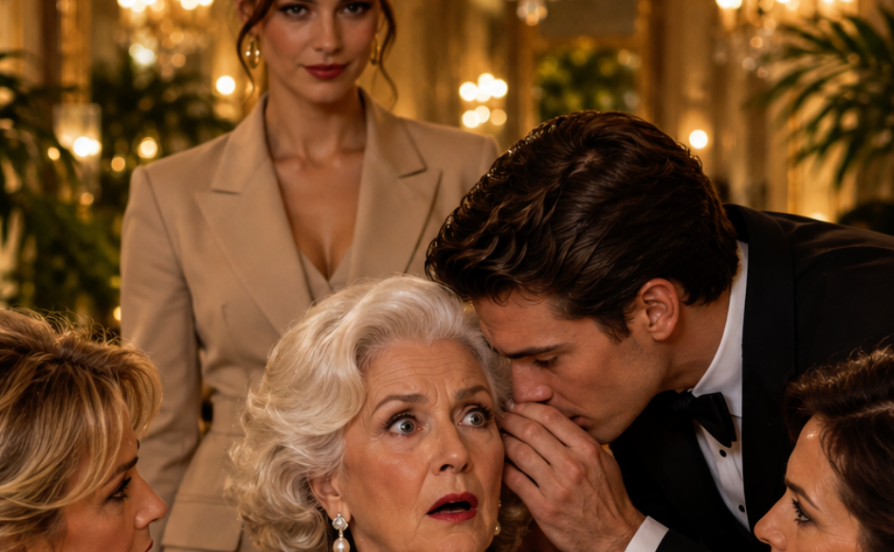
“Once again, the smell of the kitchen is all over the apartment,” Emma Markovna said as she threw the window wide open. “You could at least leave your jacket on the balcony, dear.”
I was sitting on a stool by the stove, massaging my sore feet. The wedding for ninety guests had ended at half past two in the morning, I got home at four, and by eight my mother-in-law was already banging pots and pans around like the house was on fire. Of course, I’d left my chef’s coat at work. The smell wasn’t coming from my clothes—it clung to my hair after a long night by the grill.
For five years now, I’ve been living in her three-room apartment on Zarechnaya Street. And for all that time, I’ve heard the same thing, just phrased differently each time.
“So, what do we have here?” My mother-in-law adjusted her glasses on their chain and stood by the window like she used to stand at the blackboard. “Fifty-one years old. No place of your own, not a cent to your name. You came to us with just one suitcase, and you’re still living out of it. It takes up a whole shelf in the closet, by the way. Put it away.”
The suitcase was brown, with wheels, and a lock that always jammed. I really did come here with it right after the wedding, from a rented room near the train station. I was forty-six, Vitaly was forty-nine, and for the first time in a long while, I let myself hope I wouldn’t have to live alone anymore.
I knew what I was getting into. Vitaly was upfront: he wouldn’t rent a place, he said—his mother had a three-bedroom, why pay strangers? A year later, I suggested getting a mortgage, but he brushed it off. Another year, I even showed him calculations on my phone: initial payment, monthly cost. “Zhan, it’s hard for Mom to be alone,” he said. Once, after a particularly loud fight about my late shifts, I spent a week at a colleague’s place. Vitaly came by every night, waiting outside with a bag of tangerines, promising he’d talk to his mother. I came back. Whether he really talked to her, I never found out.
My mother-in-law’s phone rang.
“Fainochka!” Her voice suddenly turned syrupy sweet. “Wednesday? Of course, at ‘Verkhovye,’ where else! I get a fifteen percent discount—thanks to Vitalik, he’s got connections there. And we’ll get the honey cake, there’s nothing better in the city, I promise.”
I folded the towel four times and laid it on my lap.
If only she knew whose connections those were. Two years ago, I was promoted to banquet head chef at ‘Verkhovye’—and with the job came a discount card for relatives. Vitaly asked me to give it to his mom so she’d be happy. I did. The next day, my mother-in-law was telling everyone in the building about her caring son. And the honey cake there? That was my recipe: twelve layers, sour cream frosting, a full day in the cold before serving.
My mother-in-law was convinced I still handed out cutlets in some factory canteen. Vitaly never set her straight. Otherwise, they’d both have to admit I made almost twice what he did—and in this house, he was considered the breadwinner. That was his mother’s decree.
“See, learn from this,” my mother-in-law said, setting her phone down on the windowsill. “A son gives his mother a discount. And you? You live on my property, eat from my fridge.”
I looked at the fridge. Yesterday, I’d stocked it with nearly six thousand rubles’ worth of groceries: cheese, fish, her favorite farmhouse cottage cheese that I always get from the same lady at the market. My fingers clutched the towel tighter, and I felt the damp fabric gathering under my nails.
No. It’s time to stop being silent about this, at least.
I grabbed my phone, opened my banking app, and placed it on the table face up.
“What’s this now?” my mother-in-law wrinkled her nose.
“This is the auto-payment history. Utilities for your apartment, Emma Markovna. Sixty payments, starting from July 2021. Four hundred fourteen thousand. You can scroll through, I’ll wait.”
She took off her glasses and lowered them to her chest. She leaned in to the screen, then straightened up again as if it had burned her.
“Well, keep paying then,” she finally said. “If you’re living here, you should pay your way. This isn’t a hotel.”
“That’s fair,” I agreed. “But then don’t call me poor. The poor don’t pay for someone else’s three-room place for years.”
“And the suitcase?”
“Let the suitcase stay. I might still need it.”
My mother-in-law opened her mouth to speak but said nothing. She pressed her lips together, ran her palm over the tablecloth as if trying to wipe away my words, and left. The door to her room slammed so hard the cups in the drying rack rattled.
I stayed alone in the kitchen. The faucet was dripping, outside doves were squabbling on the windowsill. My feet ached after my shift, but inside I felt warm and calm, like after a perfect serve when the crowd stands and cheers.
Earlier, the manager called to say yesterday’s newlyweds were thrilled, and the bride’s mom is already booking her fall anniversary with us. I was riding home in the minibus, watching the wet linden trees through the window, and I smiled. For the first time, I said out loud what I’d always known inside.
That evening, Vitaly was eating buckwheat with a cutlet, staring at his plate.
“Zhan, don’t provoke Mom, okay?” he asked. “Her birthday is on the fourth. She’ll be seventy-six. Can we just let it go smoothly, for once?”
I nodded. Back then I still thought ‘smoothly’ even happened in this house.
***
The knife was lying on the balcony, on the cutting board, next to a half-thawed chicken.
I recognized it instantly by the dark walnut handle. Japanese gyuto, twenty-one centimeters, an engraving near the base: “To Zhanna from the ‘Verkhovye’ team.” The owner handed it to me the day I got promoted. Thirty-four thousand—I knew because he forgot the receipt in the box.
The tip of the knife was gone. Instead of a point, there was a jagged chip, as if someone had bitten off the blade. On the board, in the pink icy crumbs, the broken-off piece of steel glinted, about the size of a fingernail.
“Emma Markovna!”
My mother-in-law came out of her room in her bathrobe, hair curlers tucked under a scarf.
“So what? The chicken was frozen solid, had to break it up somehow. What else are your fancy knives for? This one’s nice and sharp.”
“This knife isn’t for chopping. Especially not through bones. And definitely not frozen ones.”
“It’s just a knife,” she waved her hand. “Vitalik will buy you a new one.”
Vitalik will buy it. From his fifty-five thousand a month, most of which goes to his old Skoda, gas, and repairs.
I picked up the broken tip between two fingers. It was icy cold and smelled of raw meat. I held it, thinking about how many more things would break in this house if I kept staying silent.
“You should take a look at me instead,” my mother-in-law suddenly smiled wide. Her teeth were white and even. “A year’s gone by, and they still look brand new. That’s what it means to have a son! Vitalik fixed my teeth, and Fainka is still green with envy. And you? What did you do all this time? Still hung up on your fancy knife.”
Vitaly was standing in the bathroom doorway, a towel draped around his neck. He’d heard everything. I looked at him, waiting for him to say at least something.
“Come on, Mom,” he said, giving his mother a smile before averting his eyes.
My ears started ringing, just like when the extractor fan is turned up on full blast.
The implants cost one hundred forty thousand rubles. A year ago, my mother-in-law couldn’t chew, she only ate pureed foods and I could hear her crying through the walls at night. Vitaly shrugged: where was he supposed to find that kind of money? I gave up my entire annual bonus. I had just one request—not to make a big deal out of it. “Let’s just say we did it together,” he suggested then. Together it was. Only, over time, that quiet “together” quietly turned into just “Vitalik.”
I put the broken piece on the windowsill, wiped my fingers on my apron, and opened my email, searching the folder labeled “Clinic” for the letter from last June.
“Emma Markovna, please read this for me. Right here.”
She adjusted her glasses. She read quietly, moving her lips: “Payer: Zhanna Olegovna Kovalyova. Amount: one hundred forty thousand rubles.” She slowly turned to face her son.
“What does this mean?”
“Mom, why does it matter who paid?” Vitaly fidgeted with the towel. “We’re a family.”
“It does matter,” I said. “That was my annual bonus. I didn’t ask for a thank you. But don’t lie to your friends using my name either.”
My mother-in-law’s gaze darted from the screen to her son and back. For the first time since I’d known her, she seemed lost for words. Then she turned and headed back to her room, shuffling her slippers loudly—just like sulking children do.
I stayed out on the balcony. The air was thick with poplar fluff, the smell of raw chicken, and someone else’s cutlets cooking on the third floor. My heart was pounding so fast, but my mind felt clear—as if I’d just pulled a baking tray from the oven that everyone thought was already burned.
Vitaly followed me out and stood behind me.
“Zhan, why did you have to do that? In front of Mom.”
“Then how should I have done it, Vitaly? Just keep silent another year?”
He just shrugged and went back to watch the football game.
The next day I took the knife to our sharpener, who visits ‘Verkhovie’ once a month with his grinding wheel. He turned the blade under the lamp for a long while before humming:
“We’ll save it. I’ll file down the tip, it’ll be a centimeter shorter, but it’ll cut just like before. It’s yours, not a stranger’s.”
On my way home with the knife wrapped in a towel, I was feeling almost cheerful. Maybe I could be sharpened and renewed too, I thought.
That night, after Vitaly had fallen asleep in front of the TV, I opened a classifieds website. A one-room apartment by the Central Market, fourth floor, twenty-six thousand a month, the landlady is elderly and wants ‘no pets, no noise.’ I added it to my favorites.
Deposit plus first month. I’ll still have enough left over for the down payment. It’ll be enough.
In the morning, Vitaly stirred sugar into his mug for a long time without looking up.
“Mom asked,” he finally said. “Could you set the table for her for the fourth? You’re a chef. There’ll be six guests. Just this one last time, okay?”
***
Setting a table for six is three hours of work if you’re not in a hurry.
I took my time. There was jellied tongue, fish roulade with spinach, salad with roasted beets and goat cheese, and veal with prunes. My mother-in-law dictated the menu herself and added to each dish, “Just please, not like in the cafeteria.” Ingredients cost me eleven thousand. Vitaly promised to pay half from his salary.
There were five guests: Faina, two neighbors from the floor, and the mother-in-law’s cousin visiting from Rybinsk. Emma Markovna sat proudly at the head of the table in her amber necklace, accepting compliments on the roulade and nodding as if she herself had baked it.
After her third shot, she stood up and tapped her glass with a fork.
“I want to raise a toast to my son. To our provider. The one who fixed his mother’s teeth, managed to get us a discount at ‘Verkhovye,’ and pretty much carries the whole family on his shoulders. And on top of all that,” she paused for dramatic effect, like at an annual appraisal, “he still manages to put up with her. Five whole years he’s tolerated a pauper with a suitcase. A saint!”
The guests laughed uncertainly. Faina giggled into her napkin.
“Don’t believe me?” the mother-in-law perked up. “Vitalik, get it down from the top shelf.”
Vitaliy blushed, but went anyway. A minute later, he set my brown suitcase in the middle of the room, right by the table between the neighbors’ chairs.
“There!” Emma Markovna spread her arms wide. “Her dowry. Everything she’s managed to collect by the age of fifty.”
Now everyone was laughing loudly—even Vitaliy. He chuckled, glanced at his mother, and winked at Faina as if to say: what’s there to do.
I looked at my husband and felt my fingers grow cold, even though the room was stuffy from the heat and candles. I could taste the sour vinegar from the jellied meat I’d sampled half an hour ago. I could have handled the suitcase. But that little laugh—I couldn’t.
So that’s how it is. All these years I thought he was just weak. But he was always on their side. He always was.
I stood up, adjusted the scarf at the back of my head, and walked over to the suitcase.
“Thank you, Emma Markovna,” I said. “For getting it down. I never could have reached the top shelf myself.”
The laughter stopped. I grabbed the handle and rolled the suitcase to the bedroom. The wheel squeaked, as usual.
It took me twenty minutes to pack. My jacket, documents, laptop, a knife wrapped in a towel, and my mother’s photo in a frame. The rest I’d get later. Vitaliy stood in the doorway.
“Zhan, what’s going on? It was just a joke. Mom had a little too much to drink.”
“I’ve already found a place, Vitaliy. Been looking since last week. Come with me.”
He glanced back at the clinking dishes and the buzz of voices in the other room.
“But how can I leave? It’s Mom’s special night.”
“Then go celebrate.”
The landlord of the one-bedroom, Anna Ilyinichna, was surprised by a call at nine in the evening, but then said, “Come on over, dear, the key’s with the neighbor.” The taxi arrived in seven minutes. When I rolled my suitcase through the entryway, the room went silent. Only my mother-in-law yelled after me:
“Don’t let the door hit you!”
The apartment smelled of fresh paint and someone else’s laundry detergent. I sat on the sofa without taking off my shoes; my suitcase stayed by the door. The fridge was humming, and downstairs by the market, loaders were arguing. And no one here told me I was in the way. I sat like that for almost an hour, not thinking about anything.
In the morning, I bought coffee from the kiosk under the window and drank it standing up, watching the market women set out their new potatoes on their stands. The coffee wasn’t great. But it was my first coffee in my own home, even if it was rented.
Two weeks later, Vitaliy called.
“Zhan,” his voice sounded guilty, almost familiar. “Mom’s been crying. Says she went too far that night. She wants to apologize. Please, come back? Let’s meet on Sunday and talk?”
I stayed silent. Maybe I really did overreact? Seventy-six years old, guests, a glass in hand. Maybe I was a bit harsh too. After all, years aren’t just one evening.
“Alright,” I said. “Sunday.”
“Great!” he replied, clearly relieved. “Listen, another bill arrived. Did you turn off the autopay?”
“I did. I don’t live there anymore.”
The line went quiet. Then he coughed.
“Oh. Right. Never mind.”
I put down the phone and stared at it for a long time. For some reason, that “never mind” stung more than everything else.
On Saturday, I was catering a wedding for eighty people. Only one day left until Sunday.
***
By one in the afternoon, the banquet kitchen smelled of dill, clarified butter, and warm caramel. Eighty hot meals, a three-tiered cake, canapés filling two trays. My two chefs were busy chopping while I prepped sauces and kept a close eye on the clock: guests would arrive at five, everything had to be ready by four.
Gleb came in without knocking—definitely not like him. His ears were red.
“Zhanna Olegovna, sorry. Table seven in the main hall, four women. I brought up the pre-check, and they handed over an employee’s family card. Your last name, Kovalyova Zh O, popped up on the screen.”
“That’s my mother-in-law,” I replied. “Almost ex. So what?”
“She’s talking about you. Loudly. I thought you should know.”
For two years, only the cashier and manager knew about that card. It wasn’t our policy to discuss guests’ family connections. My mother-in-law used to come for lunch on weekdays when I’d be busy in the banquet wing with paperwork. Gleb had only been here since spring—and it seemed like he was the first to ever hear her talk about me out loud.
I wiped my hands, folded the towel neatly, and followed him. Table seven stood right behind the bar’s wooden partition; through the slats, I could see a white tablecloth and amber beads.
“Finally, that pauper’s moved out!” Emma Markovna toasted Faina with her glass of juice. “I’ve been breathing easy for three weeks! The room’s empty, the kitchen’s clean, no more burnt smells.”
“And what about Vitalik?” one of her friends asked.
“What about Vitalik? He keeps calling her, asking her to come back. I told him myself: say your mother’s crying. Who else is going to pay the bills? Seven thousand a month isn’t a joke!” She laughed. “Let her pay, she can live in her kennel for all I care. Am I supposed to apologize? Not a chance.”
“And your discount?” Faina nodded at the loyalty card by the napkins.
“That’s from my son. Everyone here knows me, Fainochka. Fifteen percent off—nowhere else has that.”
So that’s why the whole “mother’s crying” act. Not because of me. It’s the autopay.
I stood behind the partition, the wooden slats sticky with lacquer under my palm. The bar smelled of coffee, while the table had the aroma of my honey cake Gleb had just served for dessert. I didn’t feel hurt. It was cold and sharp, like standing in a freezer where nothing melts and you can see everything, even to the back of the shelf.
I pulled out my phone and called the shift manager.
“Sveta, table seven, the family card with my last name. Please delete it, right now.”
“Deleting,” Sveta replied, not asking any questions.
Half a minute later, Gleb checked his tablet and nodded: the discount had vanished from the pre-check.
“Gleb, go to their table. Quietly and politely. Say this to her, word for word.”
I dictated the phrase. He repeated it back, adjusted his apron, and made his way to the table.
Gleb leaned in close to my mother-in-law and spoke so quietly that I could only guess at his words.
“Emma Markovna, you’ve been getting a discount on this card for two years courtesy of our boss, Zhanna Olegovna. She asked me to let you know that today she closed it.”
My mother-in-law lifted her glasses on their chain to her eyes, as if that would somehow help her understand.
“What boss are you talking about?”
“Zhanna?” Faina put down her spoon. “Your Zhanna? Emmochka, you told me she handed out cutlets in the factory canteen.”
I stepped out from behind the divider. Wearing a white chef’s coat and a kerchief, with a towel tucked into my belt. The neighboring tables fell silent.
“Good afternoon. Don’t worry, Emma Markovna, I’ll only take a minute—I’m catering a wedding for eighty people. Yes, I’m the head chef of the ‘Verkhovye’ banquet service. It’s been three years. I was the one who set up the relatives’ card for you—Vitaly just brought it over. You saved almost sixty thousand on my behalf. I’ve been paying for your apartment all this time without missing a payment. The teeth Vitalik fixed for you cost me my annual bonus. And the honey cake on your table—that’s my recipe.”
My mother-in-law stayed silent. She pressed her lips together, smoothing the same spot on the tablecloth over and over with her hand.
“I’m not a pauper, Emma Markovna. I just spent five years paying to be called one. I’m not paying anymore.”
I turned to Gleb.
“Put the honey cake on my bill. The rest according to the menu. Enjoy your meal, ladies.”
“Emma,” Faina said quietly as I was walking away. “And the teeth? You told me all year: Vitalik, Vitalik.”
My mother-in-law didn’t answer. She was trying to dial a number, missing the buttons, and I heard behind me:
“Vitalik, transfer some money to my card. Right now! Don’t ask how much—everything you’ve got!”
The smell in the kitchen was just the same: dill, butter, caramel. My cooks pretended not to hear anything, even though the door to the serving area was wide open. I picked up the sharpened knife—it was a centimeter shorter than before—and started slicing veal for the canapés. The blade cut like butter. Thin pink slices fell side by side.
It felt like I’d been holding a heavy tray at arm’s length for years, and only now finally put it down on the table.
About twenty minutes later, Faina appeared at the kitchen door. Her purse tucked under her arm, face embarrassed.
“Zhanna, please forgive me,” she said. “I didn’t know. And can I order a cake for a jubilee? For my granddaughter in September. Just like this honey cake.”
“Of course, Faina Petrovna. Through the administrator. Just tell them it’s from me.”
She nodded and left. At five o’clock, the newlyweds arrived in the banquet hall, and I served the main course exactly on time.
***
At the beginning of October, we got divorced. We’d filed the application together through the public services portal back in August—after the restaurant, my mother-in-law told her son she never wanted to see me again, and it seemed even Vitaly couldn’t forgive me for letting the truth come out in front of Faina. At the registry office, he signed the papers without looking up, and all he said was, “Well, take care.”
Emma Markovna is now paying for her apartment herself, using her pension. Vitaly drives his Skoda as a taxi in the evenings so they have enough for groceries. Her mother-in-law hasn’t shown up at ‘Verkhovye’ anymore. Faina retold everything that happened that Saturday to all her friends, and now, at the bench by the entrance, people gossip not about my suitcase, but about Vitaly’s ‘acquaintances.’ Still, she did order a cake for her granddaughter’s anniversary. A honey cake, with twelve layers.
I’m still living in the same one-bedroom apartment near the market. The money for the first down payment is still there, and there’s even more now: my salary no longer disappears on someone else’s bills. In the spring, I’ll go to the bank on my own, and the apartment will finally be mine. In the morning, I drink coffee by the window, and in the evening I slice bread with a re-sharpened knife. It’s a centimeter shorter now, but it still fits perfectly in my hand.
Yesterday I finally unpacked the last boxes and tossed my suitcase up onto the storage shelf. It’s brown, on wheels, with a lock that still sticks sometimes. It sits up there empty. And now, no one will say it’s taking someone else’s spot. There’s simply nowhere else it needs to go.