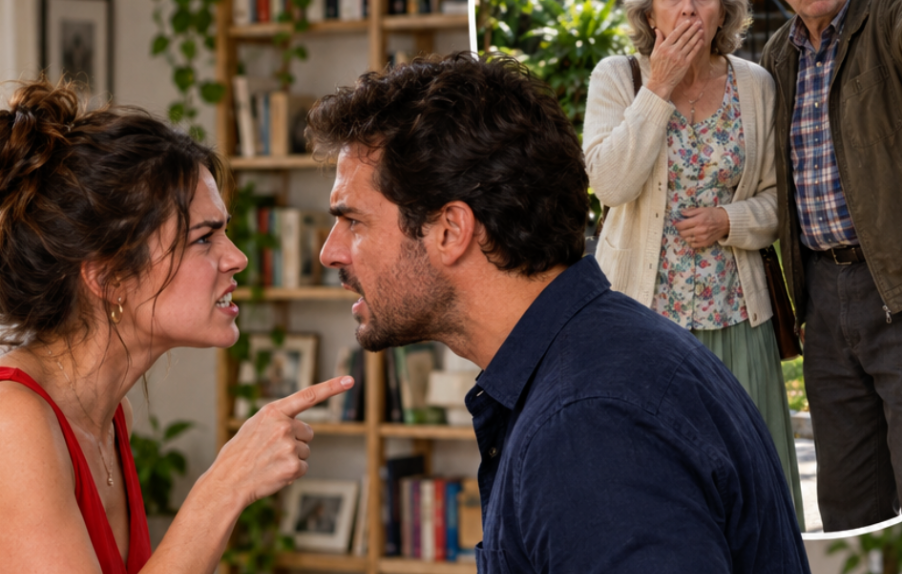
Elena called the room with the big window her study. The window was practically floor-to-ceiling, facing east toward the pine trees past the garages, and every morning sunlight would pour in so much that she could walk barefoot across warm patches of light. The study held her writing desk, a bookshelf, and an old armchair she reupholstered herself, in her first winter after buying the apartment.
Elena bought her two-bedroom on Baikalskaya Street when she was twenty-eight. She spent seven years paying off the mortgage. She worked as a dispatcher at the airport, twenty-four hours on then two days off, and took side jobs translating technical documents from English during her free days. She made the last payment in March. Come July, at her friend’s birthday, she met Dmitry.
He was charming and confident, a manager at a car dealership, and had a way of telling stories that left everyone at the table laughing. A year later, they got married. Dmitry moved in with just a suitcase and his gaming console.
The first two years were good. Dmitry did the dishes, took out the trash, vacuumed on Saturdays. They cooked together, sometimes trading off. But over time, almost everything shifted onto her shoulders.
First, he stopped vacuuming: “Lena, my back hurts after a shift.” Then he stopped doing the dishes: “I’m exhausted, I have targets, the clients are demanding.” Later, he stopped taking out the trash—“I forgot.” Three years in, Elena realized that after a full 24-hour shift at the airport, without any sleep, she’d come home only to be standing at the stove frying cutlets for her husband, while he was just lying on the couch watching football.
“Dima, I work too,” she told him one day. “A full day. Sometimes an entire 24-hour shift.”
“Yeah, but your job’s just sitting,” he replied in surprise. “You sit with your headphones on, pushing buttons. I’m on my feet all day, dealing with people. It’s not the same.”
She didn’t know what to say to that. She just quietly finished washing the skillet.
Things with his parents never really worked out from the beginning. Ivan Petrovich, a former foreman at an aircraft plant, was used to being in charge—at home, at work, at the dacha, at the dinner table. Tatyana Sergeyevna, a former storekeeper, spoke softly, but in a way that made you not want to argue. She didn’t notice other people’s boundaries. She could open Elena’s closet and say her things were folded wrong. She might rearrange the jars in the kitchen while her daughter-in-law was in the shower.
In the very first year of their marriage, at Dmitry’s birthday party, Ivan Petrovich declared at the table:
“What kind of apartment is this? Just a temporary place to live. A two-room flat in a panel building. You should sell it, add some money, and build a proper house. One with enough space for everyone. Including your mother and me.”
“Ivan Petrovich, I spent seven years paying for this apartment,” Elena said. “I’m not planning to sell it.”
“Seven years!” her father-in-law snorted. “Big deal. Tanya and I worked thirty years for ours.”
Tatyana Sergeyevna chimed in:
“Lenochka, you’re not alone anymore. You have a family now. And in a family, decisions are made together.”
The conversation came up again several more times. Every holiday, every visit. One evening, after an especially tough night, Elena said to Dmitry directly:
“Dima, I’m not going to sell my apartment. Never. It’s the only thing I have. If you want to live with me, please tell your parents to stop.”
Dmitry hugged her.
“Lenus, of course. I’ll talk to them. No one will bring up this topic again. I promise.”
And for real, for about three years, no one mentioned it.
Then last spring, Dmitry suddenly got excited about a new idea. Not for himself—for his parents.
“Dad’s always wanted a house. With a sauna, with a garden. Why should they stay in a two-room apartment on the fifth floor of a Khrushchyovka with no elevator? They should sell it, buy a plot outside the city, and build. Fresh air, everything their own.”
Ivan Petrovich picked up on the idea instantly. At first, Tatyana Sergeyevna had doubts, but soon agreed. By May, they’d sold their two-room flat on Lermontov Street. They bought a plot in Pivovarikha, twelve hundred square meters. Laid the foundation and put up a timber frame. With part of the money, Ivan Petrovich also got himself a used SUV: “You need something to drive to the construction site.” By August, the money was gone. No roof, no windows. The builder Ivan Petrovich found through friends turned out to be expensive and slow.
That fall, the parents rented a one-room flat on Sinyushina Gora. Just temporary, as father-in-law put it. Until spring.
In September, they came over to visit Elena and Dmitry. Ivan Petrovich walked around the apartment for a long time with his hands behind his back, like on a work site. He tapped his knuckles on the wall between the study and the hallway.
“Drywall,” he said approvingly. “To take it down would take a couple of hours. We’ll expand this room into the hallway and make a big room. Just right for your mother and me.”
“Ivan Petrovich,” said Elena, “this is my study. I work here.”
“She works,” her father-in-law snorted. “Her little translations. She can do that in the kitchen.”
At that moment, Tatyana Sergeyevna was standing by the window in the study, feeling the curtain. Dmitry sat in the living room scrolling through his phone. Back then, Elena just thought her father-in-law was talking nonsense. He was always full of talk.
In October, Dmitry brought it up at dinner.
— Lena, I need to talk to you. My parents are struggling. Their rental is 25,000, but they’re both on pensions. Could they stay with us for a bit? Just for a couple of months, until the construction is finished. By spring, they’ll move in.
Elena set down her fork. She really didn’t want this at all. She remembered the jars in the kitchen, their things in the closet, and how “temporary housing” always felt anything but temporary.
— Dima, let’s do it this way, — she said carefully. — I’m not saying no. But let’s talk everything through first. Timelines, rules, where they’ll stay, who does what around the house. I don’t want any misunderstandings later.
— Of course, we’ll talk it through, — he agreed easily.
But the discussion never happened. For a week, Dmitry kept dodging the topic. He’d say he was tired, that they’d talk later, that there was no rush.
Then on Thursday, Elena returned from her shift three hours early: flights had been delayed because of the fog, so they let her go. She quietly opened the door and took off her shoes. She heard her husband’s voice from the kitchen, talking on speakerphone.
— Mom, I told you, everything will be fine.
— Dima, I was thinking, — replied the voice of Tatyana Sergeyevna. — Your father and I will take the room with the big window. It’s brighter there, which is good for his eyes. Lena can move her desk into the bedroom. We’ll put the bookcase on the balcony and set our couch in that spot. Your dad wants to get rid of her armchair; it’s old and saggy. We’ll get a new one.
— Mom, let’s leave the armchair for now.
— Alright, we can decide later. About the construction, Dima, your father says we have to put it on hold. We have no money left. Maybe in a year. Maybe two. We’ll see. You said there’d be enough space at your place, right?
— There’s enough room, Mom. Stay as long as you need. This is your home now, too.
Elena stood in the hallway, steadying herself against the wall.
“A couple of months.” “They’ll move in spring.” Turns out the construction is halted. No money. Maybe in a year, maybe two. And now, “This is your home too.”
She walked into the kitchen. Dmitry jumped, quickly said, “Mom, I’ll call you back,” and hung up.
— Lena? Why are you home so early?
— Fog. They let us go. Dima, what were you talking about?
He was quiet for a moment, but didn’t try to deny it. He must’ve realized she had heard.
— Well… My parents are moving in. Tomorrow. I’ve already arranged it, Dad found a car and some movers.
— Tomorrow?
— Yeah. They’ve paid rent on their apartment until the end of the month, but there’s no reason to wait. Lena, could you clear out the study tomorrow? Move your desk to the bedroom, I’ll help in the evening. And make a proper dinner, Mom loves stuffed cabbage. Also, starting the day after tomorrow, you’ll need to make breakfasts. Dad has to have his oatmeal at 7 a.m., his stomach can’t handle missing it. Mom likes pancakes in the morning.
Elena stared at her husband, in disbelief.
— Wait. We were supposed to discuss this. The rules, the timelines. Remember?
— What’s there to discuss? Parents are parents.
— Why did you decide everything without me? This is my apartment, Dima.
Dmitry stood up from the table. His face turned to stone.
— Because you have to respect your elders. My parents devoted their whole lives to me. They’re old. They need care. And you’re my wife. So you should take care of them. It’s normal. Everyone does this.
Elena felt something hot rising in her chest.
— So you want me to be a free caregiver?! Take care of your parents yourself!
Dmitry was stunned:
— How can you say that? Do you even hear yourself? These are my parents! My dad took me fishing since I was five! My mom stayed up all night when I was sick! They spent their last penny on me! And you want to kick them out onto the street? You’re cruel, Lena. Selfish. I never thought you were like this.
Elena stayed silent. She remembered things quite differently.
She remembered how Tatyana Sergeevna, at their very first family dinner, said in front of everyone, “Well, Lena isn’t much of a homemaker, but Dima doesn’t have high standards.” How, a month later, she rearranged Elena’s clothes in the closet because “this way is right.” How Ivan Petrovich called her apartment “temporary housing” and “a prefab box.” How, at every holiday, they both insisted she sell her two-bedroom place for the sake of a “shared home.” How she always refused, and Dmitry never defended her.
— Dima, — she said quietly. — Do you remember what you promised me? Three years ago. When your father said for the fifth time that my apartment should be sold. You said: no one will bring up this topic again. I promise.
— Well, no one’s bringing it up. No one’s selling anything.
— No. No one’s selling. Your mom has just already picked which room she’ll have. And which chair she’s going to throw out. My chair, Dima. The one I reupholstered with my own hands. And now their construction has been put on hold. For a year. Maybe two. And you said this is their house too now. I heard you.
Dmitry lowered his eyes.
— How long have you been planning this? — Elena asked.
He was silent for a long time. Then, looking down at the table, he said:
— Since August. When we ran out of money. Dad and I decided back then. I knew you’d be against it. So I didn’t say anything until the last minute. I thought, once they moved in, you’d get used to it. What could you do? You wouldn’t really throw my parents out on the street.
Since August. Two months. For two months he knew, made arrangements, planned. Drove to see his parents, talked about who would sleep where. And told her, “just a couple months, they’ll move in spring.” All the while, he was just waiting for the moment to spring this on her.
— Call them, — Elena said. — Right now. Tell them the move isn’t happening.
— No.
— Dima. Call them.
— No, Lena. I’m not calling. They’ve already packed their things. Dad ordered a car. I gave them my word.
— And you didn’t give me your word? Three years ago?
He didn’t answer. Instead, he suddenly turned around, went to the bedroom, and flung open the wardrobe with a crash.
— You know what? — he shouted from there. — If that’s how it is, then I’ll go. To my parents. Let’s see how you manage without me. Who’ll fix your faucet, who’ll do the shopping. You’ll realize soon enough.
Elena stood in the kitchen doorway and listened to the sound of him rattling hangers. He was making as much noise as possible, doing it on purpose. Waiting for her to run after him, to beg, to cry. It had happened before. Once, he “left” just like this because she refused to go to his parents for New Year’s. Back then she’d chased after him into the stairwell.
But this time, something inside her broke. Or maybe, finally aligned.
She went into the hallway, took out his big blue travel bag—the one they took to Baikal. She brought it to the bedroom and set it on the bed.
— Here, Dima. Take this one. It fits more.
Dmitry froze, shirt still in his hands.
Elena opened the wardrobe and started taking down his shirts from the hangers. She folded them neatly, just like in a store. Then the jeans. Sweaters. Socks from the drawer. His razor and toothbrush from the bathroom. His phone charger. His documents from the dresser: passport, SNILS, diploma, employment contract. She packed everything into a bag and zipped it closed.
“You can pack the console yourself,” she said. “I have no idea about all those wires.”
Dmitry looked at her as if she were a stranger.
“What are you… Are you serious?”
“You said yourself that you’re moving out to your parents’. I’m helping you.”
“Lena… I didn’t… That’s not what I meant.”
“What did you mean, Dima? That I’d be scared? That I’d run after you and agree to let your parents move in here forever? That I’d get up at seven in the morning to make your dad porridge, then work a long shift at the airport?”
He didn’t answer. He stood there holding a shirt, then slowly laid it on the bed.
“You’ll regret this,” he said, but not very confidently.
“Maybe I will,” she replied. “But not today.”
He left an hour later. He carried the bag himself, and the console too. At the door, he turned to say something, but didn’t.
Elena closed the door and sat for a long time in her office, in her old armchair. Outside, the garage yard lights glowed. The pine trees were dark against the sky. It was quiet.
Around eleven, Ivan Petrovich called.
“Here’s the deal,” he said without greeting her. “Tomorrow at ten, we’re coming over. With our things. The truck is ordered, movers paid. You open the door, and no funny business. Dima told me everything. You’ll get over it.”
“I won’t open the door, Ivan Petrovich.”
“We’ll see about that.”
He hung up.
At ten in the morning, the intercom rang. Elena checked the screen: at the entrance was a minivan, Ivan Petrovich in a cap, and two movers with the first wardrobe on a dolly. Tatyana Sergeyevna was holding a cage with a parrot.
Elena didn’t open the door. Five minutes later, a neighbor came out of the entrance, and her father-in-law came upstairs. He rang the doorbell, then started banging on the door with his fist.
“Lena! Open up! What’s wrong with you? We’re standing here with our things!”
“Ivan Petrovich,” she said through the door, “this is my apartment. I never invited you to live here. Please go.”
“Dima is registered here! He’s your husband!”
“Dima isn’t registered here. And Dima isn’t here either. He’s with you.”
Her father-in-law banged on the door for another minute, and then the neighbor from across the hall, Aunt Valya, stuck her head out and loudly threatened to call the police. Ivan Petrovich cursed but left. Elena watched from the window as the movers pushed the wardrobe back into the van, and her father-in-law handed them cash, gesturing angrily.
An hour later, Tatyana Sergeyevna called.
“Lena, what have you done? Dima’s sleeping on a cot at our place! In a one-bedroom! There’s barely room for the three of us! We ordered the moving truck, got the movers! Do you realize what you’ve done?”
“I understand, Tatyana Sergeyevna. I refused to let you move into my apartment. Forever. Without my consent.”
“What do you mean, without your consent? Dima said you agreed!”
“Dima said a lot of things.”
Her mother-in-law fell silent, then spoke in a completely different, icy voice:
“I always knew you weren’t right for him. Cold. Calculating. Always making a fuss over your apartment like a hen with an egg.”
“Goodbye, Tatyana Sergeyevna.”
All week, Dmitry kept messaging her. “Mom is crying.” “Dad’s blood pressure is up.” “There’s barely enough space for the three of us.” “You destroyed our family.” Elena read his messages but didn’t reply.
Every evening, she would come home from her shift to a quiet apartment. She washed one plate, one cup, one frying pan. There were three times fewer dishes now. The washing machine only ran once a week instead of every other day. The fridge stayed full because nobody was devouring what she cooked for three days in a single evening. She realized just how much energy she used to spend on a grown man who thought her job was just ‘sitting all day.’
A week later, on Saturday, Dmitry showed up himself—with a bouquet of chrysanthemums and a cake. He rang the doorbell, even though he still had his keys.
“Lenus… Can I come back? I get it now. My parents won’t move in with us. I’ve told them. Really. Let’s just go back to how things were.”
“Back to how it was, Dima? What does that mean?”
“Well… Like before. Just you and me. The two of us.”
“So, you’ll lie on the couch, and after my shift, I’ll fry you cutlets. Your parents will keep calling my apartment temporary housing. And you’ll promise that no one will bring this up again—until the next time.”
“I’ll change.”
“Dima, for two months you made plans behind my back to move your parents in here forever. You knew I was against it. And you still planned it, just to spring it on me. I don’t trust you anymore. At all.”
He stood on the doorstep for a while. Then he handed her the cake.
“At least take this.”
“Give it to your mom,” Elena said. “She loves sweets.”
And she closed the door.
In November, Elena filed for divorce in court because Dmitry refused to sign the joint application at the registry office. The court gave them time to reconcile, but at the end of January a decision was made, and in February the marriage was officially dissolved.
He ended up staying with his parents on Sinyushina Hill, crammed into a tiny one-bedroom. He slept on a folding bed in the kitchen. He helped pay the rent: twenty-five thousand for the three of them, with two getting only pensions. Ivan Petrovich, as a mutual friend later told Elena, scolded his son every evening for “not keeping his wife with the apartment.” Tatyana Sergeevna complained to the neighbors that her daughter-in-law had kicked her husband out and refused to take in the old folks.
It was said Ivan Petrovich even demanded his son go to court and “claim half her apartment.” Dmitry went for a consultation. The lawyer looked over the paperwork and shook his head: the apartment was bought eight years before the wedding, and the mortgage was paid off before they met. It was Elena’s personal property, acquired before the marriage, and the law gives no grounds for dividing it as marital assets. There was nothing to divide. After that, Ivan Petrovich didn’t speak to his son for two weeks.
At the final court hearing, Dmitry approached Elena in the hallway.
“Lena, remember our trip to Baikal? With that blue bag?”
“I remember, Dima.”
“Those were good times.”
“They were good,” she agreed. And she didn’t say anything more.
The wooden box in Pivovarikha still stood without a roof. In winter, it was buried in snow up to the window frames, where the windows hadn’t even been installed yet.
Dmitry returned the keys through a mutual acquaintance. Just to be safe, Elena changed the lock. The locksmith, an older gentleman, tinkered with it for half an hour. As he left, he said, “That’s a good lock, ma’am. Reliable. Now you’re the only one who decides who comes in.” She tipped him an extra two hundred rubles.
On the first Saturday after the divorce, she woke up early, just before eight. No alarm clock. She lay there, staring at the ceiling. No one was calling her to make porridge. No one was waiting for pancakes.
She got up and made herself coffee in a cezve. Took one egg, fried it with a tomato. Cut a piece of black bread. She placed everything on a tray and carried it to her study.
There, in the room with the big window, she sat in her old chair. The sun was just rising over the pine trees, laying warm squares of light on the floor. Elena set the tray on her lap and slowly, piece by piece, ate her breakfast. For one.