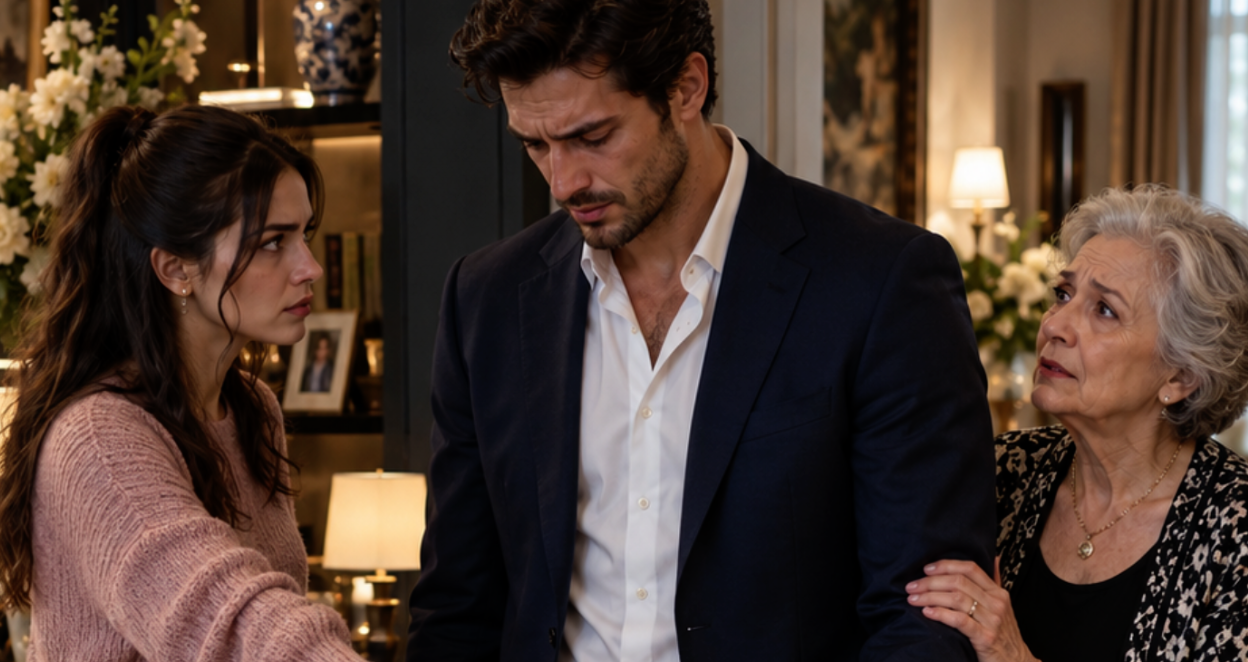
“Mom was right—I should have married someone else!” my husband snapped. His wife’s reply made him start packing his suitcase.
“Mom was right—I should have married someone else!” Anton said almost casually, pushing his dinner plate away. “Tamara, for example. Now she was a woman with character, with status. And you…”
He didn’t finish.
Marina froze by the stove, a kitchen towel in her hands. Just a second earlier, she had been about to put the kettle on the table, but now she slowly turned toward her husband.
“And what about me?”
Anton smirked.
“Nothing. It’s just that Mom saw right through you from the very beginning. She said we were too different.”
At the other end of the table sat Galina Pavlovna—his mother. She was sixty-four, with neatly styled short hair, carefully outlined lips, a dark blue blouse, and the expression of someone who had just received confirmation that she had been right all along.
“Antosha, why do you have to be so direct?” she said, although there wasn’t the slightest trace of regret in her voice. “Marina will get offended again.”
“Let her,” he said. “Maybe then she’ll finally think about it.”
Marina looked first at her husband, then at her mother-in-law.
“So Tamara would have been better?”
“Well, if we’re being completely honest…” Galina Pavlovna shrugged. “Of course. Educated, well-groomed, successful in her career. She bought her own apartment. And most importantly, she knows how to carry herself.”
“Mom,” Anton said with a satisfied smile, “that’s exactly why I say I should have listened to you.”
Marina suddenly placed the kettle back on the stove.
Very quietly.
No shouting.
No tears.
“All right,” she said.
Anton frowned.
“What’s all right?”
“If you were supposed to marry Tamara, then correct your mistake.”
“What do you mean?”
Marina looked him straight in the eyes.
“Pack your things.”
The smile vanished from his face.
“What?”
“You heard me.”
“Marina, don’t make a scene.”
“There’s no scene. This apartment belongs to me. You came here four years ago with two bags. You’ll leave with those same two bags.”
Galina Pavlovna abruptly set her cup down on the table.
“You’re throwing your husband out of the house?!”
“No,” Marina replied calmly. “I’m making room for Tamara.”
And only then did Anton realize that his wife wasn’t joking.
When they met, Marina was thirty-three.
Anton entered her life at a time when she had almost stopped expecting any major changes. She worked as an accountant for a construction company, was paying off a small renovation loan, and lived in a two-bedroom apartment she had inherited from her grandmother.
The apartment wasn’t luxurious, but it was cozy.
In the kitchen stood a round wooden table that Marina had repainted a creamy white herself. Basil grew on the windowsill, an old ficus took up half a corner of the living room, and blue-gray curtains hung in the bedroom.
Anton loved all of it back then.
“It’s so peaceful here,” he would say, sitting in the kitchen in the evenings. “It feels like a real home.”
He himself lived with his mother.
Galina Pavlovna explained it simply:
“Why should a man waste money on rent when he has his own mother?”
Seven months after they met, Anton proposed to Marina.
After the wedding, he moved in with her.
For the first six months, she was happy.
Truly happy.
Anton met her after work, cooked breakfast on Sundays, and bought her flowers. They went out of town, made plans, and argued about where to go on vacation.
Then Galina Pavlovna got a key to their apartment.
Marina didn’t even know about it.
One day, she came home from work earlier than usual and saw a pair of women’s shoes in the hallway.
Her mother-in-law was wiping down the kitchen cabinets.
“Galina Pavlovna?”
“Oh, Marinushka! Why are you home so early?”
“And you… how did you get in?”
“Antosha gave me a key.”
Marina was silent for a moment.
“Why?”
Her mother-in-law looked genuinely surprised by the question.
“So I can help you.”
The continuation is just below in the first comment.
“Mom was right. I should have married someone else,” Anton said casually, pushing his dinner plate away. “Tamara, for example. She had ambition, status, character. And you…”
He left the sentence unfinished.
Marina stood beside the stove holding a kitchen towel. Slowly, she turned toward him.
“And me?”
Anton shrugged.
“Mom understood you from the beginning. She always said we were too different.”
His mother, Galina Pavlovna, sat at the other end of the table with the satisfied expression of someone finally proven right.
“Anton, you shouldn’t be so harsh,” she said, though her voice contained no sympathy. “Marina will get upset again.”
“Let her. Maybe she’ll finally think.”
Marina looked from her husband to her mother-in-law.
“So Tamara would have been better?”
Galina Pavlovna lifted one shoulder.
“Of course. Educated, successful, well-groomed. She bought her own apartment and built a career. Most importantly, she knows how a woman should behave.”
Anton smiled.
“That’s why I should have listened to you, Mom.”
Marina quietly placed the kettle back on the stove.
“All right.”
Anton frowned.
“What’s all right?”
“If you should have married Tamara, then correct your mistake.”
“What are you talking about?”
“Pack your things.”
His smile disappeared.
“Marina, stop being dramatic.”
“I’m completely calm. This apartment is mine. You arrived here four years ago with two bags. You can leave with them.”
Galina Pavlovna slammed her cup down.
“You’re throwing your husband out?”
“No,” Marina replied. “I’m making room for Tamara.”
That was when Anton realized she was serious.
When Marina met him, she was thirty-three, working as an accountant and living alone in a modest two-room apartment inherited from her grandmother.
Anton loved the place at first. He loved Marina’s old wooden kitchen table, the herbs on the windowsill, the large ficus in the living room.
“It feels like a real home here,” he often said.
Before marriage, Anton lived with his mother. Seven months after meeting Marina, he proposed and moved into her apartment.
For the first six months, Marina felt genuinely happy.
Then Galina Pavlovna received a key.
Marina discovered it by accident when she returned home early and found her mother-in-law cleaning the kitchen.
“How did you get in?”
“Anton gave me a key.”
“Why?”
“To help you, of course.”
That evening Marina confronted her husband.
“Why didn’t you ask me before giving your mother a key?”
Anton looked genuinely confused.
“She’s my mother.”
“This is my apartment.”
“We’re married. What do you mean, your apartment?”
Marina gave in.
Later, she would understand that this was the moment everything started changing.
Galina Pavlovna began visiting constantly.
She inspected the refrigerator.
“Anton doesn’t like this cheap sausage.”
She rearranged dishes.
“These plates should go here.”
She criticized the towels, the furniture, Marina’s clothes and even her weight.
Once Marina discovered that her mother-in-law had changed the sheets on their bed.
“Please don’t enter our bedroom again,” Marina said firmly.
That evening Anton came home angry.
“You upset Mom.”
“She was going through our bedroom.”
“She was trying to help.”
Those words became his permanent excuse.
His mother was “trying to help” when she threw away Marina’s cookware.
She was “trying to help” when she rearranged the living room.
She was “trying to help” when she criticized Marina’s appearance.
Then Tamara entered their lives.
Not physically.
As an idea.
“Tamara always looked after herself.”
“Tamara built a successful career.”
“Tamara bought her own apartment.”
“Tamara knew how to present herself.”
Apparently Tamara had known Anton when they were young.
“Why didn’t Anton marry her?” Marina once asked.
Galina Pavlovna sighed.
“He was young and foolish.”
Anton said nothing.
Soon he began repeating his mother’s comparisons.
“Maybe you should change your hairstyle.”
“Why don’t you find a better job?”
“You have no ambition.”
Marina couldn’t understand how the man who once loved her peaceful, ordinary life had become someone determined to change everything about her.
Then came the dinner.
Galina Pavlovna arrived and immediately complained about dust on the mirror.
Marina, exhausted, replied, “Then we’ll live with dust today.”
Her mother-in-law looked at Anton.
“See how she behaves?”
During dinner Anton complained that the casserole lacked salt.
“The salt is beside you,” Marina answered.
“You used to cook better.”
“Anton, please. Just eat.”
Galina Pavlovna shook her head.
“A wife shouldn’t speak to her husband that way.”
“I’ve been speaking politely for four years,” Marina said. “I’m tired.”
Anton laughed bitterly.
“Tired of what? You work until five. We have no children. You inherited an apartment. Your life isn’t difficult.”
Marina went pale.
Then Galina Pavlovna began again.
“Tamara…”
“Please,” Marina whispered. “Not Tamara.”
Anton suddenly exploded.
“What’s wrong with Tamara? Mom was right! I should have married someone else. Tamara, for example!”
Ten minutes later, his suitcase stood beside the door.
Anton was certain Marina would change her mind.
“You’ll regret this.”
“Maybe.”
“You’ll call me tomorrow.”
“Maybe.”
“And what will you tell people?”
“The truth. That my husband decided he should have married Tamara.”
Anton left with his mother.
For the first time in four years, Marina was completely alone.
At first, the silence frightened her.
Then it became peaceful.
Four days later Anton texted:
“Have you calmed down?”
Marina ignored him.
Then came another message:
“Mom says we should meet and discuss everything properly.”
Marina turned off her phone.
That weekend, she cleaned the apartment and returned everything to where it had been before the marriage.
Then an unknown number called.
“Marina? My name is Tamara.”
Marina nearly dropped the phone.
“That Tamara?”
Tamara laughed.
“Apparently.”
She explained that Galina Pavlovna had called her that day, suggesting she meet Anton.
Then Tamara revealed something unexpected.
“I never wanted to marry him.”
According to Tamara, Anton had briefly courted her many years earlier. On their third date, he brought his mother to dinner.
Galina Pavlovna questioned Tamara about her family, salary, cooking skills, clothes, children and whether she would stop working after marriage.
“Afterward Anton told me his mother thought I was too confident,” Tamara said.
“What did you tell him?”
“That his mother should choose his wife herself.”
Marina laughed.
“Then why does she praise you so much now?”
“Because I’m unavailable. An unavailable woman is easy to turn into an ideal.”
Then Tamara became serious.
“There’s another reason I called. Galina Pavlovna said that after your divorce, Anton could finally solve the problem with your apartment.”
Marina froze.
“What problem?”
That night, she searched Anton’s desk.
Inside a folder she found a printed real-estate advertisement.
Her apartment.
Her kitchen.
Her bedroom.
Anton’s phone number was listed as the contact.
There were also messages to an agent.
“The owner is my wife.”
“I’ll get her consent.”
After the sale, Anton planned to use the money to purchase another property.
But he had also asked whether the new apartment could be registered in his name.
Marina photographed everything.
Then she texted him.
“Come over tonight. We need to talk.”
His answer arrived immediately.
“I knew you’d come to your senses.”
Anton arrived carrying flowers and his suitcase.
Marina didn’t let him inside.
Instead, she showed him the advertisement.
His expression changed.
“You went through my papers?”
“You tried to sell my apartment?”
“I didn’t sell anything! I was planning our future.”
“Then why would the new apartment be registered in your name?”
Anton hesitated.
“Because a man should own something.”
At that moment Galina Pavlovna appeared on the stairs.
Of course she did.
Marina showed her the advertisement.
“You knew?”
“Anton wanted what was best.”
“So you knew.”
“A man shouldn’t live forever in his wife’s apartment!”
“So you planned to sell mine and buy one in his name?”
Galina Pavlovna’s silence answered everything.
Suddenly Anton shouted:
“Mom, enough!”
His mother stared at him.
“You’ve been deciding everything for me my whole life,” he continued. “Which woman is good enough. Which job I should have. Where I should live.”
“I only wanted what was best!”
“And now I’m forty-four and standing here with a suitcase again!”
Marina listened silently.
Yes, Galina Pavlovna had controlled him.
But Anton had allowed it.
He had given her the key.
He had allowed the insults.
He had compared Marina to Tamara.
He had listed the apartment.
“Marina,” he said softly. “Let’s start over.”
“Why?”
“I understand now.”
“You understand after one week?”
“I love you.”
“Maybe you do. But you didn’t respect me.”
“I’ll change.”
“I gave you four years to change.”
“Are you really destroying our marriage because of my mother?”
Marina shook her head.
“No. Because of you. Your mother could say anything she wanted, Anton. But she wasn’t my husband. You were.”
Then Marina smiled.
“And thank you, Galina Pavlovna.”
“For what?”
“For Tamara. Without all those comparisons, I might have tolerated this much longer.”
Anton stared at her.
“You spoke to Tamara?”
“Yes. She never wanted to marry you.”
His face reddened.
“She’s lying.”
“She also told me you brought your mother on your third date.”
Galina Pavlovna looked away.
Marina laughed.
“Apparently your perfect Tamara isn’t waiting for you either.”
She closed the door.
This time, permanently.
Several months later, the divorce was finalized.
Anton tried to win her back. Eventually, he rented his own apartment.
“I didn’t give Mom a key,” he told Marina once.
“That’s good.”
“Maybe we could have coffee?”
Marina shook her head.
“You’re finally learning to live independently. Don’t turn that into a way of getting me back.”
Unexpectedly, Marina and Tamara became friends.
Marina learned that Tamara wasn’t a flawless career woman at all. Her apartment had a fifteen-year mortgage. She barely cooked. Her supposedly perfect life had mostly existed in Galina Pavlovna’s imagination.
That realization made Marina laugh.
For years, she had been competing with a woman who wasn’t competing with her at all.
Six months later, Marina stood in her quiet kitchen drinking coffee.
Her phone buzzed.
Anton had written:
“Mom admitted today that she treated you unfairly. Probably too late.”
Marina replied:
“It’s never too late to understand your mistakes. Sometimes it’s simply too late to get people back.”
She placed the phone face down.
The apartment was silent.
But now the silence belonged to her.
The kitchen belonged to her.
The old table belonged to her.
Her choices belonged to her.
Her life belonged to her.
And Marina finally understood something simple:
When someone constantly compares you to a supposedly “better” person, the problem is not necessarily that you aren’t good enough.
Sometimes the real problem is that the person beside you has forgotten how to value what they already have.