My Husband Frowned: “If You Go to Your Sister’s Wedding, We’re Through.” And the Reason Left Me Speechless
“Either you don’t go to your sister’s wedding, or we get divorced.”
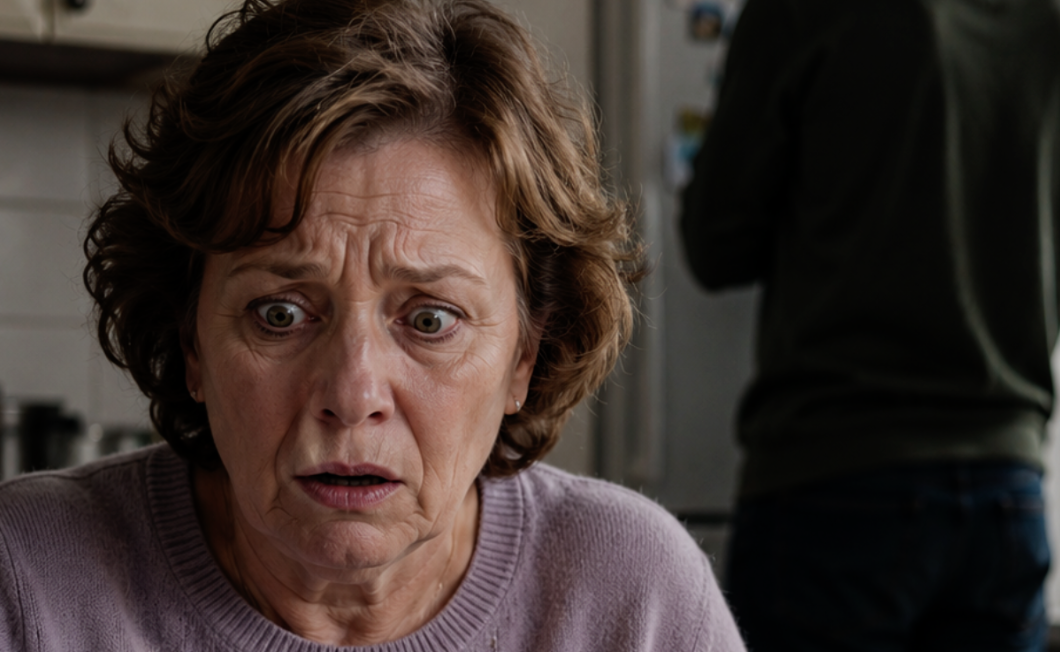
Arkady said it while standing by the refrigerator, and he didn’t even turn around.
A shopping list I had written that morning was hanging on the door: milk, bread, pills for Rudik.
Rudik is the cat.
And, if I’m being completely honest, at that moment he seemed like the most normal creature in the apartment.
I slowly put my cup down on the table.
Tea splashed into the saucer.
“Say that again,” I said.
“You heard me.”
Yes, I had heard him.
But hearing something is one thing.
Understanding that the man you have lived with for twenty-eight years is suddenly giving you an ultimatum over your own sister’s wedding is something else entirely.
My younger sister, Faina, was forty-seven.
She was getting married for the first time.
The groom was Boris Palych, a widower, a retired military man, calm, with large hands and a quiet voice.
They had met at a sanatorium in Kislovodsk.
As Faina later told it, he had simply handed her a glass of mineral water and said:
“Careful, it’s slippery here.”
And that was it.
Four months later, they filed an application to get married.
The wedding was supposed to take place in Saratov.
I had already bought my ticket.
I had prepared my dress.
I had even broken in my new shoes around the apartment, although they pinched as if they were taking revenge on me for something personal.
And now this: “Either you don’t go, or we divorce.”
That evening I went into the room.
Arkady was sitting in front of the switched-off television with the remote in his hand, as if it were not a remote but an official symbol of his righteousness.
“Please explain to me what’s going on.”
“I already said everything.”
“No, you didn’t. Why can’t I go to my sister’s wedding?”
“Because you can’t.”
“That’s not an answer.”
He remained silent.
I sat on the edge of the sofa and looked at him carefully.
In twenty-eight years, I had studied my husband better than my own employment record.
When Arkady was nervous, he rubbed the bridge of his nose.
When he didn’t know what to say, he started clearing his throat.
Right now, he was rubbing the bridge of his nose.
“You’re not telling me everything,” I said.
“I’ve said enough.”
That same evening I called Faina.
“Fai, tell me honestly, did Arkady and Boris have a fight?”
“Why would they? They saw each other once on a video call. Boris waved at him, Arkady nodded. That’s all.”
“Then I don’t understand anything.”
“Ask him properly.”
“I did ask him.”
“No. You asked as a wife. Ask as an investigator.”
Faina had once worked as a secretary at the prosecutor’s office.
Some tones, apparently, stay with a person forever.
I looked at Rudik, who was lying on my pillow.
“Well, at least you explain what’s going on.”
Rudik yawned.
Very informative.
The next day, I went to see my friend Svetlana.
Svetlana lived two courtyards away, had been my friend for thirty years, and was better than anyone at three things: baking buns, listening, and telling the truth in a way that didn’t make you want to take offense.
“Want a bun?” she asked instead of saying hello.
“I do.”
We sat down in the kitchen.
The buns were filled with apple and raisins.
Outside the window, rain was drizzling.
“He said either I don’t go to the wedding, or we divorce,” I said. “Sveta, can you even imagine that?”
“I can,” she said calmly. “My Lyonya had almost the same thing.”
“Over a wedding?”
“Over fishing.”
“Sveta, that is not the same thing at all.”
She took a bite of her bun and said:
“Maybe he isn’t angry. Maybe he’s afraid.”
“What does he have to be afraid of? A train, a hotel, two days of celebrating, and then home.”
“Zina, men are often afraid of things that would never even occur to us. My Lyonya refused to go fishing with his friends for three years. Then it turned out he didn’t know how to swim. He was ashamed to admit it.”
“Arkady knows how to swim.”
“I’m not talking about water. I’m talking about shame.”
After those words, for some reason, I felt uneasy.
That evening I started the conversation again.
“Arkasha, I’m not returning the ticket. I’m going. Faina is my sister.”
“Then we’re getting divorced.”
“Are you serious right now?”
“Do I look like I’m joking?”
No.
My husband had never looked like a joker.
Even when he told jokes, his face looked as if he were reading the instruction manual for a water heater.
“Fine,” I said. “Then explain it to me like a human being. Why can’t I go to my own sister’s wedding?”
He turned off the television, even though it wasn’t on anyway.
He placed the remote on the table.
Rubbed the bridge of his nose.
And said:
“Because he will be there.”
“Who is ‘he’?”
“You know.”
“I don’t know.”
He was silent for a while, as if even saying the name was unpleasant.
Then he said:
“Valery.”
At first I didn’t understand.
Then I did.
Valery Semyonovich Khrustalyov.
The groom’s cousin.
Once, more than thirty years ago, I had danced one slow dance with him at a friend’s graduation party.
One.
Slow.
Dance.
All I remembered about him was his mustache, the smell of Sasha cologne, and the fact that he stepped on my foot twice.
“Arkady, are you serious?”
“Absolutely.”
“That was thirty-three years ago.”
“For me, it feels like yesterday.”
At that point, I no longer knew what to do.
Laugh?
Cry?
Call a psychiatrist?
Instead, I went to the kitchen, poured myself some tea, and called Faina.
“Fai, will Valery Khrustalyov be at the wedding?”
“Probably. Why?”
“Arkady has given me an ultimatum because of him.”
There was silence on the other end.
Then Faina said:
“Zina… Khrustalyov is seventy-four years old. If he comes to the wedding, he’ll come with a cane.”
I leaned against the wall.
“I was twenty-one back then. He was forty-one. We danced once.”
“How does Arkady even know about him?”
“That’s what I’d like to know too.”
When I returned to the room, Arkady was still sitting in the same place.
“Who told you about Khrustalyov?”
“It doesn’t matter.”
“Yes, it does.”
He was silent for a long time.
Then he said:
“Mother. Fifteen years ago.”
My mother-in-law, Rimma Petrovna, had died three years earlier.
When she was alive, she had been a bright, energetic woman who was completely incapable of leaving a boring fact alone.
If reality seemed too bland to her, she immediately added pepper to it.
“And what did she tell you?”
“That you had an affair with him. That you loved him. That if it hadn’t been for me, you would have married him.”
I slowly sat down on a chair.
“Arkasha… I saw that man once in my life. Once. We danced to ‘White Roses’ for four minutes. That’s all.”
“Mother said…”
“Your mother once convinced the neighbors that our Rudik was a Maine Coon.”
Rudik, an ordinary striped street cat, looked at us at that very moment with an expression that said he had no desire to participate in family disputes.
And then Arkady suddenly asked:
“Rudik isn’t a Maine Coon?”
“No, Arkasha. Rudik is not a Maine Coon. And I never had an affair with Khrustalyov either.”
He fell silent.
Then he said quietly:
“I’ve been living with this for fifteen years.”
“With what?”
“With the thought that you once loved another man. And that if you saw him again, something inside you would wake up.”
And that was when it truly hurt.
Not because of Khrustalyov.
Not because of my mother-in-law.
But because the person I had lived with for almost thirty years had carried some wild, imaginary fear inside himself all this time and had never once asked me directly.
I looked at his reddened ears.
At the painfully familiar bald spot.
At the hands that had fixed everything in our home over the years whenever something broke.
And I felt anger and pity at the same time.
“So you’re jealous of a seventy-four-year-old man with a cane, whom I barely remember, because your mother told you a story?”
He said nothing.
The next morning I went to Svetlana’s.
“Rimma Petrovna?” she repeated, pulling a baking tray out of the oven. “Well, of course.”
“You’re not even surprised.”
“Zina, she once told everyone she had worked as a translator at an embassy.”
“Even though she was an accountant at a meat-processing plant.”
“But it sounded beautiful.”
We sat down to drink tea.
“He didn’t keep silent because he didn’t trust you,” Svetlana said. “He kept silent because he was afraid of the answer.”
“He could have asked me in fifteen years.”
“He could have. But some men would rather give themselves an ulcer than have one honest conversation.”
I smirked.
Because it sounded very much like the truth.
There were ten days left until the wedding.
After that conversation, Arkady became quiet, guilty, and cautious.
I did not return the ticket.
But I didn’t pack my suitcase yet either.
A heavy silence hung over the apartment, the kind that appears when two people love each other but are both tired.
Then Faina called.
“Zina, I found a photograph.”
“What photograph?”
“From that graduation party. You and Khrustalyov.”
“And why do I need it?”
“Because Arkasha needs to see it.”
The photo had already arrived on my phone.
Blurry, yellowish, with that unmistakable shade of the nineties, where everyone looked as if life had already exhausted them, even though they were only twenty.
In the background was an assembly hall with paper garlands.
In the center was me, young, wearing a dress with shoulder pads.
And next to me was Khrustalyov, with crooked mustaches and an enormous jacket.
There was at least half a meter between us.
Our faces looked as if we were not dancing, but standing in line for a chest X-ray.
I looked at the photo and went to Arkady.
He was sitting at the computer, looking at some ventilation diagrams.
“Look.”
Arkady took the phone.
Put on his glasses.
Zoomed in.
Then zoomed in again.
“Is that him?”
“That’s him.”
“You’re not even standing close to each other.”
“Exactly.”
He looked at the photo for another thirty seconds.
Then he said:
“His jacket looks like it belongs to someone else.”
“It probably did.”
“And his mustache is crooked.”
“That too.”
He took off his glasses.
Paused.
And very quietly asked:
“I’m a fool, aren’t I?”
I sat on the edge of the table.
“You’re not a fool. You just believed the wrong person for fifteen years.”
“I could have asked you.”
“You could have.”
“I was afraid.”
“Of what?”
He lowered his eyes.
“That it would turn out to be true.”
And at that moment, all my anger disappeared somewhere.
Because sometimes people do foolish things not out of cruelty.
But out of fear.
We went to the wedding together.
On an overnight train.
In a third-class sleeper carriage.
Surrounded by the smell of tea, boiled eggs, and chicken wrapped in foil.
In Saratov, Faina and Boris Palych met us.
“Glad to see you,” Boris Palych said, shaking Arkady’s hand. “I heard you have a Maine Coon cat?”
Arkady didn’t even blink.
“No. Just an ordinary cat.”
I turned away so I wouldn’t laugh.
The wedding was in a restaurant on the embankment.
White tablecloths.
Jellied meat.
Salads in glass bowls.
Sliced meats.
And warm lemonade that no one ever drinks, but which for some reason always has to be on the table.
Valery Semyonovich Khrustalyov was sitting at the far end of the hall.
Thin.
Small.
Without a mustache.
Wearing thick glasses.
With a cane.
And calmly eating jellied meat, not even suspecting that for fifteen years he had existed in someone else’s marriage as a romantic threat.
Arkady saw him and froze.
“Is that him?”
“That’s him.”
“But he’s…”
“Yes, Arkasha. Exactly.”
He looked at Khrustalyov as if he expected to see some fatal masculine power in him.
But Khrustalyov simply asked someone to pass the bread.
Thanked them.
And slowly began spreading butter on a slice of loaf.
“I’m an idiot,” Arkady said quietly.
“Yes,” I answered just as quietly. “But it’s too late to hide it now.”
And you know what?
That evening, for the first time in twenty-eight years, my husband invited me to dance on his own.
True, during the dance he still stepped on my foot twice.
“You’re just like Khrustalyov,” I whispered.
“Don’t compare me to him,” he muttered.
But I still saw the corner of his mouth twitch.
Later, Valery Semyonovich himself came up to us.
“Excuse me,” he said very politely. “I was told that you and I once danced together. Unfortunately, I don’t remember it at all.”
“I barely remember it either,” I said.
“Well, that’s wonderful,” he nodded. “That means the dance wasn’t very good.”
And he left.
Arkady heard the whole conversation.
His ears were as red as tomatoes in August.
We traveled back in the morning.
For a long time, we were silent.
Then Arkady said:
“Zina.”
“What?”
“Mother also told me that before me, you had a pilot.”
I slowly turned my head toward him.
“What pilot?”
“A military one. From Tambov.”
“Arkasha, before you I had Kolya Mironov from the next entrance. He worked at an auto repair shop.”
“So he wasn’t a pilot?”
“He could barely ride a bicycle.”
Arkady nodded.
“I see.”
I placed my hand on his knee.
“Let’s make a deal from now on. Everything your mother said, we will check. Point by point. Calmly. So you don’t carry nonsense inside yourself for years anymore.”
He looked at me, and for the first time in all that time, he truly relaxed.
“Thank you for going,” he said quietly.
“I wasn’t planning to stay home.”
Outside the window, fields, stations, and autumn trees rushed past.
And at home, Rudik was waiting for us.
Not a Maine Coon.
Not purebred.
Just an ordinary striped cat.
But, if I’m being completely honest, he was the most sensible one in our family.
Every family has some old unspoken truth lying around somewhere. Subscribe — we have a new story every day, and there is always something to discuss like human beings.