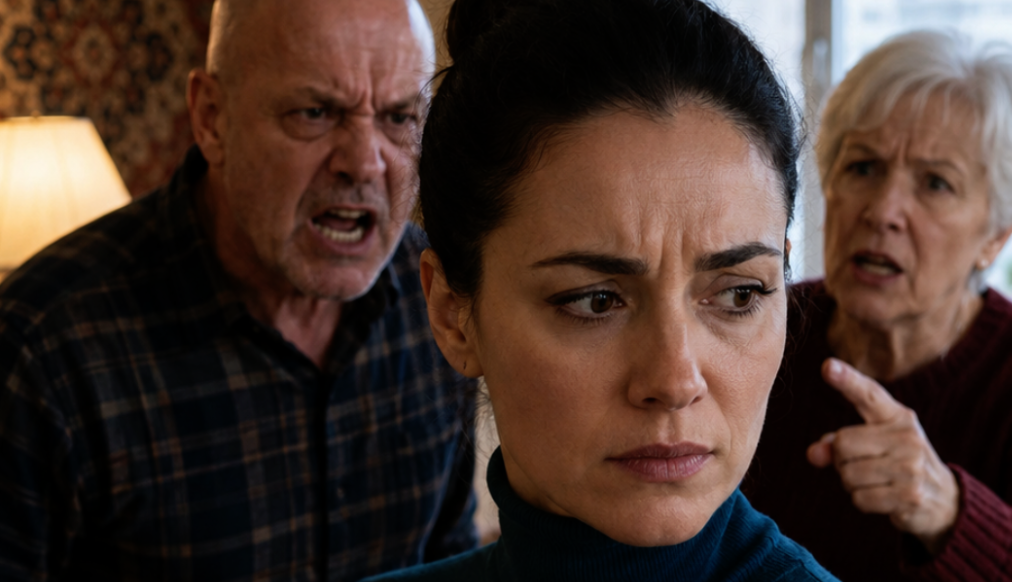
Natasha saw the photo in her feed by accident. Vika was standing next to a new foreign car — white, with a red bow on the hood. The caption read: “Thanks to my parents! Now I’ll get to the kids faster!”
Her knuckles turned white. Natasha gripped her phone.
She called her mother.
“Hello?”
“What car does Vika have?”
“Oh, you saw it? Beautiful, isn’t it? We helped.”
“Where did you get the money?”
A pause.
“We sold the dacha.”
Natasha did not understand right away.
“What dacha?”
“Yours. The one you gave us. We decided — why do we need it? My back hurts, we don’t go there. And Vika needs a car with the children. You understand, don’t you?”
Around her was the hum of the hospital corridor, someone’s laughter. Someone called out to her, but she did not turn around.
“Natash, why are you silent? You don’t mind, do you? She’s your sister. We’re your parents, we know better.”
Natasha hung up.
Five years earlier, she had sold her grandmother’s apartment — the one that had been left only to her. She added all her savings. She bought her parents a dacha.
Her mother had cried then. Her father had said, “You’re our golden girl.”
Golden.
That evening, Natasha came to see them. Without calling.
Her mother opened the door.
“Why didn’t you warn us you were coming?”
Natasha walked into the room. Her father was sitting by the television — he did not even turn around.
“Why didn’t you tell me about the dacha?”
Her mother pressed her lips together.
“Why should we have? We decided ourselves. It’s our property.”
“Mine. I bought it.”
“You gave it to us, so it’s ours. We decided Vika needed it more. She has children, a husband, her job is far away. And you’re alone. You’ll manage.”
Her father turned around.
“What are you whining about? Being greedy?”
Natasha looked at him. At her mother. They truly did not see the problem.
“You could have asked.”
“Asked?” her mother grimaced. “Vika is the youngest, life is harder for her. You always pull through. You’re strong, aren’t you?”
Natasha stood up. She said nothing. She left. She closed the door quietly, without slamming it.
For two weeks, she said nothing. She went to work, came home, lay down on the couch.
Her son asked once:
“Mom, why are you so sad?”
“I’m tired.”
He went back to his room. He did not pry.
And Natasha remembered how they had stood on the doorstep of that dacha. Her mother crossing herself. Her father hugging her: “Thank you, my daughter.” Back then, Natasha had felt she was doing the right thing. That she was needed. Good.
Now she understood: she had simply been convenient.
On Friday evening, Vika called.
“Why are you ignoring Mom? She’s beside herself.”
“Hi, Vik.”
“She says you’re offended because of the dacha. Natash, what’s wrong with you? I really needed the car. Children, kindergarten, work — you understand, don’t you? Or are you just sorry to part with it?”
Natasha closed her eyes.
“Did it not occur to any of you to ask me?”
“Why? Our parents decided. They know better.”
“I bought it with my own money.”
“So what? You gave it to them. A gift means you handed it over and don’t interfere.”
Natasha hung up. She stood. Went to the wardrobe. Took out a folder with documents — the gift agreement, bank statements, receipts.
She sat down at the table. Opened her laptop.
An hour later, she found what she was looking for.
On Monday, Natasha came to her parents again. With the folder.
Her father opened the door and frowned.
“Why are you here again?”
Natasha walked past him. Her mother called from the kitchen:
“Have you finally come to your senses?”
Natasha put the folder on the table. Opened it. Laid out the papers — slowly, one by one.
“I reviewed all the documents for the dacha.”
Her mother tensed.
“The dacha is registered in your names, but the money came from my account. By law, if the recipient of a gift shows ingratitude, the transaction can be challenged. I’m gathering documents for court.”
Her mother went pale.
“What nonsense are you talking about?”
“Either you return my money, or we deal with this publicly. In court. In front of everyone we know.”
Her father jerked.
“Have you lost your mind?! You want to disgrace us?!”
“I want to get back what’s mine.”
Her mother grabbed her by the arm.
“Natash, we’re family!”
Natasha freed her hand.
“You already chose who matters most in this family.”
She turned around and left.
Behind her, her mother shouted something about ingratitude, about how Natasha was killing them.
Natasha did not turn back.
Three days of silence. Then it began.
Vika kept calling — Natasha did not answer. She wrote: “Are you sick?! You want to take the car away?!”
Natasha did not reply.
An hour later, there was a voice message. Natasha played it on speaker. She was cutting vegetables for dinner and listening.
Vika’s voice was hysterical, broken:
“Natashka, are you even thinking straight?! My husband said if we have to sell the car because of you, he’ll throw me out! I have children! Do you understand?! You’ve always been selfish! You always thought only about yourself!”
The message ended.
Natasha continued slicing tomatoes. Evenly. Calmly.
The next day, her father called.
“Natalya, enough. Stop this circus.”
She was silent.
“Do you hear me? Your mother hasn’t eaten for two days, she’s crying. Do you understand what you’re doing?”
“I understand.”
“Then stop. We’re not returning anything. Forget it already.”
“I won’t forget. Return it, or we go to court.”
“Go to hell!” her father snapped. “Ungrateful! We raised you, fed you, and you’re dragging us to court?!”
Natasha hung up.
Her hands were shaking — but not from fear. From anger. From the fact that she had finally stopped staying silent.
Another day later, Vika came over. Without calling. Natasha opened the door — her sister stood there, pale, with red eyes.
“Can I come in?”
Natasha silently stepped aside.
Vika entered and sat on the edge of the couch. She was silent for a minute. Then:
“Will you really sue?”
“I already have.”
Vika flinched.
“Why?”
“Because all of you decided I would swallow it. That I always swallow everything.”
Vika pressed her lips together.
“Natash, I didn’t know it mattered so much to you. Our parents said, ‘We decided.’ I thought you didn’t mind.”
“No one asked me.”
“Well, I’m sorry! I really didn’t mean to!”
Natasha looked at her. Vika was always like that — first she shouted, then she cried.
“Sell the car. Return the money.”
Vika went pale.
“Are you serious?”
“Yes.”
“Natash, my husband will throw me out!”
“That’s your problem. You took what wasn’t yours — now give it back.”
Vika jumped up.
“You’re just taking revenge! You’re jealous because I have a family and children, and you have no one!”
Natasha stood and opened the door.
“Get out.”
“You’re kicking me out?”
“Yes. Get out right now.”
Vika walked to the door and turned back on the threshold.
“You’ll regret this. Mom was right — you’re selfish.”
Natasha closed the door. Leaned her back against it. Exhaled.
For a week, they were silent. Then a message came from her mother: “You’ve finished us off. I hope you feel better now.”
Natasha did not answer.
The next day, a transfer came in. From Vika. The comment said: “Sold the car. Happy?”
Natasha wrote briefly: “I’m waiting for the rest from our parents.”
Three days later, another transfer came. From her father. Less than what was owed, but a significant amount.
Natasha accepted the money.
She wrote one message in the family chat:
“I received the money. I don’t want anything else from you. Don’t write to me. Don’t call me.”
She left the chat. Deleted it. Blocked all three of them.
She sat in the kitchen. Looked out the window — evening was falling, streetlights glowing behind the glass.
The phone was silent.
It did not hurt. It was just empty.
She stood up. Turned on the kettle.
Tomorrow — work. The day after tomorrow — a meeting at her son’s school. Life goes on. Only now, without the people who thought she would endure everything.
Two months passed.
Natasha lived as usual — work, home, her son. Her phone no longer burst with calls. No one invited her to family dinners, asked for help, or reminded her: “You’re the eldest, you have to.”
Silence. Unfamiliar, but peaceful.
Her son asked once during dinner:
“Mom, does Grandma not call anymore?”
“We had a fight.”
“A serious one?”
“Yes.”
“And you won’t make up?”
“No.”
He nodded. He did not ask questions. Smart kid.
A month later, a message came from an unknown number:
“Natash, it’s Vika. I’m writing from someone else’s phone. You were right. Forgive me.”
Natasha read it. Deleted it. Blocked the number.
Not out of anger. It was simply too late.
On Saturday, she and her son looked at apartments. Natasha had decided to add her savings to the money she had gotten back and buy a larger two-room apartment. Her son would soon be seventeen; he needed a proper room of his own.
The third option had a bright kitchen and large windows. Her son walked through the rooms, looking out the windows.
“Mom, look, there’s a school nearby!”
Natasha came over. Looked. Smiled.
“Do you like it?”
“Yes. Are we taking it?”
“We’re taking it.”
That evening, they rode home on the bus. Her son scrolled through his phone while Natasha looked out the window. The city drifted past — evening lights, bustle, people hurrying about their own business.
Suddenly, her son said:
“Mom, I’m glad you didn’t stay silent back then.”
Natasha turned to him.
“Why?”
He shrugged.
“I don’t know. You just became kind of… different. Stronger, I guess.”
Natasha smiled. Put her arm around his shoulders.
“Thank you.”
He nodded and buried himself in his phone again.
And Natasha looked out the window and thought: yes, she had become different. The kind of woman who was no longer afraid to stand up for what was hers. The kind no one would use anymore.
And that was right.