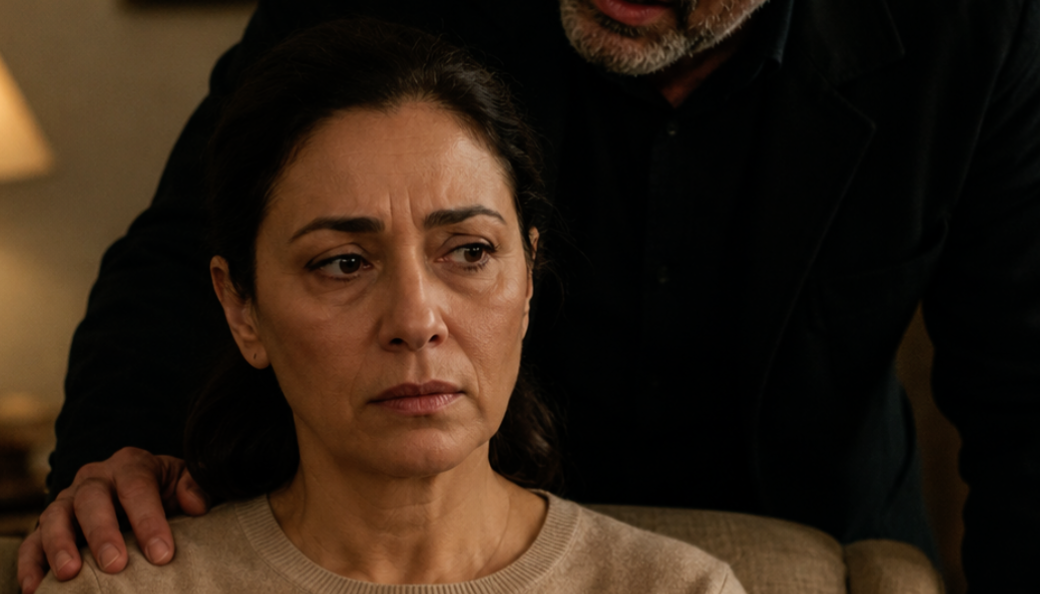
Natalya opened her eyes and saw a white ceiling. The bright light cut into her pupils, and the first thing that came to her mind was where she was and why it hurt so much to breathe. It felt as if her chest were being squeezed in a vise; every breath came with difficulty.
“She’s awake,” the woman heard someone say. “Lie still. Don’t move.”
A nurse leaned over the bed and checked the IV. Natalya tried to say something, but her throat was dry, and instead of words, only a hoarse sound escaped.
“Don’t speak yet. You were lucky. You had a heart attack, but the doctors got to you in time. The most important thing now is rest.”
A heart attack. That word sobered her more than any medicine could have. Natalya remembered how, the evening before, her chest had suddenly twisted in pain. The pain had been so sharp that it took her breath away. Oleg had been sitting on the sofa watching football. Natalya had called out to her husband, but her voice had stuck in her throat. She grabbed the back of a chair and tried to reach the phone. After that, everything blurred.
Now, lying in the hospital ward, Natalya realized that she could have died. Just like that, in the middle of an ordinary October evening, while rain drizzled outside the window and her husband enthusiastically commented on the match.
A few hours later, the doctor entered the ward. An elderly man with tired eyes sat down on the edge of the bed and looked attentively at his patient.
“How are you feeling?”
“Better,” Natalya croaked.
“Good. You were extremely lucky. A little longer, and we might not have made it in time. Now the most important thing is recovery. Minimal movement, no stress, a strict diet. Take your medication according to schedule. And absolutely no work for at least six months.”
Natalya nodded. The doctor wrote something in her chart and left. The woman remained alone in the ward. Outside the window, it was getting dark, and the rain tapped against the glass monotonously, almost lulling her to sleep. She closed her eyes and tried not to think about what would happen next.
Oleg came the next day. He entered the ward holding a bag of fruit. He placed it on the nightstand and sat down on the chair beside the bed.
“How are you?” her husband asked without looking her in the eyes.
“Alive.”
“What do the doctors say?”
“That I need to recover. For a long time.”
Oleg nodded and took out his phone. He began scrolling through the news, occasionally glancing up at his wife. Natalya looked at him and understood—he was uncomfortable. Uncomfortable sitting there, in that hospital ward that smelled of medicine and other people’s pain. Uncomfortable looking at his wife, pale and lying with an IV in her hand.
“You don’t have to sit here,” Natalya said.
“What?”
“Go home. It’s obvious this is hard for you.”
Oleg sighed with relief.
“Well, if you don’t mind… I have things to do. I’ll stop by later.”
Her husband got up and left without even turning around. Natalya watched his back disappear and gave a bitter smile. Twenty years of marriage, and now, when she truly needed support, there was no one beside her.
The next two weeks passed in the hospital. The doctors carefully monitored her condition, and the nurses gave injections and changed IVs. Oleg visited rarely, usually for fifteen minutes. He would bring yogurt or apples, put the bag on the nightstand, and sit silently. Their conversations were short and strained.
“How are things at home?” Natalya would ask.
“Fine.”
“What about work?”
“Everything’s okay.”
“Did the dog eat?”
“He ate.”
There was nothing else to discuss. Oleg would sit for ten minutes, then get up and leave. Natalya did not feel offended. She had no strength left for offense. All her strength went into simply breathing, getting out of bed, and reaching the bathroom.
When the doctors finally allowed her to be discharged, Natalya was glad to return home. The apartment greeted her with silence. Oleg helped carry her things to the bedroom and immediately went into the living room. Natalya sat down on the bed and looked around. Everything was in its place, but the atmosphere had changed. It was as if the home had stopped being a home.
The first days of recovery were difficult. The doctor had warned her: no sudden movements, no strain. Natalya walked slowly through the apartment, holding on to the walls. Even getting out of bed required effort. Oleg did not help. In the morning he left for work; in the evening he returned late.
“Oleg, can you bring me some water?” Natalya asked one evening.
Her husband was sitting in the living room watching television. He turned around, looked at his wife, and reluctantly got up. He poured water into a glass and handed it to her.
“Thank you.”
“Mm-hmm.”
Oleg returned to the television. Natalya drank the water and placed the glass on the nightstand. She did not feel like talking. And there was no point anyway.
A week after being discharged, Natalya noticed changes in her husband’s behavior. Oleg began staying at work even later. He came home after midnight, smelling of cigarettes and someone else’s perfume. Natalya remained silent. Asking questions was pointless. She would not get an answer anyway.
One evening, Oleg came home around nine. Natalya was sitting in the kitchen drinking tea. Her husband walked past without greeting her and disappeared into the bedroom. A few minutes later, he returned with his phone in his hand and began typing something. Natalya saw his lips stretch into a smile. It had been a long time since she had seen that kind of smile at home.
“Oleg, will you have dinner?” Natalya asked.
“No. I already ate.”
“Where?”
“At work.”
“They feed you at the office?”
“We had a corporate event. A small one.”
Natalya nodded. A corporate event. On a Wednesday. In the middle of the workweek. Of course.
The days dragged on slowly. Natalya gradually recovered—she could already walk without support and prepare light meals. The doctor said the process was going well, but it was too early to relax. She needed to take care of herself and avoid stress.
Oleg avoided his wife. Their conversations were reduced to a minimum. Silence in the morning. Silence in the evening. They slept on opposite sides of the bed, not touching each other. Natalya did not try to rebuild contact. She had no strength for that. All that remained was to survive day by day.
One late evening, Natalya woke up because of a noise. Oleg was standing in the bedroom, packing his things into a suitcase. The light was bright and harsh. Natalya propped herself up on one elbow and looked at her husband.
“What are you doing?”
Oleg did not turn around. He continued folding shirts into the suitcase, neatly and methodically.
“Packing.”
“Where are you going?”
“On vacation.”
Natalya sat up in bed, leaning against the pillow. Her heart began to beat faster, and she took a deep breath to calm herself.
“When?”
“Tomorrow.”
“For how long?”
“Two weeks.”
Natalya was silent. Oleg zipped up the suitcase and finally turned around. His face was calm, almost indifferent.
“I’m flying to the Maldives.”
“All right.”
“With another woman.”
Silence hung in the air, heavy and thick. Natalya looked at her husband and did not recognize the man she had lived with for twenty years. Oleg stood there with a suitcase in his hand, waiting for a reaction. Tears, screams, accusations. But Natalya was silent.
“I need rest,” Oleg added, as if justifying himself. “I’m tired of all this.”
“Of what?” Natalya asked quietly.
“Of hospitals. Of medicine. Of your illness.”
“I see.”
Oleg waited a few more seconds, but his wife still said nothing. She simply sat on the bed, hugging her knees, and looked out the window.
“All right. I’m leaving,” her husband said and walked out of the bedroom.
Natalya heard the front door slam. Silence covered the apartment. The woman continued sitting motionless, looking out the window, where November rain drizzled behind the glass. Inside, she felt empty. Not hurt, not offended. Just empty.
She slowly lay back down on the pillow and closed her eyes. Her heart was beating evenly, without faltering. The doctor had said to avoid stress. Natalya smirked. What stress? Her husband had gone to the Maldives with his mistress, leaving his wife alone in the apartment after a heart attack. But there was no stress. There was relief.
The next morning, Natalya woke up early. She sat up in bed and looked at the empty half beside her. Oleg was gone. The suitcase had disappeared. The only thing that reminded her of her husband was the smell of cologne on the pillow.
The woman got up, went into the bathroom, and looked at herself in the mirror. Her face was pale, her eyes tired, her hair disheveled. But something inside had changed. It was as if the weight she had been dragging around for the past few weeks had finally released her.
Natalya washed her face, got dressed, and went into the kitchen. She brewed coffee and took cottage cheese out of the refrigerator. She sat at the table and began eating slowly, enjoying the silence. No reproaches, no dissatisfied sighs. Only her and her morning coffee.
After breakfast, Natalya called her friend.
“Svetlana, hi. Can you come by today?”
“Of course. Did something happen?”
“I’ll tell you when you get here.”
Svetlana arrived an hour later. She sat across from Natalya and looked at her friend attentively.
“How are you?”
“I’m fine.”
“Really?”
“Yes. Oleg left.”
“Where?”
“To the Maldives. With another woman.”
Svetlana froze with the cup in her hand.
“Is he serious?”
“Completely.”
“And you’re taking it calmly?”
“What am I supposed to do? Cry? Run after him? I don’t have the strength for that. Or the desire.”
Svetlana put the cup down on the table and took her friend’s hand.
“Natasha, I understand that this is hard for you. But you can’t just let go of twenty years of marriage.”
“I can. I already have.”
Her friend was silent for a moment, then nodded.
“All right. Then what are you planning to do next?”
“Recover. Live. Without him.”
Svetlana stayed the entire evening. They talked about everything—work, plans, memories. Natalya told her how Oleg had avoided her over the past weeks, how he came home late, how he smiled at his phone. Svetlana listened and shook her head.
“He doesn’t deserve you.”
“I know.”
“You’re strong.”
“I don’t know. I’m just continuing to live.”
When Svetlana left, Natalya was alone again. The apartment was quiet, almost cozy. The woman went into the bedroom, opened the wardrobe, and took out Oleg’s things. Shirts, trousers, jackets. She folded everything neatly into a large bag and carried it into the hallway. Tomorrow she would give it away somewhere. Or throw it out.
Natalya lay down in bed and closed her eyes. For the first time in a long while, sleep came easily, without anxious thoughts or fears. She simply slept. Calmly and deeply.
In the morning, Natalya woke up to sunlight. The sun had appeared outside the window—a rarity for November. The woman got up, stretched, and went into the kitchen. She brewed coffee and turned on her phone. A photo appeared in her social media feed. Oleg on the beach, in shorts, holding a cocktail. Beside him was a young girl in a swimsuit. The caption read: “Finally living for myself.”
Natalya looked at the photo for a few seconds, then blocked her former husband. She had neither the desire nor the need to watch his happy life. She now had her own life.
The following weeks passed in a calm rhythm. Natalya went to doctor’s appointments, took her medication, and walked in the park. Her condition improved with each passing day. The doctor was pleased with the results.
“You’re doing well, Natalya Sergeyevna. Your body is recovering nicely. Continue like this.”
“Thank you.”
“Just no stress. That is the most important condition.”
Natalya nodded. There was no more stress. Oleg had left, and with him disappeared the constant tension. The house became quiet and peaceful.
A month later, Natalya decided to change her surroundings. She rearranged the furniture in the living room, bought new pillows, and hung a painting she had wanted for a long time. The apartment was transformed. It became brighter and cozier.
Svetlana came over often. The friends drank tea, talked, and laughed. One day Svetlana brought a magazine with job advertisements.
“Take a look. Maybe something will suit you.”
“It’s still too early. The doctor said not to work for six months.”
“Well, at least look. So you’ll know where you might go later.”
Natalya flipped through the magazine. She stopped at an advertisement for an administrator position in a small company. A calm job, no overtime, a decent salary.
“This one is interesting.”
“Call them. Find out the details.”
Natalya called the next day. She spoke with the manager and explained her situation. The woman on the other end of the line listened attentively.
“I understand. Let’s do this. Recover completely, and then come in for an interview. The position is still open.”
“Thank you.”
Natalya hung up and smiled. There was a plan ahead. A goal. Something to strive for.
December brought the first snow. Natalya stood by the window and watched the white flakes slowly fall to the ground. Her phone vibrated. A message from an unknown number.
“Hi. It’s Oleg. How are you?”
Natalya deleted the message without replying. An hour later, another one arrived.
“Natasha, come on, answer me. I’m worried.”
She deleted it again. Oleg continued writing all evening. Short messages full of fake concern. Natalya blocked the number and turned off her phone.
January arrived with frost. Natalya went on long walks, wrapped in a warm coat. She breathed in the cold air and rejoiced in every day. Her heart worked steadily, without failures. The doctor allowed her to increase her activity.
“You may begin light exercise. Swimming, yoga. Nothing heavy.”
“All right.”
Natalya signed up for a swimming pool. She swam three times a week, slowly, without rushing. The water relaxed her and removed tension. After the pool, she felt lightness throughout her body.
In February, Natalya decided to change her appearance. She made an appointment with a hairdresser and asked for a shorter haircut. The stylist gave her a neat shoulder-length style and added light strands. Natalya looked in the mirror and did not recognize herself. Her face looked younger, fresher.
“It suits you very well,” the hairdresser smiled.
“Thank you.”
At home, Natalya went through her wardrobe. She threw away old dark clothes and kept the lighter ones. She bought new jeans, several sweaters, and comfortable sneakers. She looked at herself in the mirror and nodded. Now this was right.
In March, it was time to change the locks. Natalya called a locksmith. The man came within an hour, removed the old locks, and installed new ones. Natalya took the keys and put them in her bag. She threw the old ones away immediately.
“All done,” the locksmith said. “Reliable locks. No one will get through them.”
“Excellent.”
When the locksmith left, Natalya locked the door with the new key. She turned it twice and smiled. Now no one would enter without permission.
In April, Natalya filed for divorce. She gathered the documents, medical certificates, and an extract from the house register. She went to court and handed everything over to the lawyer.
“Does your husband agree to the divorce?” the lawyer asked.
“I don’t know. We don’t communicate.”
“All right. We’ll file without his participation. You have grounds—separate residence for more than three months.”
“How long will it take?”
“About two months. Maybe a little longer.”
Natalya nodded. Two months was not so much. She could wait.
May brought warmth. Natalya started her new job. As an administrator in a small firm, just as she had planned. The job turned out to be calm, without stress. Her colleagues welcomed her kindly, and the manager was an understanding woman.
“If anything is wrong, tell us right away. We’ll help.”
“Thank you.”
Natalya settled into the rhythm quickly. Work took exactly eight hours, without overtime. In the evening, she returned home, cooked dinner, and watched a series. Life had settled into place.
In June, a notice came from the court. The divorce had been finalized. The marriage was dissolved. Natalya received the document and calmly placed it in a folder. That was it. She was officially free.
Svetlana called that evening.
“Well, should I congratulate you?”
“For what?”
“For the divorce. You’re a free woman now.”
“Yes. Free.”
“How do you feel?”
“Good. Excellent, honestly.”
The friends met at a café. They ordered desserts and drank coffee. Svetlana talked about work, her daughter, and vacation plans. Natalya listened and smiled. Life continued—bright and full.
July turned out rainy. Natalya was sitting at home reading a book when the doorbell rang. It was late evening; she was not expecting guests. The woman got up and approached the door. She looked through the peephole.
Oleg was standing on the doorstep. Gaunt, with dull eyes. In his hand was a worn bag. Natalya froze. For several seconds she looked through the peephole at her former husband, then opened the door.
Oleg tried to smile. The smile came out pathetic and uncertain.
“Hi, Natasha.”
“Hello.”
“May I come in?”
“No.”
Oleg blinked, as if he had not expected a refusal.
“Natasha, I… I’m sorry. I did something stupid. Very stupid.”
“I see.”
“They kicked me out. That girl… She used me. I spent all my money, and she left for someone else. I understood everything. I realized I made a mistake.”
Natalya stood in the doorway and looked at her former husband. Inside, there was neither pity nor anger. Only calm.
“What do you want?”
“To come back. Let’s try again. I’ve changed.”
“No.”
“Natasha, please, give me a chance. I understood my mistakes. I’ll be different.”
Natalya tilted her head to the side and looked carefully at Oleg. This man had left when she had been at her worst. He had abandoned her after a heart attack and gone to a resort with his mistress. And now he was standing on her doorstep asking to come back.
“You left when I was lying between life and death,” Natalya said calmly. “You left because it was inconvenient for you. Because you were tired of hospitals and medication. And now you’ve come because you feel bad. Not because you missed me. Not because you love me. But because you have nowhere to go.”
“Natasha…”
“It’s too late to come back, Oleg. Far too late.”
Natalya closed the door. Slowly, without hurry. She turned the key in the lock twice. Behind the door, footsteps sounded, then silence. Oleg had left.
The woman returned to the living room, sat in an armchair, and picked up her book. She finished the chapter, then put it aside and looked out the window. Rain was drizzling behind the glass, but inside it was warm and peaceful.
Natalya got up, went into the kitchen, and brewed tea. She sat at the table and drank slowly, enjoying the silence. Her silence. The one she had earned. The one no one would disturb again.
Her phone lay on the table. Natalya picked it up and opened the gallery. She deleted every photo with Oleg. Every shared picture, every memory. She pressed the button, and everything disappeared.
The woman put the cup in the sink and went out onto the balcony. The air was fresh, damp after the rain. Natalya breathed in deeply. Her heart beat evenly, calmly. No failures, no pain.
She had lived through a heart attack. Through betrayal. Through loneliness. And she had survived. She had become stronger. Freer. Herself.
Natalya looked at the city drowning in evening lights. Somewhere out there, Oleg was walking, looking for a place to spend the night, regretting his decisions. But that was his problem. His life. And she now had her own.
The woman returned to the apartment, closed the balcony, and went into the bedroom. She lay down in bed, covered herself with the blanket, and closed her eyes. Tomorrow would be a new day. Tomorrow there would be work again, a walk, a meeting with her friend. Tomorrow there would be life again.
Her life. The one no one would ever destroy again.