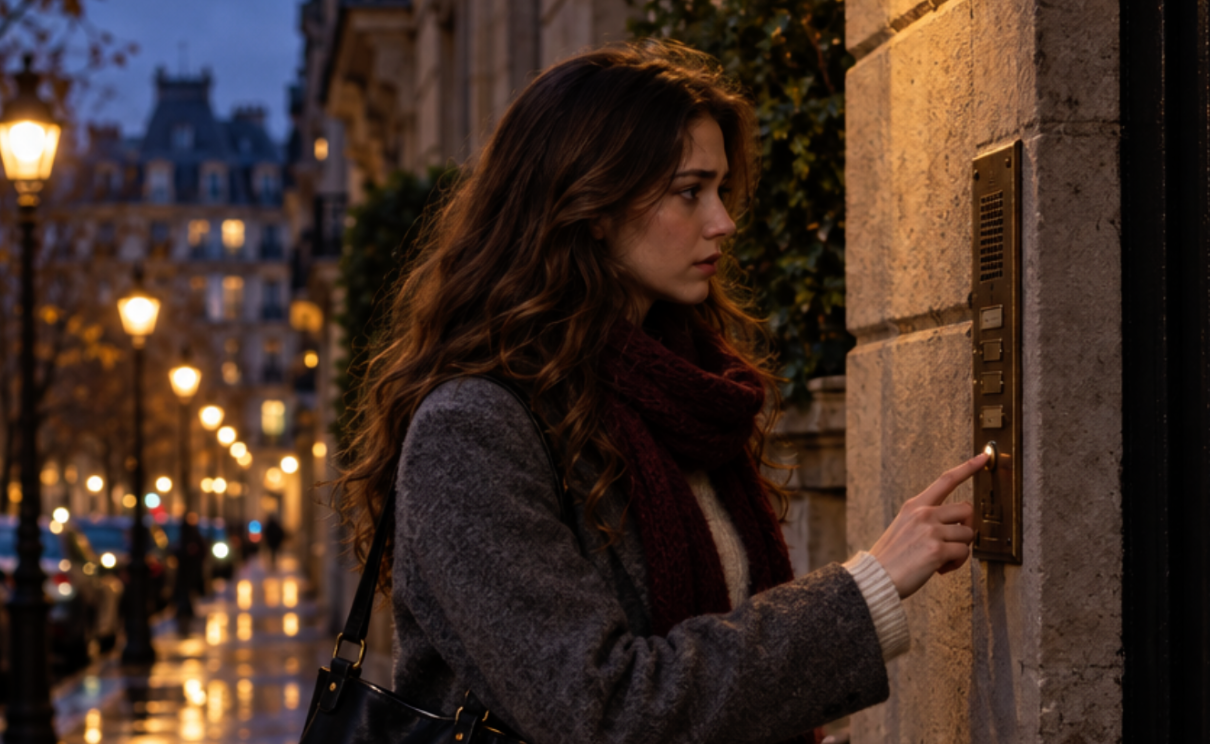
Galina arrived at her sister’s place half an hour early. Her husband’s silver sedan was parked outside the building. She rang the doorbell as if already expecting what she would find behind it.
The silver sedan was parked right where her sister’s neighbor usually keeps his car. Galina recognized it straight away: the dent in the rear bumper that Kostya had promised to fix back in March, and the child’s car seat in the back—even though Polina is already seven and hasn’t used it in ages.
She paused in the middle of the courtyard. The bag with the cake weighed down her right hand.
Kostya was supposed to be at work. It was Saturday, but at their office, project deadlines often fall on weekends—he’d told her that morning while filling his thermos with coffee. She’d even asked, ‘Maybe you could swing by Rita’s and pick me up on the way home?’ He shook his head and said, ‘I’ll finish late. Don’t wait up.’
And yet, here was his car.
Galina walked closer. She touched the hood. It was warm—he’d only just arrived.
She pulled out her phone and dialed his number. Four rings, then voicemail. She tried again. Same result.
Inside the bag was a ‘Prague’ cake from the bakery on Leninsky. Rita had asked for this specific one—with the apricot layer, just like in their childhood. They’d planned to celebrate Rita’s new contract, have some wine, and enjoy a quiet night together. No husbands, no kids, no talk about school or mortgages.
Galina pressed the intercom button.
Rita didn’t answer right away. Twenty seconds passed—maybe thirty. Galina counted the beats of her own pulse in her throat, listening to the silence from the intercom speaker.
‘Who is it?’
‘It’s me. I’m early.’
There was a pause. Short, but Galina noticed it.
‘Come up, I’ll buzz you in.’
The lock clicked. The entryway smelled of dampness and something sour, kind of like cabbage brine. On the third floor, someone was cooking borscht.
Galina climbed the stairs instead of waiting for the elevator. She counted the steps without thinking: twelve to the landing, then a turn, twelve more. Fifth floor. The door was ajar.
Rita stood in the doorway. Her hair was wet, and her bathrobe was buttoned crookedly: the top button in the wrong hole. Bare feet on the cold tile.
‘Why are you so early? I just got out of the shower.’
‘No traffic jams.’
Galina stepped into the hallway. It smelled different here: Rita’s perfume, something citrusy, and beneath it, faintly, tobacco smoke. Rita didn’t smoke. She never had.
‘I brought the cake you asked for.’
‘Oh, thanks! Let’s go to the kitchen.’
Galina took off her shoes and set them on the mat near the door. Next to them were Rita’s sneakers and a pair of worn house slippers. That was it. No men’s shoes.
On the coat rack hung two coats: Rita’s gray one and a black windbreaker Galina didn’t recognize. She reached out and touched the fabric. It was wet—someone had just arrived, out in the rain.
Rita was already making noise in the kitchen.
Rita’s kitchen is tiny, six square meters. A table by the window, two chairs, a fridge covered in magnets from Turkey and Abkhazia. On the windowsill, a violet plant that Rita waters every Thursday—and against all odds, it keeps blooming.
Galina set the cake on the table and sat down.
‘Should I get the wine glasses? Or start with tea?’
‘Let’s have tea first. I’m not even dry yet.’
Rita switched on the kettle. Her hands moved quickly and confidently, as always. But Galina noticed something new: her fingers were trembling slightly as she reached for the mugs on the top shelf.
Two mugs. Both from the same set, white with a blue rim.
“Rita.”
“Hm?”
“There’s a car parked in your yard. Silver, with a dent in it.”
Rita didn’t turn around. She set the mugs on the table, one a little farther away from Galina, the other for herself.
“There are plenty of cars out there. It’s a shared yard.”
“It’s Kostya’s car.”
The kettle clicked off. Rita picked it up and poured water into both mugs. Steam rose to the ceiling, thin and white, and for a second, a silence hung between them—louder than any shout.
“Are you sure? There are a lot of silver cars.”
“The dent on the bumper, Polina’s child seat. I know the license plate by heart.”
Rita sat down across from her. She wrapped her hands around the mug, even though the water was boiling hot. She didn’t flinch.
“Alright.”
“Alright what?”
“Alright, it’s his car.”
Galina felt her knee cap start to tremble beneath the table. She pressed her palm to her thigh, pushing down.
“And what is his car doing at your place?”
Rita stayed silent for twelve seconds. Galina knew, because the clock on the wall was ticking, and she could hear every single tick.
“He came to see me. We talked.”
“About what?”
“About you.”
Galina leaned back in her chair. The chair creaked. On the other side of the wall, the neighbors had their TV on—someone laughed on a talk show, and it sounded ridiculous, like applause at a funeral.
“About me. My husband came to my sister to talk about me.”
“Galya, you got it wrong.”
“I’m not getting anything yet. Explain it.”
Rita let go of her mug. Red stripes from the heat were left on her fingers. She looked at her hands, then at Galina.
“It’s the third time he’s come by. Since October.”
October. It’s November now. So, a month. Or a little more.
“Why?”
“He wants to get you an anniversary present. And he doesn’t know what to pick. He asked me to help.”
Galina blinked. Then blinked again.
“A present.”
“Yes.”
“And for that he has to come by three times?”
“You know Kostya. He spent an hour and a half picking out bathroom tiles. And this is your anniversary—ten years.”
Nine. It will be ten in December. Galina corrected herself automatically, in her head, and then thought—maybe he’s counting from when they met? Then it really would be ten. They met in November, at a mutual friend’s birthday. Kostya spilled mulled wine on her.
But something didn’t add up. The jacket hanging in the hall. Wet. The smell of tobacco smoke. Kostya quit smoking two years ago.
“Rita, whose jacket is in the hallway?”
“Which jacket?”
“The black one. On the hanger.”
Rita stood up. She went into the hallway. Came back a minute later.
“It’s Lyosha’s. He forgot it here last week.”
Lyosha. Rita’s ex. They broke up in August, and Rita said back then: that’s it, enough, I’m not letting him in again. But the jacket’s still hanging there.
“He was here?”
“For his stuff. Not like that.”
Galina stayed silent. She stared at the violet on the windowsill, at three purple flowers poking out from dusty leaves, and tried to understand why she felt so cold inside. The cake sat in its box, untouched. The tea was growing cold.
She called Kostya again. This time, he picked up.
“Hi, I’m at work. What’s up?”
“Nothing. I just wanted to ask what time you’ll be done.”
“Around eight, maybe later. Don’t get bored.”
His voice was normal. Calm. The same voice he uses when he’s looking at his monitor and talking on the phone at the same time.
“Alright. Bye.”
She hung up the phone and looked at Rita. Rita was sitting with her hands folded on her knees, looking like a schoolgirl in front of the principal.
“He says he’s at work.”
“Maybe he already left. He was here for half an hour, no longer.”
“But his car is still here.”
Rita opened her mouth and then closed it. She got up and walked to the window. The kitchen was facing the other side, so you couldn’t see the courtyard.
“Maybe it wouldn’t start? His battery has been acting up.”
“Rita.”
“What?”
“Look at me.”
Rita turned around. Her eyes were dry, her face calm. But the vein on her neck was pulsing so hard that Galina could see it from two meters away.
“I’m not lying to you.”
“I didn’t say you were lying.”
“But you look at me like that.”
“I’m looking at you and trying to understand. My husband lied to me that he was at work. His car is parked by your house. You came out of the shower with wet hair. What am I supposed to think?”
Rita flinched. Not with her whole body: only her shoulders jerked, as if from a draft.
“Galya, I’m your sister.”
“Exactly.”
They sat in silence for about five minutes. The tea had gone completely cold. Galina took the cake out of the box, just to have something to do with her hands. The brown glaze was shiny, and there was a mark from the cardboard insert—an uneven line running across the surface.
“You want a knife?”
“Yeah.”
Rita handed her a knife. Just a regular kitchen knife with a wooden handle. Galina cut the cake into eight pieces, even though there were only two of them. The apricot layer was bright, almost orange, just like in their childhood.
She and Rita always cut the cake like this: into eight slices, even if only the two of them were eating. Their mom taught them: “Cut extra, just in case someone drops by.” No one ever dropped by, but still, they always cut it into eight.
“Do you remember how mom used to buy ‘Prague’ cake for New Year’s?”
“I remember.”
“You always ate the apricot layer separately. You’d scrape it off with a knife.”
“I remember, Galya.”
Rita took a piece. She took a bite and chewed slowly.
Galina didn’t eat. She was thinking about how she could just get up and leave. Go down to the courtyard, walk over to Kostya’s car, and wait. Or not wait. Just drive home and pretend she hadn’t seen anything.
And honestly, that would be the easiest thing to do. Close the cake box, put on her shoes, say “bye” and walk out. She knew how to do this: ignore things. Kostya’s late nights at work, the scent of someone else’s perfume on a shirt he’d washed himself—even though he normally dumped it in the laundry basket. Three years ago, something similar happened. She didn’t ask questions then. She just washed his mug, dried it, and put it back.
But this is different now. This is Rita.
“I want to see your phone.”
Rita stopped chewing.
“Why?”
“Show me your messages with Kostya.”
“Galya, there’s nothing like that in there.”
“Then show me.”
Rita put her fork on the plate. She got up and went into the other room. She came back with her phone.
Galina took it. The screen was warm, as if someone had just been holding it. She opened the messenger app and found “Kostya.”
The last message from today at 2:12 PM: “I’m already here, come out or open up.”
From Rita at 2:13 PM: “Come up, 5th floor, code 2479.”
Above that: photos. Galina scrolled through. A ring. A silver ring with a blue stone. Then another one: gold, thin, with an engraving. The third photo: earrings, two different pairs.
From Kostya: “Which do you think, the first or the second?”
From Rita: “The first one. She likes silver more, don’t you know that?”
From Kostya: “I know, but I’m not sure. It’s been ten years, after all.”
From Rita: “That’s why silver. She doesn’t like flashy things. Silver. She doesn’t like showiness.”
Galina kept scrolling. The chat started in October, just like Rita mentioned. The first message from Kostya: “Hey, Rita. I need your help. Want to get Galya an anniversary present, but I have no idea what. You know her best.”
No photos. No ‘miss you’s. No hearts. Just jewelry stores, links, and discussions about ring sizes.
Size sixteen and a half. Rita knew it, but Kostya didn’t.
Galina closed her phone and put it face down on the table.
— There.
— That’s it.
— Happy now?
Galina didn’t answer. She stared at her hands on the table. Her nails were bare, cuticles chapped. The wedding ring on her ring finger was slim, worn down on one side.
— I’m sorry.
— For what?
— For what I thought.
Rita was silent for a moment. Then she reached across the table and placed her hand over Galina’s. Her palm was warm and a bit clammy.
— If you were me, you would’ve thought the same.
— No.
— Galya.
— Okay. Yes. I probably would’ve.
They looked at each other, and something in the air between them shifted slightly. It didn’t crack or break apart. It just shifted—for example, like a piece of furniture moved one centimeter, so the mark on the linoleum no longer lines up with the leg.
— But why couldn’t he just ask me?
— Because it’s a surprise, silly.
— And why did he say he was at work?
— Because you’d ask where, why, and you’d figure it out in three minutes. You always guess.
That was true. Galina could predict her gifts with an accuracy that drove Kostya crazy every New Year. Once she even guessed about theater tickets, though he bought them a month in advance and hid them in his work drawer.
— So the battery has nothing to do with it?
— I don’t know about the battery. Maybe it really didn’t start. He did leave, I think.
Galina stood up and went to the window in the big room that looks out over the yard. The silver sedan was still parked there. Next to it stood Kostya. He was talking on the phone, smoking, and kicking at the curb with his foot.
Smoking.
She returned to the kitchen. Her hands were steady, but somewhere inside, in the pit of her stomach, a small, hot knot tightened.
— He’s out in the yard.
— Who?
— Kostya. Smoking.
— But he quit.
— Two years ago. Yeah.
Rita frowned. The wrinkle between her brows deepened, looking like a tiny scar.
— Maybe he’s just nervous about the gift.
— Or maybe not.
Galina sat back down. She took a piece of cake and bit in. The chocolate glaze was slightly bitter, while the apricot layer was sweet to the point of being cloying. Just like in childhood. Exactly like in childhood.
— You know what annoys me?
— What?
— It’s not that he’s down there. Not that he lied. It’s that after ten years, I’ve never told him I don’t need presents.
Rita raised her eyebrows.
— What do you mean?
— I mean exactly that. I don’t need a ring. Not silver, not gold. I just want him not to run off to work on Saturday mornings. For him to pick up Polina from school at least once a week. For him not to lie that he’ll be late when he’s actually out in the yard at my sister’s, smoking and picking out earrings for me.
She spoke quietly. Didn’t raise her voice. Which made every word weigh even more.
— Galya.
— What?
— That’s a different conversation. This isn’t about the gift.
— Right. Not about the gift.
Rita put the dishes in the sink. She turned the water on, turned it off. Then on again. She always did this when she didn’t know what to say: her hands would move while her mind was working.
— Are you going to tell him?
— Tell him what, exactly? That I saw the car? That I checked your phone? That he smokes?
— That you need something different.
Galina looked at her sister. Rita stood with her back turned, her shoulders slightly hunched, her robe askew. These days, she looked a lot like their mom: same posture, same habit of hiding behind household chores whenever the conversation got real.
— Mom never told Dad what she really needed.
— Mom’s from a different generation.
— And us?
— We can.
The water ran into the sink, drumming against the metal bottom, filling the silence with a sound that neither of them knew how to fill with words.
— Do you remember when Dad bought Mom that fur coat?
— I remember.
He bought her a fur coat when what she really needed was knee surgery. She wore it for one winter. Then the coat just hung in the closet, while Mom limped around for three more years until her knee got so bad she finally had surgery on the state quota.
— Mom said “thank you” and put the fur coat away in its cover.
— Yeah.
— I don’t want that.
Rita turned off the water. She turned around.
— Then don’t stay silent.
Galina went down to the yard twenty minutes later. The cake was left at Rita’s, cut into eight pieces, and they’d eaten two and a half.
Kostya was sitting in the car. The engine was running, which meant the battery had started—or maybe it never broke down. The driver’s window was slightly open, and cigarette smoke drifted out.
She knocked on the window.
He turned his head. His expression barely changed—just his eyes got a bit wider for a split second, no more.
— Galya? Aren’t you at Rita’s?
— I just came from Rita’s.
— Oh.
He turned off the engine. The silence felt thick and heavy, like the November air outside.
— You’re smoking.
— Just one cigarette.
— You quit two years ago.
— Yeah. But I caved. Work’s stressful.
She walked around the car and got into the passenger seat. The car smelled of tobacco, leather, and the aftershave she’d given him for New Year’s last year. The bottle was in his glove compartment. She noticed.
— Kostya.
— Hmm?
— I know about the ring.
He looked at her. Then at the steering wheel. Then back at her.
— Did Rita tell you?
— I saw the car. I rang the doorbell. I read the messages.
He exhaled, long and with a whistle, like someone letting out a breath after holding it in too long.
— Well, damn.
— Yep.
— So much for the surprise.
— So much for the surprise.
They sat in silence. Rain tapped on the roof, and the windows were fogging up from the inside. Kostya drew a crooked circle on the windshield with his finger, then wiped it away with his palm.
— Silver, with a blue stone. Rita helped pick it out.
— I know.
— Size sixteen and a half.
— Rita told you the size?
— Yep. I tried it on my pinky three times—it never fit.
Galina almost smiled. Almost. The corner of her mouth twitched and went back.
— Kostya.
— What?
— I don’t need a ring.
He froze. The fingers that had just been tracing shapes on the glass stopped moving.
— What do you mean, you don’t need it?
I need you to be home on Saturdays. Pick up Polina from school. And please, stop pretending you’re working late when you’re actually here.
“I didn’t lie. Well, I did, but it was for you.”
“I know. But that’s not the point. The point is that for ten years, I’ve been getting gifts from you instead of having you here.”
He stayed silent.
The rain got heavier. Big drops drummed on the hood, each leaving a tiny splash that faded instantly.
“Are you angry?”
“No.”
“Then what is it?”
“I’m just tired.”
Kostya sat motionless, both hands on the steering wheel even though the car wasn’t moving. Galina watched a muscle tense in his jaw: a small, almost invisible movement she’d learned to read over the years.
“I thought you’d like it.”
“I would have, if you’d asked me what I wanted.”
“I wanted to surprise you.”
“You did surprise me. Just not the way you hoped.”
He turned to her. His eyes were gray, with yellow flecks around the pupil. She used to love looking into them. She could lie there for ages just gazing. When did that stop? She couldn’t remember. There wasn’t a specific day.
“Galya, I don’t know how to do this right.”
“Me neither.”
“But I’m trying.”
“I know.”
She reached out and wiped the fogged-up window on his side. Outside, the yard blurred into a gray smudge: rain, streetlights, an empty playground with wet swings no one was sitting on.
“By the way, the ring is beautiful.”
“It’s silver. With a topaz. Rita said it would suit you.”
“Rita knows me.”
“And I don’t?”
The question hung in the air, and Galina didn’t answer. Not because the answer was too harsh, but because it was complicated, and she hadn’t found the words for it yet.
They sat in the car for another fifteen minutes. Not talking. Kostya turned the radio on, then immediately off. He opened the glove compartment, took out a small blue velvet box, and placed it on the dashboard between them.
“Here.”
Galina looked at the box. She didn’t open it.
“Our anniversary is next month.”
“I know.”
“Then keep it until December.”
“What’s the point? You already know.”
“The point is—I want to receive it somewhere else. Not in the car by Rita’s building. Not after spending thirty minutes thinking my husband was sleeping with my sister.”
Kostya flinched.
“Wait, you actually thought that?”
“What would you think if you were in my place?”
He rubbed his face with his hands. His stubble rasped loudly against his skin, the sound harsh in the silent car.
“God, Galya. I would never.”
“I know.”
“Rita, she’s… She’s your sister.”
“Yes. That’s why it was so scary.”
She said “scary” softly, almost a whisper, and that word settled between them like a third passenger. Kostya reached for her, and she let him take her hand. His hand was big, warm, with a callus on his index finger from holding a pencil. He drew his projects by hand before transferring them to the computer. She’d always loved that habit.
“Listen, I really thought the ring was a good idea.”
“It was a good idea. You just could’ve called and told me: ‘Galya, I’ll be at Rita’s, she’s helping me with a gift, don’t ask what.’ And I wouldn’t have asked.”
“You would have guessed.”
“Maybe. But I wouldn’t have stood outside, touching the car’s hood, wondering how I’m supposed to keep going.”
He squeezed her fingers tightly. Then eased his grip a little.
— I won’t lie anymore.
— Don’t promise something you can’t do.
— Alright. I’ll do my best to lie less often.
She almost laughed. Almost.
When Galina stepped out of the car, the rain had nearly stopped. The asphalt glistened and the streetlights were reflected in the puddles—orange, blurred a bit, like watercolor spots.
She looked up at Rita’s windows. The kitchen light was on on the fifth floor. Rita was probably doing the dishes. Or finishing the cake. Or maybe just standing at the window, looking down.
Kostya started the car. The engine purred to life on the first try.
— I’ll pick up Polina from my mom’s, then head home.
— Okay.
— Should I buy anything?
— Bread. Dark rye.
— Alright.
He drove off. The silver sedan pulled out of the yard, blinked the turn signal, and disappeared around the corner.
Galina stood in the middle of the yard, holding her phone. The screen had gone dark. She didn’t bother turning it on.
On the playground, the swings creaked. The wind rocked them lazily, slowly—making a rhythmic sound, like a metronome. The air smelled of wet leaves and gasoline.
She looked up. The November sky was low, gray, heavy. Not a single star. But the rain had stopped, and that was something.
She called Rita.
— Hello?
— I’m coming up. Let’s finish the tea.
— Sure. I warmed it up.
Galina entered the building. This time, she waited for the elevator. She pressed for the fifth floor. The elevator rose, humming quietly, and she watched her own reflection in the mirror: beige coat, dark ponytail, the circles under her eyes that concealer couldn’t hide.
A ring on her ring finger. Thin. Worn on one side.
The door was open. Rita stood in the doorway. Her robe was buttoned correctly now, her hair had almost dried and stuck out in all directions, like a child’s after a nap.
— Well?
— Nothing. Let’s have some tea.
She walked in. Rita closed the door.
The cake was on the table. Eight pieces. Two and a half were gone. On an empty plate there were crumbs and an orange streak of apricot filling.
Galina sat in her usual chair. Rita set a mug of hot tea in front of her. White, with a blue rim.
— Rita.
— Hm?
— Thank you.
— For what?
— For opening the door.
Rita didn’t say anything. She just sat across from her and picked up a piece of cake. The fourth one so far.
Outside, the lights in the neighboring courtyard came on, and the kitchen got a little brighter. The violet on the windowsill swayed in the draft. Three purple flowers, dusty leaves, a pot with a crack on its side.
Galina took a sip of tea. Hot, strong, no sugar.
For the first time all evening, she felt warm.