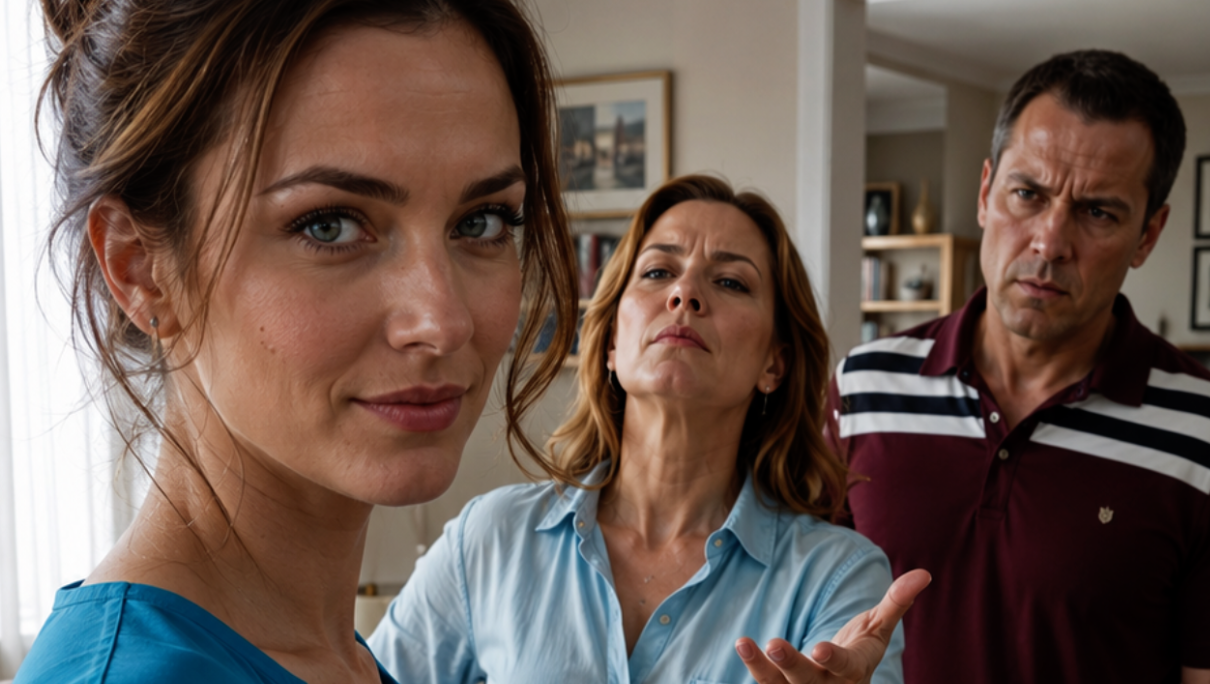
My Sister-in-Law Called Our Apartment a Mistake and Insisted the Bank Would Soon Throw Us Out. But Not Long Afterward, She Called Asking for a Large Sum of Money
“The ceilings are a little low, Tanya. They’ll make the place feel cramped. And why do the two of you need a three-bedroom apartment? You’ll only overpay on utilities for no reason. You spend all day at work anyway.”
This was the first family dinner in the apartment that Andrei and I had spent five years working extra shifts and saving every spare thousand rubles to buy.
Marina, my darling sister-in-law, stood in the middle of our new entryway with her lips curled contemptuously.
She examined the perfectly smooth walls with such a disgusted squint that she looked like Detective Gleb Zheglov discovering a warehouse full of stolen goods in my apartment. Her gaze seemed to scan the space for the slightest flaw she could seize upon and use to diminish someone else’s happiness.
I silently watched her take off her coat.
For some reason, another person’s mortgage always weighs more heavily on relatives than their own shoes do. It is an astonishing law of family physics: the harder you work, depriving yourself of weekends and vacations, the more convinced your relatives become that you were simply outrageously lucky.
And once you are considered lucky, you automatically become guilty in the eyes of those who preferred not to make the same effort.
Marina marched confidently down the hallway, her heels clicking loudly against the new laminate flooring. She reached for the door to our bedroom, preparing to throw it open like a customs officer at the border.
Calmly and without making a fuss, I stepped in front of her and closed the door.
“The bedroom isn’t an exhibition hall, Marina. The tour is over.”
My sister-in-law snorted with displeasure, spun around sharply, and headed into the kitchen. There, her hands immediately reached for the lower drawers of the snow-white cabinets so that she could inspect their capacity.
I stepped closer and caught the drawer front with my palm right in front of her nose, preventing her from pulling it out completely.
“A housewarming party isn’t a property inspection. The soft-close mechanisms work perfectly, and nobody needs your hands in here.”
But Marina had already noticed the brand stamped onto the metal side of the drawer. She gave an exaggerated whistle of amazement. A sharp flash of envy appeared in her eyes.
“Blum hardware? Well, someone is certainly living extravagantly. We could never afford anything like that.”
Nina Arkadyevna followed behind her daughter, gently agreeing with every comment she made. She had mastered the art of concealed jabs, wrapping every reproach in the shiny packaging of life experience.
“Well, yes,” my mother-in-law sighed heavily, running her finger across the flawless matte countertop. “Your father and I lived our whole lives with ordinary cabinet doors, and our hands didn’t fall off. Why waste so much money, Tanya? Furniture is just furniture. You should be more modest.”
My voice remained as steady as the cardiogram of a perfectly healthy person when I replied:
“Andrei didn’t spend his evenings climbing out of elevator shafts covered in technical grease and metal dust, while I worked one and a half positions at the clinic, just so we could slam cheap cabinet doors that dry out and fall apart. Respect for your own labor begins with good soft-close mechanisms.”
My husband, who was standing in the kitchen doorway, gave his sister a hard look, stopping her next attempt to peer inside the oven.
“Marina, stop touching and inspecting everything. You were invited to a housewarming party, not to accept the apartment from the developer.”
The dinner began with an inventory.
Marina poked at the festive salad with her fork and casually remarked, as though mentioning it in passing:
“We’re calculating our expenses too. We found a new car at the dealership with an excellent package, but the down payment is enormous. That’s why I don’t understand why you invested so much money in furniture.”
“And the curtains in your living room are heavy and expensive,” Nina Arkadyevna immediately added, shaking her head sadly. “You could have hung some simple sheer curtains instead. Why all this luxury when you have debt hanging over your heads? People should live modestly when they’re living on borrowed money.”
As though she had been waiting for exactly that remark, Marina pulled her phone out of her handbag and opened the calculator.
“All right, let’s estimate it,” she began brightly, tapping the screen with her long fingernail. “A three-bedroom apartment in this neighborhood, plus the renovation… You took out a twelve-year mortgage, didn’t you? Wow! Twelve years of bondage! Do you even understand that after one year of living like this, you’ll be eating nothing but pasta? No vacations, no decent clothes. This mortgage is an unbearable stone around your neck!”
I looked at Marina as she enthusiastically entered numbers into her calculator and predicted our inevitable collapse.
It was astonishing how quickly another person’s success could turn a grown woman into an offended tax inspector demanding an immediate financial declaration.
“Don’t worry about our pasta,” I said, tilting my head slightly as I looked at her indignant face. “I know how to make delicious sauces.”
Andrei clenched his jaw and spoke firmly, staring directly at his sister.
“Put away the phone and the calculator. Our payment, income, and mortgage term are none of your business.”
Nina Arkadyevna continued sighing quietly about how it would have been more sensible to choose cheaper wallpaper and buy a folding sofa instead of a bed.
I slowly put down my cutlery, paused briefly, and said:
“Marina, you have already inspected our ceilings, mattress, cabinet hardware, curtains, and mortgage. There is only one thing left to clarify: were you invited here to congratulate us, or to find evidence that we don’t deserve this apartment?”
Viktor Pavlovich, my father-in-law, was an old-fashioned man. Until that moment, he had silently watched the spectacle unfold, growing increasingly displeased.
He slowly put down his fork, gave his daughter several warning looks, and then leaned heavily on the table with both fists.
“That’s enough. Did you come here to congratulate them or to turn their pockets inside out?”
Nina Arkadyevna tried to mutter something about family concern, but my father-in-law cut her off.
“Andrei and Tatiana worked for five years and never asked anyone for a single ruble. You didn’t come here to congratulate them. You came here to diminish what they achieved. And you,” he said, turning his stern, piercing gaze toward Marina, “put away that calculator. You inherited your grandmother’s apartment without a mortgage or a down payment. You have never made a single bank payment for the walls you live in. So don’t use your calculator to measure someone else’s burden.”
He took a breath, looked at Andrei and me, and said firmly:
“The apartment is excellent. The renovation was done properly. I’m proud of you.”
Marina’s face instantly turned crimson with anger. She jumped to her feet, pushing her chair back with a loud scrape.
“Oh, really? Fine! Sit here in your palace! But when the bank throws you out, don’t come running to me!”
She stormed into the hallway and slammed the front door behind her. Neither of us moved to stop her.
A week later, Andrei’s phone rang while we were having dinner. When he saw his sister’s name on the screen, he silently turned on the speakerphone.
“Hey, Andrei,” Marina said in a sickeningly sweet voice. All her arrogance had mysteriously disappeared. “Listen, here’s the situation. We finally found the car we want, but we’re three hundred thousand rubles short for the down payment. Could you lend it to us for six months? Since you had enough money for soft-close mechanisms, heavy curtains, and renovations, three hundred thousand can’t be your last money. You won’t be going anywhere now anyway because of the mortgage. At least let the money work for us.”
I listened to her monologue with a smile.
It was remarkable how quickly a stern household auditor could transform into a helpless beggar when the right car package appeared at the dealership.
“Sorry, Marina,” Andrei replied in a calm, cold voice. “You explained yourself that we’re facing a future of pasta and financial collapse. We’ve decided to trust your forecast.”
I leaned toward the microphone and added clearly:
“Someone else’s down payment is not included in our mortgage.”
Andrei ended the call, cutting off an outraged gasp from the other end.
An hour later, my phone rang. Nina Arkadyevna’s number appeared on the screen. Her daughter had clearly already managed to complain in vivid detail about her greedy relatives.
I answered and, without waiting for a long speech about understanding their situation, said:
“A week ago, you advised us to save money on curtains and furniture. Start the family savings program with Marina’s car.”
In the background, Viktor Pavlovich’s familiar deep voice came through the phone.
“Nina, hang up. They are not your emergency loan fund.”
The call ended.
While Marina frantically called relatives and searched for the missing three hundred thousand rubles, the car she had chosen was purchased by someone else.
A month later, she arrived at her mother’s house in her old, thoroughly worn-out compact car, having failed to upgrade her status as a car owner.
At our housewarming party, Marina counted our debts. A week later, she counted our spare money.
But the calculator had been correct about one thing: in the category marked “someone else’s car,” our balance was exactly zero.