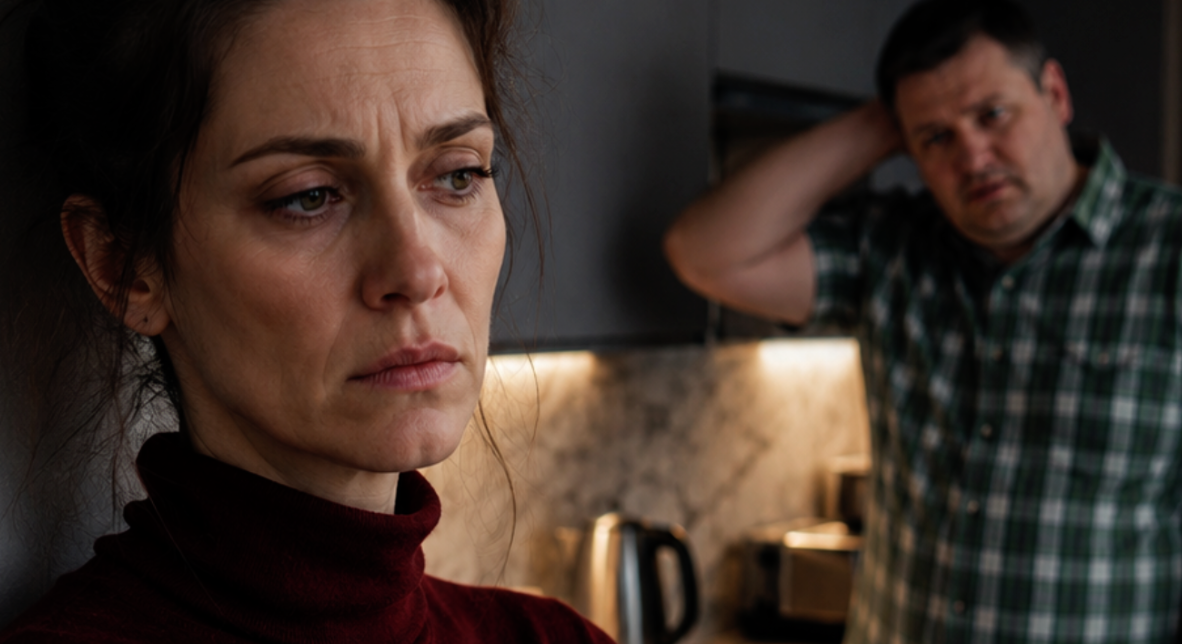
“You are not family to us!” Nina Petrovna said loudly enough for the whole room to hear.
“You were never one of us. You’re Sergei’s wife, that’s all.”
I stood calmly.
And thought: interesting… does that mean the bill for her boarding house is “not ours” either?
But that came later, at the end. It all started with jam.
A Jar of Blackcurrant Jam
Blackcurrant jam. In a glass jar with a cloth cover tied with string — just the way Nina Petrovna had loved it in childhood, the way her own mother used to make it. I had remembered that conversation on purpose. I always did.
That Sunday, I came to see her at three. I found her in the armchair by the window — a burgundy one with a sunken armrest, the one she had taken from home when she moved. She did not get up. She did not turn around.
“Jam?” she said, glancing briefly at the jar.
“Put it over there.”
No “thank you.” No “sit down, Lyuda.” Just — “put it over there.”
Behind her, on the windowsill, sat her neighbor Vera Ivanovna. She had come for tea and stayed for half the day. She looked at me with the expression I had learned to read over three years: interesting, what will happen now?
“This is my daughter-in-law,” Nina Petrovna said to Vera Ivanovna.
“Well, she came after all.”
Her tone was like someone saying, “So she finally showed up.”
I put down the jar. Went to the little table by the window. Put on the kettle. On the windowsill stood a pot of geraniums — red, well cared for. Nina Petrovna tended them herself every day. The room smelled of heart drops and dry geranium leaves.
I had been paying for that room for three years.
For the view of the birch grove. For the starched bed linen, changed on Tuesdays and Fridays. And for the geranium on the windowsill.
When she first called me “daughter” — three years earlier, at a holiday table — I did not know it was not forever.
A Pastry for Olya
Olga arrived forty minutes later.
Nina Petrovna heard the doorbell and got up. By herself. Effortlessly — although just moments earlier she had been complaining to Vera Ivanovna about her knees: “They don’t obey me at all anymore.” She went to the door quickly.
“Olenka!” Her voice instantly changed. Warm, alive.
“I’m so glad, I was waiting for you!”
They hugged in the hallway. Nina Petrovna patted her daughter on the back slowly, tenderly. Olga looked tired: a mortgage, two children, a husband away on rotational work three weeks out of four. But here she softened, relaxed her shoulders.
I stood in the doorway with a cup of tea in my hands.
They came into the room. Nina Petrovna seated Olga beside her on the sofa. Took out a little plate.
“Olenka, sit down. I saved you an apple pastry, the kind you like. I asked the kitchen for it specially.”
There was only one pastry.
I was still standing with my cup.
“Now Olya is family,” Nina Petrovna said to Vera Ivanovna.
“You understand? One of our own. But she… she is Sergei’s wife, that’s all. A stranger, really.”
Vera Ivanovna looked at me. Then at the pastry. Then at the geranium.
I finished my tea and put the cup in the sink. Rinsed it.
I said goodbye — “goodbye” into the air. Nina Petrovna nodded. Vera Ivanovna said “bye-bye” with the look of a person who felt awkward but had no intention of leaving.
I went out.
The Automatic Payment
I sat in the car for about five minutes without starting the engine.
April. Bare poplar branches, trash by the curb, and an old woman with a cart. Outside the glass, it was an ordinary day.
I opened my banking app.
“Automatic payments.”
“Boarding house — 28,500 rubles — charged on the 1st of every month.”
Three years. Thirty-six months.
Sergei transferred part of the money to my card. But I was always the one who pressed “OK.” My hand.
I tapped “Manage.” The screen offered: “Edit,” “Pause,” “Cancel.”
I tapped “Cancel.”
Confirmed.
“Automatic payment disabled.”
I closed the app and started the car.
While I was driving, I thought: maybe I shouldn’t have done it. She is old, after all. Sergei will be upset, and what does Olga have to do with it?
But an automatic payment is not patience. It is a decision I make myself every month. Every first day of the month, I pressed “OK” to confirm it — and thought it was politeness. It turned out that for three years I had been giving permission.
A stranger.
But the payment was mine.
Silence on the Phone
That evening Sergei called from his business trip.
“Mom says you behaved strangely somehow,” he began. His voice was careful.
“How was I supposed to behave?”
“Well, you understand. She’s old, vulnerable. Why leave like that…”
“Sergei.” I spoke evenly.
“She called me a stranger in front of people. In front of Vera Ivanovna, in front of Olga. I didn’t make a scene, I just left.”
“Well, you shouldn’t blow it out of proportion…”
“Old,” I agreed.
“And 28,000 rubles a month old.”
Silence. Good, dense silence.
“Don’t turn this into…” he said after a pause.
“Into what?”
He did not answer.
“Good night, Seryozha.”
I placed the phone face down. Beside it stood a glass of tea. Lavender with thyme. Sergei called it “a pharmacy broom.”
I knew he would call back. Once he realized that “this” had already become something.
The Fork on the Plate
The family lunch took place a week later in the shared dining room of the boarding house. The smell of compote and boiled chicken. A long table.
I came. I brought a salad with carrots and prunes — the one Nina Petrovna had once praised. For three years I had brought jam and salads. For three years I had smiled.
The children clattered their spoons. Olga talked about mortgage payments. Sergei served cutlets. Nina Petrovna sat at the head of the table — upright, starched.
I ate silently.
Then Nina Petrovna set down her glass of compote. Looked at Olga. Began speaking — loudly, for the whole table, as though casually:
“I told Sergei long ago: if he had married one of our own, there wouldn’t be strangers in the house. She is an outsider to us — you understand, Olya. One of your own is one of your own.”
I put down my fork.
Slowly. Without a sound. I stood up.
Olga looked at her plate. Sergei froze. The children stopped clattering their spoons.
“Nina Petrovna,” I said quietly.
So quietly that everyone turned.
“Starting from the first of the month, you will pay for the boarding house yourself.”
I turned and walked toward the exit.
I did not slam the door — there was no need.
The hallway smelled of chlorine. I went outside and stood there for a moment.
As I walked to the car, I thought: am I angry at her? No. I am angry at myself for bringing blackcurrant jam for three years and never saying anything out loud. She did not know she was hurting me. Because I stayed silent and called it composure. And that was permission.
It was April, but cold.
Four Days of Calls
Sergei called first — probably still from the dining room. Someone’s voice rustled in the background.
“Lyudmila, what the hell… Mom is upset again, the children are watching…”
“I’m driving home, Seryozha.”
“Wait, come on…”
“Goodbye.”
He called that evening. Talked about “nerves,” about “blood pressure,” about “an elderly person.”
I listened. “I hear you, Seryozha.” Nothing more.
The next day:
“I don’t have that kind of money. Twenty-eight thousand is one and a half of my salaries…”
“I understand.”
“And?”
“That is your family, Seryozha.”
A pause. Then:
“And you and I are not family?”
I pressed “end call.”
On the fourth day, Nina Petrovna herself called. It was the first time in three years. Her voice was unusually quiet, careful.
“Lyudmila… well, I didn’t mean it that way. We are family, you understand.”
“Nina Petrovna, I’m listening.”
“I sometimes say too much. My blood vessels, my blood pressure, at my age I mustn’t get upset… I didn’t mean any harm. We’ve known each other for so many years…”
Her voice trembled. She was not crying — but close.
“Nina Petrovna,” I said when she fell silent.
“I hear you. I’ll think about it.”
I hung up.
On the table beside me lay my phone with the app open: automatic payment disabled. Date of the last charge — March 1. Fifteen days until the next first of the month.
Differently
I thought for three days.
I know many people will say: you should have done it earlier, long ago. But that is how we are — those of us who are used to holding everything together. We leave slowly. But when we decide, we mean it.
And I know someone else will say: she is old, you cannot do that. Maybe. But for three years I pitied her and stayed silent. It did not help.
Sergei came over in the evening. He sat in the kitchen on the corner chair with the wooden back. He held his mug with both hands, the way he always did when he did not know what to say.
“I am proposing an agreement,” I said.
He lifted his head.
“A simple one. I continue paying for the boarding house. As I did before. But Nina Petrovna no longer says ‘outsider’ or ‘not family.’ Not in front of people, not in private. She simply does not say it.”
Sergei was silent. He looked into his mug.
“And if she doesn’t agree?”
“Then from the first of the month, she pays herself.”
He nodded. Slowly.
“All right.”
Nina Petrovna agreed — through him, the next day, without enthusiasm. Just: “All right.” That is how people speak when they have no options.
I did not expect warmth. I did not expect “daughter.” I got what I asked for: a rule. An agreement.
Maybe that is what family is. Not what you are born into, but what you agree on.
On the first of the month, I opened the app.
Found the line: “Boarding house — 28,500 rubles.”
Tapped “Enable.”
I paid for the next month. And the silence became different.
Not like before, when I stayed silent and called it patience. Different: when you know there is a rule. And it is yours.
Would you have continued? Or for you, is family what people say with words — not what someone pays for with money every first day of the month?
She did not leave, after all. She did not slam the door, did not divorce Sergei. She proposed an agreement. Adult, without hysteria. Few people know how to do that.