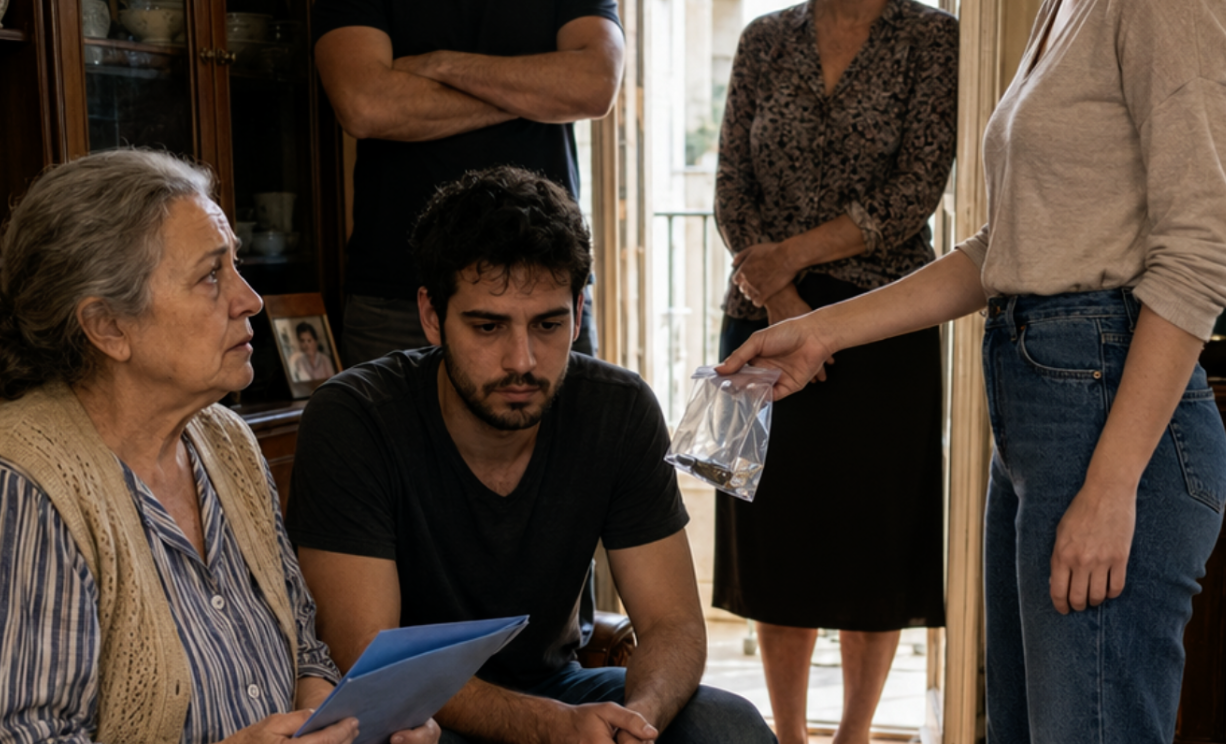
The banquet hall buzzed with lively conversations and the laughter of guests. Polina, in a snow-white dress, sat beside Boris, who could not stop smiling and accepting congratulations. The September evening had turned out warm, and the young couple’s wedding celebration was unfolding on a grand scale—with live music, dancing, and endless toasts.
At the main table sat their closest relatives. Polina’s parents, modest middle-aged people, were happy for their daughter and tried not to draw attention to themselves. Next to them sat Boris’s parents—Lyubov Vasilyevna and Fyodor Petrovich—who were clearly enjoying their role as the organizers of the celebration.
Lyubov Vasilyevna was an energetic, sociable woman, used to being the center of attention. She worked as an administrator at a clinic and knew how to impress people. Fyodor Petrovich, on the other hand, had a calm nature and preferred to remain in his wife’s shadow.
“Dear guests!” Lyubov Vasilyevna announced loudly, rising from her seat. “We have a special surprise for the newlyweds!”
The hall gradually fell silent. The guests turned their attention to the solemn figure of the mother-in-law, who was clearly preparing to make an important announcement. Polina and Boris exchanged curious glances.
“Fyodor Petrovich and I have decided to give our children a gift that will help them begin their family life!” Lyubov Vasilyevna continued, enjoying everyone’s attention.
Fyodor Petrovich nodded and stood beside his wife.
“We are giving the young couple a two-room apartment!” Boris’s father announced solemnly.
The hall exploded with applause. The guests began murmuring excitedly, expressing admiration for the parents’ generosity. Polina felt her heart beat faster—such a gift exceeded all expectations.
“Thank you!” Boris exclaimed, standing up and hugging his parents. “This is incredible!”
Polina also rose and thanked her mother-in-law and father-in-law. The young woman was moved to tears—having their own home seemed like a dream that had suddenly become reality.
Among the applauding guests was Inna Vasilyevna, Lyubov Vasilyevna’s sister. The woman looked somewhat tense and clapped without much enthusiasm. Inna Vasilyevna worked as a saleswoman in a grocery store, was raising three children, and lived with her husband in a cramped one-room apartment.
“What a magnificent gift!” one of the guests exclaimed. “The young couple is so lucky!”
“Lyubov Vasilyevna, you are simply golden!” another woman added.
Polina’s mother-in-law beamed under the praise and accepted the compliments with visible pleasure. Fyodor Petrovich also looked pleased, although he was not trying to be the center of attention.
The rest of the evening passed in an atmosphere of joy and gratitude. Guests kept coming up to the newlyweds, congratulating them on a successful marriage and envying the parents’ gift. Polina felt incredibly happy—marriage to the man she loved and their own apartment seemed like the perfect start to adult life.
Boris was in high spirits too. The young man worked as an engineer at a factory and earned a decent salary, but he would not have been able to save for a home in the next few years. His parents’ gift solved the housing problem and allowed them to plan their future without worrying about rented apartments.
“Polinochka, now we’re real homeowners!” Boris whispered to his wife during a dance. “We’ll be able to decorate our home exactly the way we like!”
“I can hardly believe it,” Polina replied. “Your parents are so kind!”
The celebration ended only toward morning. The tired but happy guests went home, and the newlyweds stayed overnight at Boris’s parents’ house. Polina fell asleep thinking about the future apartment, imagining how she would furnish it.
The next day, once the emotions had settled, the newlyweds decided to discuss practical matters with Boris’s parents. Polina and Boris came to his mother and father in the afternoon, after they had already rested from the celebration.
“Lyubov Vasilyevna, Fyodor Petrovich,” Boris began, “we’d like to know the details about the apartment. When can we move in? What needs to be done for the documents?”
Polina looked attentively at her husband’s parents, waiting for specific information. The young woman was already mentally planning furniture purchases and imagining how things would be arranged in the new home.
Lyubov Vasilyevna unexpectedly hesitated and looked away.
“Why are you in such a hurry?” the mother-in-law said. “First we need to think about furniture. We have an old sofa; we can give it to you. And the dining table will also become available.”
“Mom,” Boris said in surprise, “we’re not asking about furniture. We’re asking about the apartment. Where do we get the keys? What documents do we need to sign?”
Fyodor Petrovich also looked somewhat awkward and busied himself with a newspaper, avoiding eye contact with his son.
“And we also need to think about relatives,” Lyubov Vasilyevna continued. “Inna Vasilyevna said yesterday that her children are growing up. Maybe we should visit them this week?”
Polina frowned. The conversation was clearly drifting away from the main topic. The young woman did not understand why her mother-in-law was avoiding direct answers to simple questions.
“Lyubov Vasilyevna,” Polina said politely but firmly, “it is important for us to know when we can move into the apartment. We need to plan the move and buy the necessary things.”
“There will be time for everything, dear,” the mother-in-law brushed her off. “There’s no need to rush. Young people should first get used to each other, and only then think about having their own place.”
Boris exchanged a glance with his wife. His mother’s behavior seemed strange and inexplicable. The day before, Lyubov Vasilyevna had solemnly announced the gift, and now she was avoiding any concrete details.
“Mom,” Boris said carefully, “maybe there are some problems with the documents? Or is the apartment not ready to move into yet?”
“There are no problems,” Lyubov Vasilyevna quickly replied. “It simply takes time to process everything. These things aren’t done in one day.”
The young couple left Boris’s parents’ home confused. Polina was puzzled by her mother-in-law’s behavior and could not understand the reason for such secrecy.
“Boris, I think your mother is hiding something,” Polina said on the way home. “Yesterday she announced the gift, and today she doesn’t want to discuss the details.”
“Maybe there really are some document formalities,” Boris suggested. “Mom doesn’t like talking about problems until she solves them herself.”
Over the next few days, the young couple tried to get at least some specific information about the apartment from Lyubov Vasilyevna. Each time, the mother-in-law found a way to steer the conversation aside or claimed she was busy.
“Lyubov Vasilyevna,” Polina insisted during another visit, “we at least need to see the apartment. We need to understand what repairs and furnishings will be needed.”
“Oh, dear, I’m so tired from work today,” the mother-in-law replied. “Let’s talk about this another time. Better tell me how your parents are doing.”
This behavior was beginning to irritate even calm Boris. The young man could not understand why his mother was acting so strangely after the solemn announcement at the wedding.
A week later, the situation became clear in the most unexpected way. Boris happened to meet his mother’s neighbor, Valentina Fyodorovna, who was up to date on the family news.
“Boris, congratulations on your marriage!” the elderly woman said. “I heard your mother is giving you an apartment. Though Inna Vasilyevna says she needs it more with three children.”
The neighbor’s words struck Boris like lightning. The young man realized that something serious was happening involving Aunt Inna.
“Valentina Fyodorovna,” Boris asked carefully, “what exactly did Inna Vasilyevna say?”
“She thinks it’s too early for newlyweds to have their own place, while her children are suffering in a one-room apartment,” the neighbor explained. “I saw her having a long talk with your mother the other day. She was probably asking for help with housing.”
Boris thanked Valentina Fyodorovna and hurried home to Polina. The young man was beginning to understand the true reason behind his mother’s strange behavior.
“Polina,” Boris said as he entered the room, “I think I know what’s going on with the apartment.”
“What happened?” his wife asked anxiously.
“Aunt Inna is pressuring Mom to give the apartment to her instead of us. The neighbor told me that Aunt Inna thinks we’re too young to have our own place.”
Polina turned pale. The thought that the promised apartment might go to other people seemed absurd and painful.
“But your mother announced it at the wedding in front of all the guests!” Polina said indignantly. “How can she change her decision after such a public statement?”
“I know, it looks strange,” Boris agreed. “But Aunt Inna can be very persuasive. She has three children, and the family really does live in cramped conditions.”
Polina paced around the room, trying to make sense of the situation. The young woman felt a mixture of hurt, disappointment, and bewilderment.
“Boris, we need to talk to your mother directly,” Polina said decisively. “Let her explain what’s going on. We have the right to know the truth.”
“I agree,” Boris nodded. “Tomorrow we’ll go to my parents and demand an honest conversation.”
The young couple spent the evening in tense reflection. Polina imagined various ways the situation could develop, and most of them did not inspire optimism. Boris was also worried and angry at his mother for her lack of openness.
The next day, the spouses went to Boris’s parents with the firm intention of finding out the truth. Polina was nervous, but she was ready for a serious conversation.
Lyubov Vasilyevna met the young couple at home alone—Fyodor Petrovich had gone to work. The mother-in-law looked tense and avoided looking directly at her son and daughter-in-law.
“Mom,” Boris began firmly, “we need to talk about the apartment. And we need to speak honestly, without evasive answers.”
Lyubov Vasilyevna sighed and sank onto the sofa. The woman understood that it was no longer possible to hide the truth.
“Sit down, children,” the mother-in-law said quietly. “There really is something we need to discuss.”
Polina and Boris sat opposite Lyubov Vasilyevna, preparing to hear her explanation.
“You see,” the mother-in-law began, nervously twisting the edge of her sweater, “Inna Vasilyevna came to me the day after the wedding. She told me about her difficulties, about how cramped her family is in their one-room apartment.”
“And?” Boris asked tensely.
“My sister thinks it’s too early for newlyweds to have their own home,” Lyubov Vasilyevna continued. “She says you can live with me, and the apartment is needed more by a family with children.”
Polina felt indignation boil inside her. Inna Vasilyevna’s logic seemed absurd and selfish to the young woman.
“Lyubov Vasilyevna,” Polina said with restraint, “but you solemnly announced the gift to us. In front of all the guests. How can you change your mind?”
The mother-in-law hesitated and looked away. It was obvious that the woman felt uncomfortable about the situation.
“Inna Vasilyevna begged me very much,” Lyubov Vasilyevna weakly justified herself. “She has a large family, the children are growing. And you are young; you’ll still have time to save for housing.”
Boris flushed with indignation. The young man could not believe that his mother was seriously considering giving the promised apartment to his aunt.
“Mom, do you understand what you’re doing?” Boris said angrily. “We made plans; we counted on your promise! And now it turns out everything might change because of Aunt Inna’s request?”
Lyubov Vasilyevna looked increasingly embarrassed and unhappy. The woman clearly had not expected such a reaction from her son and daughter-in-law.
“You understand, children,” the mother-in-law tried to explain, “Inna Vasilyevna is desperate. Three children in a one-room apartment, and the youngest is only five. And you are young and strong; you can arrange everything yourselves.”
“Mom,” Boris said firmly, “you made us a promise in front of all the guests. You publicly announced the gift. And now you want to take back your words?”
Polina listened to the conversation and felt her indignation growing. Her mother-in-law’s logic seemed absurd—why should Inna Vasilyevna’s problems be solved at the expense of the young family?
“Lyubov Vasilyevna,” Polina said evenly, “if you had doubts about the decision, why announce the gift at the wedding? You could have thought everything through first.”
The mother-in-law fidgeted on the sofa and began tugging at the edge of the tablecloth. It was obvious that the conversation made her deeply uncomfortable.
“Inna Vasilyevna is insisting very strongly,” Lyubov Vasilyevna weakly justified herself. “She says a family with children has priority. And you can live with me or rent a place.”
Boris stood up from the sofa and began pacing the room. The young man was agitated and trying to restrain his emotions.
“Mom, do you hear what you’re saying?” Boris said angrily. “We just got married, we’re making plans, and you’re suggesting we rent an apartment instead of the promised gift?”
The conversation continued for another half hour, but they could not reach an agreement. Lyubov Vasilyevna referred to pressure from her sister and family circumstances, while the young couple demanded that the promise be kept. In the end, the sides parted without reaching any agreement.
A week passed in tense expectation. Polina and Boris tried several times to contact the mother-in-law, but she avoided serious conversations. The young couple understood that Lyubov Vasilyevna was making her final decision under pressure from Inna Vasilyevna.
On Saturday evening, Lyubov Vasilyevna called Boris and asked him to come with his wife for an important conversation. The mother-in-law’s voice sounded formal and cold, which did not bode well.
The young couple arrived at Boris’s parents’ home at the appointed time. Fyodor Petrovich met his son and daughter-in-law in the hallway, but he looked embarrassed and awkward.
“Dad, what’s going on?” Boris asked.
“Your mother wants to talk to you,” his father replied evasively. “She’s waiting in the living room.”
Lyubov Vasilyevna sat at the table with a serious expression on her face. The woman looked collected and determined, as though she had prepared herself for an unpleasant but necessary conversation.
“Sit down,” the mother-in-law said coldly, pointing to the chairs across from her.
Polina and Boris sat at the table, waiting for an explanation. The atmosphere in the room was tense and formal.
“I’ve decided to give the apartment to Inna Vasilyevna,” Lyubov Vasilyevna declared without preamble. “She has a big family. She needs it more.”
Polina froze, trying to process what she had heard. Her mother-in-law’s words sounded like a sentence, destroying all the plans and hopes of the young family.
Boris turned red with shame for his mother. The young man could not believe that the woman who had raised him was capable of such public humiliation of her own son.
“Mom, do you understand what you’re doing?” Boris said quietly. “You’re renouncing a promise you made publicly for the sake of Aunt Inna’s whim?”
“It’s not a whim,” Lyubov Vasilyevna objected. “It’s justice. A family with three children needs housing more than young people do.”
Polina finally found her voice. The young woman felt a mixture of hurt, humiliation, and outrage.
“Lyubov Vasilyevna,” Polina said with restraint, “show us the documents for the apartment gift. After all, you solemnly announced the gift in front of all the guests.”
The mother-in-law looked away and hesitated. It was obvious that the question about documents had caught her off guard.
“What documents?” Lyubov Vasilyevna asked uncertainly.
“The deed of gift,” Polina insisted. “The official papers confirming the transfer of the apartment to us. Or at least a preliminary agreement.”
The silence dragged on. Lyubov Vasilyevna tugged at the edge of her sweater and avoided the young couple’s gaze. Fyodor Petrovich stood in the doorway and also looked extremely uncomfortable.
“There are no documents,” the mother-in-law finally admitted. “It was a gesture for the public. I wanted to make a beautiful announcement at the wedding.”
A chill ran down Polina’s spine. It turned out that the solemn promise had been nothing more than a theatrical performance designed to make an impression.
“A gesture for the public?” Polina repeated. “You made us a laughingstock in front of all the guests!”
Boris rose from his chair. The young man’s face burned with shame and indignation. The son could not forgive his mother for such humiliation.
“Mom,” Boris said, trying to control his voice, “games like this humiliate me and my wife. You turned our wedding into a performance.”
“Son, don’t shout,” Lyubov Vasilyevna tried to calm him. “I understand that you’re upset, but Inna Vasilyevna really does need help more than you do.”
“Enough!” Boris sharply interrupted his mother. “This conversation is over. I don’t want to hear any more excuses or explanations.”
The young man turned and headed for the exit. Polina followed her husband without saying goodbye to her mother-in-law. The spouses left Boris’s parents’ house in complete silence.
On the way home, Boris did not say a word. The young man was shaken by his mother’s behavior and did not know how to react to what had happened. Polina was silent too, living through humiliation and disappointment.
At home, Boris finally spoke.
“Polina, forgive me for my mother. I never thought she was capable of this.”
“Boris, it isn’t your fault,” his wife replied. “But now we know what your mother is capable of for the sake of relatives.”
That same evening, Boris made a drastic decision. The young man declared a boycott of his mother—he stopped visiting his parents and stopped answering phone calls. Lyubov Vasilyevna tried to contact her son, but he ignored all attempts at communication.
Fyodor Petrovich called Boris several times, trying to settle the conflict, but his son was unyielding. The young man considered his mother’s behavior unacceptable and had no intention of forgiving the public humiliation.
“Dad,” Boris said during one of their conversations, “there will be no communication until Mom apologizes to Polina for her behavior.”
“Son, but she’s family,” his father tried to persuade him.
“Family doesn’t humiliate loved ones for the sake of outsiders,” Boris replied.
The young couple continued living in Polina’s room in a communal apartment, which her parents had left to her. The space was small but cozy. Boris helped his wife arrange it and, for the first time in a long while, felt at home.
“Polina,” Boris said one evening, “this is our real home. And only you matter to me.”
The young woman was touched by her husband’s words. Polina understood that the break with his mother was not easy for Boris, but she valued his support and loyalty.
“We’ll manage on our own,” Polina replied. “Without help from people who don’t keep their word.”
Rumors of the family scandal quickly spread among all the relatives. The wedding guests learned that Lyubov Vasilyevna’s solemn promise had turned out to be a deception. Many relatives condemned the mother-in-law’s behavior and sympathized with the young couple.
Inna Vasilyevna received the apartment she wanted, but her joy was darkened by public condemnation. Relatives reproached the woman for destroying her nephew’s relationship with his mother for her own benefit.
“Inna, why did you let it turn into such a scandal?” the aunts said. “Boris doesn’t speak to his mother now. The family is broken.”
Lyubov Vasilyevna herself also faced condemnation from those around her. Her colleagues at work and acquaintances learned what had happened and disapproved of the woman’s behavior.
“Lyubov Vasilyevna, how could you deceive the newlyweds at their own wedding?” the neighbors asked.
The mother-in-law tried to justify herself by referring to family circumstances and Inna Vasilyevna’s needs, but her explanations sounded unconvincing. Most people considered Lyubov Vasilyevna’s behavior unacceptable.
A month later, Fyodor Petrovich tried once again to reconcile his son with his mother. The father came to Boris’s workplace and asked for a meeting.
“Son, your mother is suffering,” Fyodor Petrovich said. “She understands that she acted wrongly. Maybe you can forgive her?”
“Dad,” Boris replied, “until Mom apologizes to Polina publicly, just as she publicly humiliated us, there will be no conversation.”
“But she’s a proud woman. She can’t admit her mistake openly,” his father tried to explain.
“Then let her live with her pride,” Boris answered harshly.
The father understood that his son would not change his decision and stopped trying to reconcile them.
Inna Vasilyevna also felt the consequences of her actions. The woman got the apartment she wanted, but lost the respect of her relatives. Inna Vasilyevna’s children heard gossip at school about how their mother had destroyed their Uncle Boris’s family.
“Mom,” Inna Vasilyevna’s eldest son said, “at school they say we took the apartment away from Uncle Boris.”
“Don’t listen to nonsense,” his mother replied, though she herself understood the fairness of the accusations.
Gradually, Inna Vasilyevna realized that her victory had turned out to be Pyrrhic. The apartment had been obtained at the cost of destroyed family relationships and a lost reputation.
Lyubov Vasilyevna found herself isolated. Her son did not speak to her, relatives condemned her behavior, and her sister Inna was busy settling into the new apartment. The mother-in-law realized that she had lost far more than she had gained.
Boris and Polina, on the contrary, only grew stronger. The shared experience of humiliation and betrayal brought the young family closer together. The spouses learned to rely only on each other and not to expect help from people who did not know how to keep their word.
“You know,” Boris said to his wife three months after the scandal, “maybe it was all for the best. Now we know the price of pretty promises, and we rely only on ourselves.”
“I agree,” Polina replied. “It’s better to live in a small room with an honest person than in a big apartment with those who don’t keep their word.”
The young couple began saving money for their own home. Boris took on extra work, and Polina found evening part-time work. The spouses understood that the path to their own apartment would be long, but they walked it with their heads held high.
Six months later, Lyubov Vasilyevna met Polina on the street. The mother-in-law looked older and tired. The woman tried to speak to her daughter-in-law, but Polina greeted her politely yet coldly and walked past.
Boris no longer met with his mother and no longer took an interest in her life. The young man had chosen his wife and his own dignity. Boris and Polina’s family developed without the involvement of relatives, having learned to value honesty and loyalty above material benefits.
“The dacha is only ours today! Get out with your freeloaders!” the mother-in-law shouted, waving her arms.
In the middle of the yard, at a table covered with an oilcloth tablecloth, sat three women. Valentina, the mother-in-law, reigned at the head of the table, with two neighbors seated on either side of her—Oksana recognized them as Raisa Fyodorovna and Tamara Ivanovna from the neighboring plots. On the table stood bottles, sliced appetizers, and pickles. Judging by their flushed faces and loud voices, the group had already had quite a lot to drink.
Valentina was the first to notice the newcomers. She jumped up from her chair so abruptly that it toppled over. Her face twisted with anger. Read the full story…
“You have money for a car for your mommy, but not for me?!” the husband shouted, sitting there without a penny.