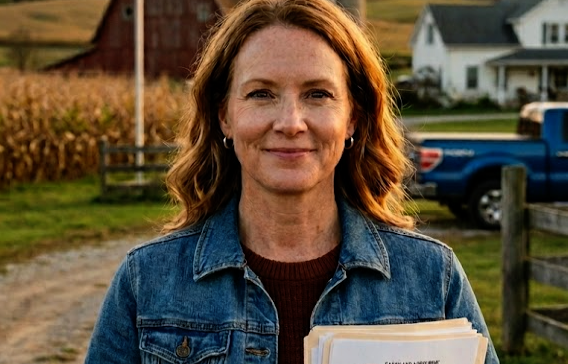
The first time I heard the word “sold,” I was standing in the middle of our family farm with dust on my boots and a wind pushing through the corn that felt like a warning. My dad didn’t ease into it. He said it like he was reading the weather.
“We sold the farm,” he announced, loud enough for the hired hands near the equipment shed to hear. “To a developer. It’s done.”
My mom stood beside him, chin lifted, wearing the same satisfied smile she used when she corrected me in front of the company. Behind them stood Evan Mercer, a man from Cedar Ridge Development who looked at my family’s land like it was just a line item on an agenda.
“You sold it when Grandpa’s estate still isn’t settled?” I asked, my voice steady despite the hammer of my heart.
My dad’s eyes narrowed. “Your grandfather is gone. This land was always ours to handle, and you should be grateful we’re even telling you.” He shoved a stack of papers at my chest. “Sign. And stop acting entitled.”
My mom leaned in, her voice sweet and sharp. “You don’t own anything here,” she whispered. It was meant to sink into the soil. But I remembered Grandpa Walter’s words from the summer I came back from college: “Someday, Natalie, you’ll need proof. People act differently when land becomes money.”
I didn’t sign. Instead, I drove to the one place where truth is recorded in ink: the Hawthorne County Clerk and Recorder’s Office.
The office smelled of toner and old paper—the scent of bureaucracy and, hopefully, justice. I approached the counter and requested the deed history for the Rowan farm and the probate file for my grandfather.
The clerk, Mara Ellison, typed into her system, then paused. The clacking of the keyboard stopped. She leaned closer to her monitor, her expression tightening.
“What is your relationship to Walter Rowan?” she asked quietly.
“Granddaughter,” I replied.
She stood up and retrieved a thin folder. “The parcel shows a transfer recorded yesterday,” she said. “But there is no active probate case filed for Walter Rowan in this county.”
My stomach went cold. If there was no probate, there was no legal authority to sell. Mara clicked through a scanned packet labeled “Will” that had been deposited years ago for safekeeping but never officially filed. Her face changed. She leaned in and whispered, “This was never filed… and it changes who owns the farm.” Mara opened an internal log to see if the packet had been accessed recently. “It was viewed yesterday morning,” she said. “By a Gail Rowan.”
The realization hit me like a physical blow. My mother hadn’t just made a mistake; she had looked at the will, seen what it said, and then signed an Affidavit of Heirship claiming Grandpa died intestate (without a will) so they could bypass me and sell to the developer.
I requested certified copies of everything:
The Deposited Will.
The Affidavit of Heirship (the lie).
The Access Log (the proof they knew).
I called my attorney, Tessa Marlo. Her response was crisp: “We file for emergency probate today. We’re going to cloud that title so fast the developer won’t be able to touch a blade of grass.”
As we prepared the filing, the probate clerk found a second page in the deposited packet that hadn’t been scanned with the first set: a handwritten codicil. Grandpa Walter had been even more strategic than I realized.
“If Dennis or Gail Rowan attempt to sell, transfer, or encumber the farm in any manner, they are immediately disinherited. The farm shall pass solely to Natalie Rowan as trustee.”
He had predicted their greed and built a trap for it. By attempting to sell the land, my parents had effectively triggered their own removal from the family legacy.
The Emergency Hearing
We joined a video hearing with a duty judge that evening. Tessa laid out the evidence with the precision of a surgeon. She showed the judge the will, the codicil, and—most importantly—the receipt showing my mother had paid for a copy of that very will just hours before claiming it didn’t exist.
The judge’s face was a mask of cold professionalism. “I am granting a Temporary Restraining Order (TRO),” he declared. “No entry by the developer, no survey activity, and no alteration of the property. Furthermore, I am directing the clerk to forward the affidavit and the access receipt to the District Attorney for review. Filing a false instrument is a serious matter.”
The next morning, I arrived at the farm to find a survey crew and a sheriff’s deputy. My father stood at the gate, smug and triumphant.
“The survey crew is here,” he barked at the deputy. “Tell her to leave.”
Deputy Landry, who I had spoken to the night before, didn’t look at me. He looked at my father. “Sir, I received a court order this morning. A Restraining Order.”
He read the terms aloud: no entry, no disturbance. The survey crew immediately began packing their gear, wanting no part of a felony contempt charge.
My father’s face turned a violent shade of red. In a fit of blind rage, he grabbed one of the survey stakes and yanked it out of the ground, hurling it into the ditch.
“Sir, stop!” Deputy Landry commanded. My father didn’t stop. He grabbed another.
The sound of the handcuffs clicking into place was the most honest thing I’d heard on that farm in years. My mother watched in stunned silence as the deputy guided my father toward the patrol SUV.
“You use the sheriff as a prop,” I told her calmly as she stood by the gate. “But the law isn’t a prop. It’s a record.”
The legal fallout was swift and total.
The Developer: Cedar Ridge withdrew immediately, citing fraud by the sellers.
Criminal Charges: The District Attorney filed charges for perjury and filing a false instrument.
The Estate: The “Quiet Title” action was successful. The fraudulent transfer was erased, and I was confirmed as the sole owner and executor.
My parents were banned from the property by court order. The farm, once a source of bitter contention, became a sanctuary again. The corn still moves with the wind, and the porch still creaks in the same spots, but the soil finally feels solid beneath my boots.
Grandpa was right. People act differently when land becomes money. But they act even more differently when they realize that the truth, once recorded, cannot be unwritten.