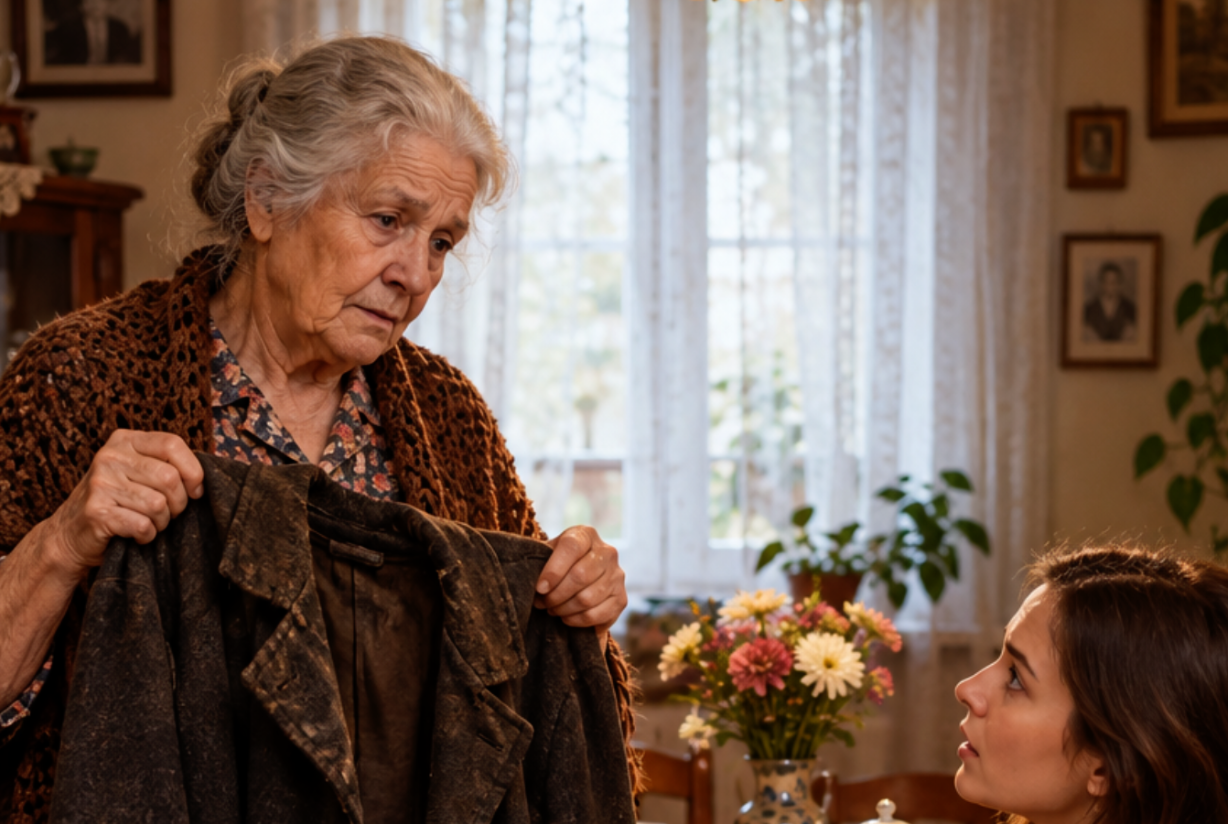
“Why did you put that cheap mayo in the Olivier salad? I told you to buy ‘Provencal’—it’s richer, more flavorful. This one is just water and starch, you’ve wasted good ingredients.”
Irina froze with the spoon in her hand, feeling a dull irritation begin to boil deep in her solar plexus. She let out a slow breath, determined not to snap, and looked at her mother-in-law. Tamara Igorevna stood in the middle of the kitchen, hands on her hips, inspecting the salad bowl as if she were a health inspector at a train station cafeteria. She wore her festive dress with lurex, something she saved for only the grandest occasions, and her face was set in an expression of mournful importance.
Today wasn’t just any celebration. Today was Irina’s thirtieth birthday—her big milestone. She dreamed of spending the day in a restaurant, with music and dancing, dressed in a beautiful evening gown, not in an apron over a hot stove. But a month ago, their car broke down, the repairs cost a fortune, and her husband Sergey decided, after a family discussion: they’d celebrate at home. “Ira, you’re such a wonderful homemaker, your spread will be better than any restaurant,” Sergey had said sweetly, kissing her on the head. With a heavy heart, Irina agreed.
“Tamara Igorevna, the mayo’s fine, it’s the same brand as always,” Irina replied, keeping her cool as she continued mixing the chopped veggies. “They just changed the packaging. Maybe you could help finish the caviar sandwiches? The guests will be here in an hour.”
“I bet you bought that caviar on sale, too?” her mother-in-law wouldn’t let up, grabbing the jar and examining it. “Just as I thought. The eggs are small and squished. Oh, Ira, you really are cutting corners for the guests. That’s not how things should be. Back in my day, a jubilee meant a feast of delicacies, not these substitutes.”
Sergey poked his head into the kitchen. He was already dressed up—in a white shirt and neatly pressed pants, smelling of cologne.
“Ladies, are you two fighting in here?” he asked cheerfully, grabbing a slice of sausage from the plate. “The smells in here are making my mouth water! Mom, why so serious? Let’s keep it cheerful for Ira’s special day, okay? No critiques.”
“I’m not criticizing, I’m just passing down my wisdom,” Tamara Igorevna pursed her lips. “Who else will tell her the truth if not me? Her mother lives far away, in another city, so it’s up to me to fill in. Alright, where’s your bread, let me help spread the caviar.”
Irina turned away to the stove to hide the tearful sting of hurt in her eyes. ‘Passing down her wisdom,’ she thought. After five years of marriage, she’d had all the wisdom she could handle. Tamara Igorevna was old school, frugal to a fault, and absolutely convinced that only her opinion mattered. She saved milk bags, washed disposable dishes, and claimed her daughter-in-law wasted her son’s money on frivolities like manicures or good shoes.
Preparations for the party were in full swing. The apartment was filled with the smells of roasted chicken, garlic, and fresh pastries. Irina rushed between the kitchen and the living room, setting the table. She wanted everything to be perfect. She brought out her best china, starched the napkins, and arranged the glasses just so. Even though she was tired and her mother-in-law’s nitpicking got on her nerves, Irina still hoped for a lovely evening. After all, turning thirty is a pretty big milestone.
My mother-in-law gave me some of her old things for my birthday, and I couldn’t hide my disappointment.
By five o’clock, the guests started to arrive. Friends came with their husbands, coworkers were there, along with Sergei’s cousin and his wife. The apartment buzzed with voices, laughter, the clinking of glasses, and the rustle of wrapping paper. Irina received flowers, envelopes with money, and gift cards to cosmetics stores. It was a warm, heartfelt atmosphere.
Tamara Igorevna sat at the head of the table, like a queen mother, keeping a sharp eye on how much everyone was eating and drinking. Every now and then she made her comments: “The pickles are too salty,” “You should grate an apple into the herring under a fur coat, but there’s none here,” “The wine is sour, my homemade liqueur is a hundred times better.” The guests nodded politely and went on enjoying themselves, doing their best to ignore the elderly lady’s grumbling.
When it was time for toasts, Sergei stood up, raised his glass, and gave a touching speech about what a wonderful wife, hostess, and friend Irina was. Irina was moved; in that moment all her fatigue vanished. She looked at her husband and thought that maybe, just maybe, all her efforts were worth it.
“And now,” Tamara Igorevna announced, rising from her seat and tapping her glass with a fork to demand silence. “Now it’s my turn to congratulate the birthday girl. Sergei, bring my present, it’s in the hallway, in the big bag.”
Sergei hurried to the entryway and returned with a huge, bulky bag tied with a bright ribbon. The bag was heavy and rustled as he carried it. All eyes were on the scene, and even Irina tensed up. Her relationship with her mother-in-law had always been a bit strained, but Tamara Igorevna always emphasized the importance of tradition and propriety. Last year, she had given a simple but useful set of towels. What could be in the bag this time? Maybe a blanket? Or a kitchen mixer, since Irina had mentioned wanting one?
Her mother-in-law took the bag from her son, placed it on a free chair next to Irina, and announced ceremoniously:
“Irina, thirty is the age when a woman truly blossoms, but she must also start thinking seriously. Enough with your short skirts and those ripped jeans. You’re a wife, soon to be a mother. I thought long and hard about what to give you. Money is like water—you spend it and forget about it. Appliances break. But things… Things made with care last for generations. I decided to give you my most treasured belongings—my dowry, my dresses that I’ve kept my whole life. You could even call it a family heirloom. Wear them in good health and remember your mother-in-law fondly.”
With these words, she made a sweeping gesture, untied the ribbon, and dumped the contents of the bag right onto Irina’s lap—and partly onto the floor.
The room was plunged into a ringing silence. Even the music seemed to fade. Irina stared in shock at the pile of rags that had been dumped on her. A sharp, unmistakable smell of mothballs, dampness, and old dust hit her nose, instantly overpowering the scents of perfume and roasted chicken.
On Irina’s lap lay a drab, brownish-gray wool coat with a huge, worn faux fur collar, moth-eaten in places. Beside it was a stack of crimplene dresses—a synthetic fabric popular in the seventies—in wildly clashing colors: eye-searing green, dirty orange, and giant polka dots. On top were several blouses with ruffled jabots, yellowed with age, and a wool plaid skirt so thick and scratchy-looking, it made you itch just to look at it.
Irina slowly picked up one of the blouses. There was a clear yellow stain under the arm, unfaded after decades of storage. The buttons barely hung on by a thread.
“Tamara Igorevna…” Irina’s voice trembled, but she forced herself to speak loudly enough for everyone to hear. “What is this?”
“What do you mean, what is it?” her mother-in-law replied, genuinely surprised and beaming with her own generosity. “These are my outfits! I bought this coat in ’82 at the Moscow department store—I stood in line for five hours! It’s everlasting, you know, indestructible. Just needs a little cleaning and the buttons replaced—you’ll look amazing. And these dresses? They’re imported, Yugoslavia! You can’t find this quality these days, it’s all cheap Chinese synthetics now, but this is breathable material. I used to wear these dancing—I even charmed Sergey’s father in them. Now it’s your turn to show off.”
The guests started glancing at each other. Irina’s friend Sveta covered her mouth, either to stifle laughter or a gasp of horror. Sergey’s brother Nikolai stared down into his plate, blushing to the roots of his hair. Only Sergey stood next to his mother, smiling awkwardly, clearly not sure how to react.
“Mom, wow… retro style, huh?” he tried to ease the situation. “Vintage is totally in fashion now…”
Irina felt her face flush. This wasn’t just disappointment. It was humiliation. Public, calculated humiliation. Her mother-in-law had dragged a bag of old, stinking junk to her birthday party—stuff she probably just wanted to clear out of her closets—and presented it like some grand gift, demanding gratitude.
She got up, brushing off the heavy coat. It fell to the floor with a dull thud, sending up a small cloud of dust.
“Vintage, Sergey, means things with artistic value,” Irina said in an icy tone. “This is rags. Old, dirty rags that reek of mothballs and someone else’s sweat.”
“Ira!” gasped Tamara Igorevna, clutching her chest. “How can you say that? I gave from the heart! I saved and kept these all these years! It’s memory! How dare you call my things rags?”
“Tamara Igorevna,” Irina looked her straight in the eye. “Do you see this stain on the blouse? Do you see the moth-eaten fur on the coat? Do you really think, on my thirtieth birthday, I deserve to wear hand-me-downs from forty years ago? Do you honestly believe I’ll wear any of this?”
“You’ve just become spoiled!” my mother-in-law shrieked, her tone instantly flipping from grand to downright shrill. “Look at her, acting like a queen! She spotted a little stain! Is it so hard to wash it by hand? I’ve done nothing but care about her, wanted her to look like a proper woman instead of someone loose, and this is how she treats me! Sergey, are you listening to how she talks to her mother-in-law?”
Sergey rushed between the two women.
“Ira, Mom, please, that’s enough! Irina, Mom really meant well, she’s just from a different time—she values things. Mom, you could have at least asked…”
“Asked?!” Tamara Igorevna exploded. “If I should even give her a coat that could cost three months’ salary to buy new? Ungrateful! That’s it, I’m packing up everything and leaving! I won’t set foot in this house again!”
“That would be the best gift,” Irina said quietly but clearly.
The room fell so silent you could hear the clock ticking on the wall.
“What did you say?” whispered the mother-in-law, turning pale.
“I said I won’t let you turn my special day into chaos,” Irina replied firmly. “Take your things, Tamara Igorevna. I don’t need them. Not now, not ever. I have self-respect.”
Her mother-in-law was breathless with outrage. She snatched up a bag and started furiously stuffing in the scattered clothes. The coat wouldn’t fit, and she shoved it in with such force she chipped her nails.
“Let’s go, Sergey!” she ordered her son. “Take me out of here! I’m not staying another minute! And if you’re really my son, you need to leave with me right now!”
Sergey looked helplessly from his wife to his mother.
“Mom, where am I supposed to go? It’s Ira’s birthday, we’ve got guests… I’ll order you a taxi.”
“Oh, I see! Traitor! Mama’s boy! You’ve chosen this rude girl over your own mother!”
Tamara Igorevna grabbed her bag, thrust her chin up with pride, and swept out of the room. The door slammed in the hallway.
The remaining guests sat frozen, afraid to move. The celebration was ruined beyond repair. The smell of mothballs still hung in the air, mingling with the aftermath of the argument.
“Well… let’s raise a glass to the birthday girl,” someone suggested uncertainly.
They tried to revive the evening, but it just didn’t work. Conversation wouldn’t flow, and everyone kept glancing at Irina, who sat stiffly with red blotches on her cheeks. After an hour, guests began to leave, mumbling their apologies.
Once the last couple left, Irina started clearing the table. She was silent, sweeping up the plates with sharp movements. Sergey sat on the couch, head in his hands.
“Ira, why were you so harsh?” he finally asked. “You could have just quietly tossed it out or taken it to the dacha later. Why make a scene in front of the guests? Mom is going to have high blood pressure now.”
Irina set a stack of plates on the table so loudly they clinked together mournfully.
“Sergey, don’t you see the difference?” she asked, looking straight at her husband. “If she’d given me that in private, maybe I’d have just let it go. But she did it in front of everyone. She wanted to show that I don’t matter, that I should be happy with castoffs. That’s not caring, Sergey—that’s about flaunting her superiority and disrespect.”
“She just doesn’t understand! She thinks differently! They lived through shortages!”
“Everyone lived with shortages, Seryozha. My mom did too. But she bought me a gold pendant that she saved up for over six months. Your mom, who actually has money in the bank by the way, brought me dirty, smelly rags. And you just stood there, silent. You didn’t even try to defend me. Were you really okay with your wife being dressed like a scarecrow?”
“I just didn’t want any arguments…”
“Well, I don’t want to live feeling humiliated. You know what’s the worst part? You didn’t even notice the stain on that blouse. To you, it’s ‘vintage.’ To me, it’s a slap in the face.”
She went into the bedroom and shut the door. Sergey stayed in the kitchen surrounded by dirty dishes and leftover food. He sat for a long while, staring at the empty chair where that cursed bag had been. For the first time in years, he tried to see the situation not through the eyes of a loving son, but as an outsider. He remembered the horrified face of Sveta, his wife’s friend. He remembered the way Irina held that blouse with disgust. And he felt ashamed. Burning, unbearable shame.
In the morning, Irina got up early. She didn’t speak to her husband. She got ready in silence and had some coffee. In the hallway, she noticed her mother-in-law’s forgotten scarf—also old, made from scratchy wool.
“I’m going to your mom’s,” she told Sergey as he came out of the bedroom.
“Why? To apologize?” he asked hopefully.
“No. I’m taking her scarf back. And I’m going to set the record straight. I don’t want any more unspoken things between us.”
“I’m coming with you,” Sergey said firmly.
“No need. This is my conversation.”
Irina arrived at her mother-in-law’s house an hour later. Tamara Igorevna didn’t open the door right away. She looked miserable: a towel wrapped around her head, the smell of valerian in the air.
“Came to finish me off?” she asked weakly. “Come in, and see what your mother has turned into.”
Irina entered the kitchen and put the scarf on the table.
“Tamara Igorevna, let’s drop the theatrics,” she said calmly. “I’m here to tell you one thing. I respect your age and I respect that you are my husband’s mother. But I demand respect for myself.”
“Respect? Yesterday you humiliated me in front of everyone!”
“No, you humiliated both yourself and me. You know very well the things you brought aren’t fit to be worn. They’re trash. And giving trash as a birthday gift is an insult.”
“How dare you…”
“Listen to me,” Irina raised her voice, cutting her off. “I don’t need your hand-me-downs. Sergey and I make our own money and provide for ourselves. If you want to give a gift, ask what we need. If you don’t want to spend money, just bring flowers and some kind words. But never, and I mean never again, try to dump your junk on me in the name of caring. I am not a garbage bin. I am your son’s beloved wife. And if you want us to visit you—and if you want to see grandchildren in the future—you’ll have to respect that.”
Her mother-in-law sat there, mouth open. She was used to her daughter-in-law keeping quiet, tolerating and agreeing with everything. This rebellion was a shock.
“And what if I don’t want to?” she asked, squinting spitefully.
“Then we’ll only talk on holidays and over the phone. It’s your choice.”
Irina turned around and headed for the door. At the doorway, she paused.
— And one more thing, Tamara Igorevna. Everyone really loved the Olivier salad. Even with that mayonnaise. Because it was made with love, not bitterness.
She stepped out of the building and took a breath of fresh morning air. She felt light. For the first time in five years, she didn’t feel like a victim.
That evening, Sergey came home from work carrying a huge bouquet of roses.
— My mom called, he said, avoiding her eyes.
— And what did she say?
— She said you… have a strong character. And that she got carried away. Basically, she asked me to tell you that she’ll take the coat to the consignment shop, since you’re so proud.
Irina burst out laughing. It was a victory. A small one, but an important one.
— Let her take it. Maybe someone else really does need it. And you and I are going out to a restaurant this weekend. I still want to celebrate my birthday — for real. In a beautiful dress, which I’ll buy myself.
— Let’s do it, Sergey smiled, hugging her. — And no talk about saving money. You deserve this.
From then on, their family settled into a new rhythm. Tamara Igorevna didn’t suddenly become an angel — she still grumbled and gave advice, but she did it more carefully. And now she only gave gifts as envelopes of cash, lamenting that young people these days have such strange tastes. Irina didn’t mind at all. The main thing was that her closet no longer had space for someone else’s mothball-scented past.