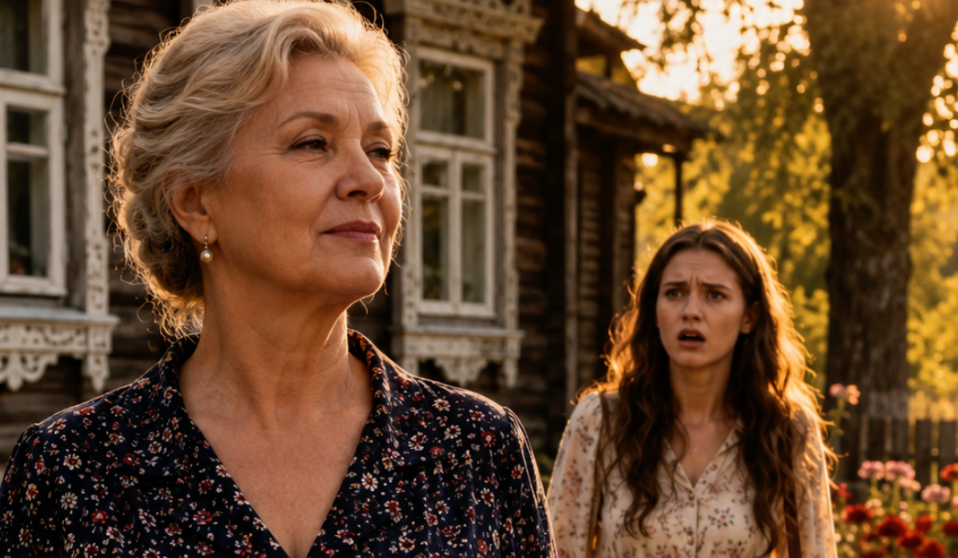
“Your Husband Signed the Country House Over to Me, So Pack Your Things and Get Out,” My Mother-in-Law Sneered
“Dig up that garbage right now, Denis!” my mother-in-law shouted from the fence, pointing at my flower beds. “Because of this nonsense, we won’t have any room for potatoes!”
I froze on the garden path with pruning shears in my hand.
I had been married to Denis for six years, and during all that time, Tamara Petrovna had treated our country house as if she were its queen and I were merely a guest. Denis had owned the property before our marriage, but I had spent years improving it with my own money and effort.
That spring, I finally created the flower garden I had dreamed about. I spent forty-eight thousand rubles on fifteen rare hydrangea bushes, saving for three months. I planted them myself over several exhausting weekends.
Then my mother-in-law arrived with a rusty shovel.
“Mom, maybe leave them,” Denis muttered weakly. “Alina worked hard.”
“Be quiet, Deniska,” she snapped. “Flowers won’t feed anyone. We need potatoes.”
Before I could stop her, she drove the shovel into my largest hydrangea.
The stems cracked.
Within minutes, she had ripped three bushes from the ground.
I stared at Denis.
“Tell your mother to stop.”
He lowered his eyes and twisted his wedding ring.
“Alina, Mom just wants what’s best. Potatoes are more useful.”
Something inside me snapped.
Without arguing, I brought out a wheelbarrow, carefully placed my damaged hydrangeas inside, then walked to the porch where Tamara Petrovna had left two twenty-five-kilogram bags of seed potatoes.
I emptied both bags into the wheelbarrow.
“What are you doing?” she screamed. “Those are expensive potatoes!”
“And my hydrangeas cost forty-eight thousand,” I replied.
I rolled the wheelbarrow to the gate and dumped all fifty kilograms of potatoes into a muddy roadside ditch.
My mother-in-law nearly collapsed.
“Denis! She’s insane!”
But I had already turned away.
That evening, I replanted the surviving flowers.
For the first time in years, I felt that I had defended something that belonged to me.
Unfortunately, Tamara Petrovna was only getting started.
A month later, I returned from a three-day work trip and found her standing proudly inside our new gazebo.
In her hand was a paintbrush dripping dark-brown enamel.
Earlier that summer, I had bought a beautiful solid-larch table and six chairs for eighty-six thousand rubles. I had saved for four months. The pale wood had been smooth, elegant, and protected only with transparent oil.
Now every piece was covered in thick brown floor paint.
“I saved your furniture!” Tamara Petrovna announced. “Now it won’t rot.”
I stared at Denis.
He avoided my eyes.
“Mom worked all day,” he said. “And brown is practical.”
I felt physically sick.
“Denis. Go inside.”
Then I called a sanding crew I had used before.
When the workers arrived, Tamara Petrovna tried to stop them, but I told them to remove every trace of paint.
Three hours later, the furniture was restored.
The bill was twelve thousand rubles.
I photographed the receipt and sent it to my mother-in-law.
“You damaged my property,” I told her. “You can pay for the restoration.”
She left screaming that Denis would “put me in my place.”
He never did.
Instead, he blamed me.
“She’s a pensioner, Alina. Why make her pay twelve thousand?”
“Because she destroyed something worth eighty-six thousand.”
After that, the atmosphere between us became colder.
Then came my thirty-fifth birthday.
I invited twelve friends and colleagues to celebrate at the country house. I spent an entire day cooking: roasted duck, appetizers, salads, and a two-tier cake with fresh berries.
Tamara Petrovna was not invited.
She came anyway.
“I’m here to help,” she announced, pushing past me with a shopping trolley.
Within an hour, she had seated herself at the head of the table and started criticizing everything.
“This salad is dry.”
“This duck is strange.”
“What is this ridiculous restaurant food?”
My guests stared at their plates.
Denis said nothing.
Then his mother laughed and announced loudly:
“And anyway, girls, Alina is only temporary here. This country house belongs to Denis. She’s nobody. If he wants, she can be thrown out tomorrow with one suitcase.”
Silence fell over the table.
I looked at my husband.
He continued twisting his wedding ring.
He did not defend me.
Slowly, I stood up and took my mother-in-law’s plate.
“What are you doing?” she asked.
“You’re right,” I said calmly. “My cooking is apparently terrible, so I won’t force you to eat it.”
I carried the plate outside and emptied the roasted duck and potatoes into our neighbor’s dog bowl.
“Enjoy it, Polkan,” I said. “At least you know how to appreciate food.”
When I returned, I placed the empty plate in front of Tamara Petrovna.
“Now please leave my birthday.”
She exploded.
“Denis! She’s throwing your mother out like a dog!”
Finally, Denis looked at me.
“Alina, you’re going too far. Mom only expressed her opinion. Apologize.”
For the first time in six years, I looked at my husband and felt nothing but disgust.
“No. Either your mother leaves, or my guests and I leave and continue the celebration somewhere else.”
Denis hesitated.
Then, quietly, he asked his mother to go home.
She left cursing me and promising that we would soon divorce.
A month later, I discovered why she had been so confident.
One Saturday morning, Tamara Petrovna arrived smiling and threw a document onto the kitchen table.
“Your husband signed the country house over to me a long time ago,” she said. “So pack your things and get out.”
I read the document.
A deed of gift.
Denis had transferred the property to his mother two months earlier.
I looked at him.
“Why?”
He stared at his wedding ring.
“Mom was worried about inheritance. You can still visit sometimes… if she allows it.”
“She won’t,” Tamara Petrovna interrupted. “You have two hours to leave.”
For a moment, I could barely breathe.
The house had originally belonged to Denis before our marriage, yes.
But when I first saw it, it had been a collapsing log cabin with a leaking roof and no proper plumbing.
Three years earlier, I had sold property I owned before marriage and invested 1.2 million rubles of my own money into the renovation.
I paid for the new roof.
The windows.
The electrical system.
The plumbing.
The water heater.
The gazebo.
Nearly everything that made the house comfortable existed because of me.
And now they expected me to walk away quietly.
I took out my phone.
“Grigory? I need your crew again. This time, bring six men, tools, and a truck. I need everything I paid for removed.”
Tamara Petrovna stared at me.
“This is my house!”
“Exactly,” I replied. “Your house. The original log shell is yours. Everything I purchased is mine.”
An hour later, the workers arrived.
Denis threatened to call the police.
“Go ahead,” I told him. “The receipts, contracts, and payment records are all in my name.”
The workers began.
First, they removed ten modern windows.
Then they dismantled the expensive roofing materials.
Next came the shower, toilet, faucets, water heater, outlets, switches, and wiring.
Finally, they carefully dug up my hydrangeas and wrapped their roots for transport.
Tamara Petrovna ran around screaming.
“Denis! They’re destroying the house!”
But Denis stood by the fence, pale and silent.
Six hours later, the truck was full.
I looked back at the property.
The warm, comfortable country house was gone.
What remained was almost exactly what Denis had owned before I invested my money: a bare log structure with empty window openings, exposed rafters, and no modern conveniences.
Tamara Petrovna sat on the porch steps crying.
Denis stood beside her.
For the first time, he looked completely unfamiliar to me.
I climbed into the van.
I did not feel happy.
I simply felt free.
Two months later, our divorce was underway.
Denis was trying to claim part of my car through the courts. Tamara Petrovna continued sending angry messages, blaming me for “destroying the family home.”
Meanwhile, their country house remained unfinished and exposed to the autumn rain. Neither of them had enough money to restore what had been removed.
I rented a small apartment and filled it with the furniture I had saved.
And my hydrangeas?
They now grow at my friend Lena’s country house.
Every time I see them blooming, I remember the moment I finally stopped allowing other people to decide what I was permitted to keep from the life I had built.