“You’ll live without me—maybe then you’ll wise up!” Anton shouted dramatically, tossing a pile of socks into his gym bag. One sock, rolled into a spiral, sadly rolled onto the floor. “I do everything for this family, and you… you won’t even take out a loan for Lerka! And that’s all about developing the business, by the way!”
I looked at my husband the way a doctor might examine an MRI—interested, but already knowing the case is hopeless. Calmly, with a touch of professional curiosity.
“Anton, business development involves having a business plan. It’s not when your sister wants the latest iPhone to take pictures of the nails she files in the kitchen,” I sipped my coffee. “And while you’re at it, pick up that sock. If you’re leaving, do it with some style, not missing pieces of your wardrobe.”
My husband turned crimson. His favorite strategy, the “silent treatment,” failed. Time for Plan B—dramatic meltdown.
“Fine, live here by yourself! With your…” He nodded toward my daughter’s room. “Let’s see how the two of you cope without a man for a week. I’ll come back when you apologize. And call my mom to explain why her son has to sleep at his parents’ place!”
The door slammed so hard that a volume of Chekhov toppled off the shelf. How symbolic.
Three weeks went by in a strange, slightly unsettling… bliss. It turned out that without a “man” in the house:
Groceries stopped disappearing from the fridge overnight.
The toilet seat was always down.
My cortisol levels (that’s the stress hormone, which, by the way, can break down muscle proteins and raise blood sugar if it’s chronically high) dropped back to normal.
For the first time in two years, my ten-year-old daughter Alina and I ate dinner in peace—chatting not about mother-in-law dilemmas or Anton’s brilliance, but about the structure of a paramecium.
“Mom, is Uncle Anton gone forever?” Alina asked quietly, twirling spaghetti on her fork.
“I don’t know, sweetheart. But breathing definitely got easier, didn’t it?”
“Yeah. And no one is stealing the yogurts.”
But the idyll couldn’t last forever. The “punishment” was up by Saturday morning.
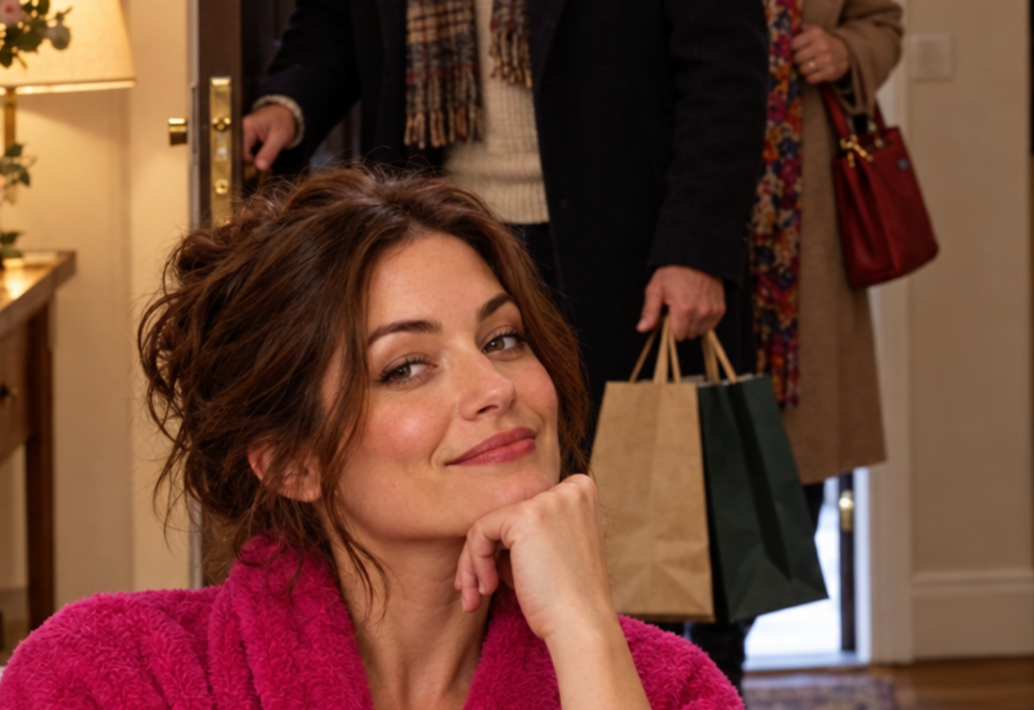
The doorbell rang—insistently and firmly, like a SWAT team was lurking outside. I peeked through the peephole. Oh, the whole crew: Anton (with the face of a martyr), Galina Sergeevna (a prosecutor’s glare), and Lera (looking like the world owes her something).
I opened the door.
“So, did you enjoy your little adventure?” my mother-in-law declared from the doorway, sweeping into the hallway like an icebreaker through Arctic seas. “Antosha is wasting away on my food—he has gastritis! And you, I bet, are living the high life?”
“Hello, Galina Sergeevna. Anton’s gastritis is from his love of spicy and fried food, not from heartbreak,” I leaned against the door frame, blocking them from entering further. “And what brings you here today? I’m not offering tea, because I’ve reached my toxicity limit for this month.”
Anton, still wearing his shoes, tried to squeeze toward the kitchen:
“Marina, enough with the drama. I forgive you. Come on, set the table—mom brought cabbage pies. And by the way, Lera still needs the money. We decided you should take the loan, and we’ll help pay it off. Split it. At some point. Probably.”
Lera, chewing gum, chimed in support:
“Come on, Marina, you work at a private clinic, your salary’s all above board and big. Don’t be stingy! I’ll pay you back as soon as I get my first clients. There will be a line out the door, just wait and see!”
That’s when things really started to get entertaining for me.
“Okay, stop,” I said, raising my hand. “Let’s break down this whole stream of consciousness, point by point.”
Galina Sergeyevna drew in a deep breath, gearing up to launch into a tirade about a woman’s lot in life:
“Young lady, don’t get smart with me! A wife should be the neck that turns the head… Family means everything is shared! And here you are, counting every penny! You’ve got a husband who’s pure gold, and you don’t even appreciate him. In my day, women gave birth right in the fields and washed their husbands’ feet!”
“Galina Sergeyevna,” I interrupted her, my tone gentle but steely. “According to historical data, mortality rates during childbirth in the fields were about 30%, and washing feet was simply due to no plumbing, not some sacred tradition. We live in the 21st century, where slavery has been abolished, but mortgages haven’t. Speaking of mortgages, this apartment is mine — I bought it before I got married. Anton just has a temporary registration here.”
My mother-in-law choked on air, her face blotching as her mouth opened and closed, unable to make a sound.
She looked just like a beached carp struggling to grasp the concept of dry land.
“Don’t throw facts at me!” shrieked Lera. “You’re just greedy! We’re trying to talk to you like normal people, and you… Anton’s stressed out, you know! He nearly lost his job because of you!”
“Lera,” I said, turning my gaze to my sister-in-law. “A sales manager’s job requires communication skills. If Anton sells building materials the way you’re trying to ‘sell’ me on taking out a loan in my name, I’m amazed he hasn’t been fired already. And by the way, ‘parasite’ is a biological term for an organism living off its host. In finance, that’s called a kept woman — but for that, you need to have at least a little charm, not just nerve.”
Lera jerked, bumped her elbow on the coat rack, and Anton’s coat tumbled down onto her. She got tangled in the sleeves and nearly fell over.
She looked exactly like a drunken moth caught in a wool sock.
Anton finally realized his grand homecoming wasn’t going as planned. So he switched into ‘man of the house’ mode:
“Alright, enough! Am I the man of this house or what? I’m back, so things will go back to the way they were. Alinka!” he yelled toward the other room. “Bring me some water, your father’s throat is dry!”
Aline came out of the room, already holding a thick book titled ‘Fun Physics’. She adjusted her glasses and peered over the frames at Anton.
“Aline, bring water!” Anton barked. “And why is the hallway so dirty anyway? Has your mother just let everything go?”
I was just about to tell them all to leave, but Alina beat me to it.
“Uncle Anton,” she said calmly, with the quiet confidence of a straight-A student. “According to Newton’s third law, every action has an equal and opposite reaction. You’ve been gone for three weeks, haven’t contributed anything to the apartment ecosystem, so your status here is reset. You can get your own water from the tap. And that ‘dirt’ you see is my sneakers — I just got back from a math olympiad.”
Anton froze.
“How… how can you talk to your father like that?”
“You’re not my father,” my daughter replied calmly. “You’re simply a factor increasing the entropy in our home.”
“What is she talking about?” Galina Sergeyevna hissed. “Entropy? Is she on drugs or something?”
“Entropy measures chaos, Grandma,” Alina smiled. “And right now, you’re pushing it to critical levels. Mom, I’m off to do my homework, it’s way more interesting than this.”
Alina left, gently closing the door behind her.
Silence filled the room—the heavy kind, dense like a thick blanket, not the ringing kind.
“Here’s the deal,” I said, flinging the front door wide open. “The show is over. Anton, I packed your stuff two weeks ago. It’s sitting out on the landing in trash bags. Sorry, my suitcase was in use. I changed the locks two days ago.”
“You can’t do this!” Anton screeched. “That’s jointly acquired property!”
“Article 36 of the Russian Family Code,” I responded crisply. “Any property owned by either spouse before marriage belongs solely to them. The only things we acquired together are your gastritis and my nervous eczema. I’ll keep the eczema, you take the gastritis.”
I shoved the stunned Anton out onto the landing. Galina Sergeyevna and Lera flew out after him, almost by inertia.
“You’ll regret this!” my mother-in-law screamed as I shut the door. “Who’s going to want you and your baggage at thirty-five?!”
“Loneliness isn’t about not having anyone around, Galina Sergeyevna,” I said through the crack in the door. “It’s about having someone near who makes you feel alone. Now, things are great for me.”
I slammed the door and turned the lock. Two turns. Click-click. The sweetest sound in the world.
On the other side, they were still grumbling and kicking the door, but it was nothing more than background noise, like the TV from a deaf neighbor—annoying, but not life-interfering.
I went to the kitchen. Alina was sitting at the table, munching on an apple.
“Are they gone?” she asked.
“They’re gone.”
“For good?”
“I think so. Now we’ll have to buy our own groceries, instead of waiting for Uncle Anton to begrudgingly hand over three thousand rubles from his paycheck,” I winked.
Alina took a bite of her apple, chewed, and thoughtfully said something that put everything in perspective:
“You know, Mom, the air feels lighter in the apartment without them. It’s like we finally took out the trash that had been stinking for three years—and all this time, we thought it was just the air freshener.”