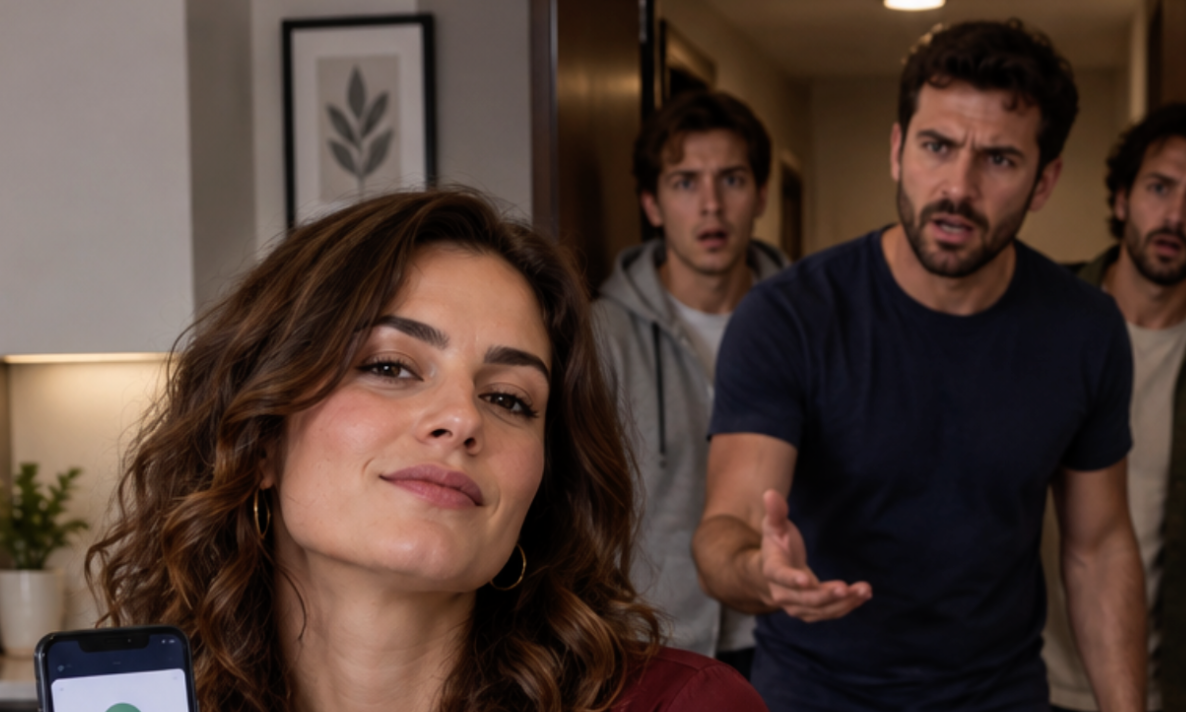
“Ninety-eight thousand,” I said, placing my phone next to his plate, screen up. “That’s how much for a trip to the sea. I’m going in September.”
Philipp glanced over at the numbers, finished his cutlet, and burst out laughing. Loudly and with gusto, like he’d just heard a joke on TV. The keychain in the pocket of his lounge pants jingled softly in response.
“Nelka, you’re fifty-three. Going to the sea? You want to scare all the seals off the beach?”
The air smelled of fried onions and his cologne, which he used even on Saturdays. I stared at the balance in my banking app, where the figure was labeled with my own custom name: ‘Sea.’ Since January 2024, I’d moved three and a half thousand from every paycheck there. Thirty-two months—never missed one, even when the salon was empty, and Liana had cut our bonuses.
We’ve been married for twenty-seven years. I went to the sea just once, right after our wedding, in 1999. Anapa, third-class train, more than a whole day on the road, with a point-and-shoot camera and just one film roll for the entire trip. I brought back an orange seashell with a white stripe, and it’s still on the shelf in our hallway. Every Saturday I dust it off and think: next year.
When did that “next year” turn into twenty-seven years?
“You cut pensioners’ hair for nine hundred a pop,” Philipp tapped his fork on the rim of his plate. “So keep cutting. And in September, my mom has potatoes to harvest. That’s it, end of discussion.”
“Back in April you bought a boat motor,” I pointed out. “It cost ninety-eight thousand. Exactly what I have saved.”
“A motor’s useful! And the sea? Just salty water. What’s there you haven’t seen already?”
I didn’t argue any further. In seven years, I’ve learned what happens if our disagreements last more than five minutes. Philipp stands up, heads to the hallway, and opens the closet. On the bottom shelf sits a blue sports bag, always half-packed: razor, two shirts, charger. He throws it over his shoulder and says the same phrase: “I’ll stay at Mom’s until you come to your senses.”
Eight times in seven years. And all eight times, I was the first to call.
When Arseny lived with us, Philipp never did this—he was embarrassed in front of our son. But in 2019, our son left for college in Kazan and stayed there. The apartment became so quiet at night I could hear the fridge hum. I was forty-six then, and the empty rooms made me uneasy, more than his packed bag did. After three days, Zoya Arkadyevna, his mother, would start calling and sighing into the phone: “Sweetie, you’re a smart woman.” I’d call my husband, ask him to come home. He’d return pleased with himself, like a cat let in from the cold.
By the way, the apartment is mine. My mom gave it to me in 2012, when she moved to her sister’s in Bor. Philipp is still registered at his mother’s though. “Just in case,” he would say, with a wink.
“I’ve already looked at guesthouses in Adler,” I said. “The water is warm there in September.”
Philipp reached out, took my phone, swiped away the app, and turned the screen face down.
“Just quit it with all that nonsense.”
My face felt flushed, like I was leaning into an open oven. I pressed my palms to my lips so I wouldn’t blurt out something unnecessary with the TV on and the cutlets I’d been frying for an hour. Everything inside me felt hot and tight, but my fingers were somehow ice cold.
On Monday, I arrived at the salon half an hour early. Liana was drinking coffee at the receptionist’s desk, and the place was filled with the scent of nail polish and minty shampoo.
“Liana, I need a vacation. From September 14 to September 27.”
“Two weeks?” she raised an eyebrow. “Nelli Sergeyevna, you’ve been working five summers here without a vacation.”
“That’s exactly why.”
She signed my request right away, not even checking the schedule. I took a photo of it and made a copy on the salon’s copier by the front desk.
That evening, Philip was sitting in the kitchen with a newspaper full of fishing ads. I placed the copy next to his mug. It stood on top of my request like a paperweight.
“I won’t be home from September 14 to 27,” I said. “I’m not asking for permission, Philip. I’m telling you when I won’t be here.”
He read it. Then he read it again, mouthing the words. I half-expected him to get up and walk over to the closet, and I even mentally tried to remember where I’d put the charger for his shaver.
But he didn’t get up. He stuck his hand in his pocket, jingled his keys, and said:
“We’ll see.”
I went to the bathroom and stood under the hot water for a long time. My heart was pounding like I’d just climbed nine flights of stairs. I said it. Out loud, by myself, and he didn’t leave.
Afterward, I wiped the foggy mirror with my hand, brushed a wet strand behind my ear, and smiled at my reflection. The gray lock at my temple, which I insist on never dyeing, stuck out in a funny tuft. That evening, I went to bed with my phone and spent hours looking at photos of strangers on the embankment in Adler. Palm trees, white railings, water the color of bottle glass.
But for some reason, the word “we’ll see” just wouldn’t leave my mind.
By June, I understood what he had meant.
***
At the end of June, his Logan’s transmission broke down. The repair shop gave us a quote for eighty thousand, and on Saturday evening Philip came into the kitchen with a slip of paper from the car garage.
“Transfer the money from your seaside trip,” he said, placing the slip on the table over my half-eaten okroshka. “Eighty thousand. I need it to get to the factory, and you’re not going anywhere anyway.”
“No.”
He didn’t get it at first. He asked again, tilting his head as if his ear was blocked.
“Didn’t you hear me? The car broke down. The fam-i-ly car.”
“I heard you, Philip. In April you bought an engine for ninety-eight thousand. Sell the engine and fix the transmission. My money is for the seaside.”
He slapped his hand on his knee and laughed, but not as cheerfully as he did in May. Then he stood up. I listened to him walk down the hallway, the squeak of the closet door, the zip of his blue bag. The ninth time. I knew every sound in this performance by heart.
“I’ll stay with my mom until you come to your senses.”
The front door slammed, and immediately there was a grating noise. Our lock had been sticking for three years—you had to pull the key toward you and turn it with force. Philip promised to fix it every time. From the stairwell, I could hear him cursing at the lock, at me, and at the transmission all at once.
As I sat over my bowl of okroshka, I was thinking about the one time I tried not to call. Back in 2021, I made it sixteen days. On the evening of the sixteenth day, Arseny from Kazan called me via video, tired after his shift.
“Mom, come on, just call him,” he asked. “You know how stubborn he is. Grandma has already called me three times.”
So I called him. Before that, I had tried to convince Philipp to actually talk using words, not just his bag. He laughed then, “Let your clients in your salon chat with words, not me.”
On the fourth day, Wednesday, Zoya Arkadyevna called. I was at the salon, in between two hair dye sessions, and stood by the sink in the back room. It smelled like ammonia from the hair dye and unfamiliar perfume.
“My dear,” she began in that tone reserved for misbehaving school kids. “Philipp is sleeping on my fold-out bed. His back hurts. Did you kick him out over money?”
“I didn’t kick him out, Zoya Arkadyevna. He left on his own and took his bag.”
“Back in my day, a wife would give her husband her last penny! And you’re saving up for vacations. The husband is the head of the house, dear. Call him, he’s waiting.”
My phone felt slippery from my damp palm. I looked down at my hands in black gloves, stained with ‘dark chocolate’ dye, and I suddenly saw it: in a week I’d be calling his number again. I’d say, “sorry, come back.” He’d lazily reply, “Well, we’ll see.” And I felt something clench into a cold knot inside—I knew there wouldn’t be a ninth call.
“Zoya Arkadyevna,” I said, surprised at how calm my voice sounded. “Let him fix the gearbox with his ninety-eight thousand. My money is going to the sea. I won’t call him. Sorry, I have a client waiting with dye.”
And I hung up first. For the first time in twenty-seven years.
Then I stood there by the sink for a minute, listening to the tap drip. My ears were ringing, my cheeks burned, and my hands pulled off the gloves and tossed them in the trash on their own. Was it really that simple? Just one phrase, and the sky didn’t fall.
My client, Valentina Petrovna, saw my face in the mirror and asked:
“Nelly, did you fall in love or something?”
“Almost,” I replied and laughed.
On the eleventh day, Wednesday, Philipp came back on his own. No call, no flowers, with the same blue bag. He quietly put it back in the closet where it had been and walked into the kitchen.
“Mom asked me to,” he tossed over his shoulder. “She needs some peace.”
He had his gearbox fixed, set up a credit card at the bank near his work. I didn’t ask what the interest rate was. I didn’t say anything at all, just placed a plate of pasta in front of him. That night, I slept more soundly than I had in probably seven years.
On Saturday, Philipp was smoking on the balcony and talking on the phone with Yefim, his friend from school. I was walking down the hallway with a wet rag and stopped by the open balcony door.
“Where would she go?” my husband told his friend. “She kept calling, crying, begging me to come back. I even had to think about whether I should return or not.”
I stood there with the rag in my hand, water dripping onto my slipper. My husband was telling his friend things that never happened.
“And at my mom’s anniversary, I’ll tell her again,” he added, laughing. “In front of everyone.”
***
We celebrated Zoya Arkadyevna’s 80th birthday on August 15th at a cozy cafe near her house. Fourteen guests gathered around a long, P-shaped table draped with a tablecloth and bright yellow napkins folded like fans. Soft melodies from her youthful days played quietly from the speaker above the bar, filling the air alongside the smells of hot cabbage pies and the perfumes of distant cousins.
I gave my mother-in-law a warm plaid blanket as a gift and took a seat at the end of the table, close to the exit. For a month and a half, I still hadn’t told Philip that I overheard a conversation on the balcony. I kept it inside, like holding a burning coal in my palm.
Philip raised the third toast. He got up, smoothed his jacket, and jingled his keys in his pocket.
“To Mom!” he began. “Eighty years, and her mind is sharper than some young folks’! And also—to my Nelly. You know, she’s planning a trip to the sea!”
The guests perked up at that. Philip’s cousin even turned his whole body toward me.
“She’s earned a hundred and twelve thousand!” Philip lifted his glass higher. “All from haircuts! I tell her, ‘Nell, you’ll look like a seal on the rocks in your swimsuit there. A mermaid worth a hundred and twelve thousand!’”
Everyone burst out laughing. The loudest was Aunt Galya, whom I’d styled for her granddaughter’s wedding for free last month. Someone tapped their fork against a glass.
“Back in our day, wives vacationed with their husbands, not gallivanting around resorts,” Zoya Arkadyevna remarked, adjusting her brooch. She leaned across the table toward me and added, “At least you came to your senses back in June. You called.”
So she believed, too. Which meant everyone here had heard about my supposed tears. Fourteen people knew I ‘cried and begged him to come back,’ even though I never dialed a single number.
The champagne turned sour in my mouth, like an unripe plum. I crushed my yellow napkin into a ball and felt my fingernails dig into my palm through the paper. My temples pounded so hard, I could no longer hear the music. I just sat and stared at my husband, who was still standing with his raised glass, smiling at the family, waiting for applause.
That’s when I stood up, too. My legs felt weak as if they were made of cotton, but they held me.
“Zoya Arkadyevna, happy birthday to you,” I said. The table fell silent, except for the speaker quietly singing about white roses. “And since everyone’s heard about the sea, I’ll say it myself. I’m going. On September 14th. Alone, since my husband doesn’t want to. And in June, I didn’t call anyone. Not once.”
Philip stayed standing with his glass. My mother-in-law opened her mouth but said nothing, just looked at her son. The cousin turned away toward the window.
I grabbed my purse, walked around the table, and left. My taxi arrived in six minutes through the app.
The car smelled of pine air freshener and someone else’s cigarettes. I pressed my forehead to the cool window and watched the streetlights of Beketova drift by. My hands shook, so I wedged them between my knees. What have I done? Eighty years old, family, celebration. But then I remembered Aunt Galya’s laughter, and told myself: nothing anyone didn’t deserve.
At home, I took off my shoes, walked into the hallway, and picked a ginger shell from the shelf. I held it to my ear, just like I used to as a kid. Of course, it wasn’t the sea rushing in it—it was my own blood. But it still felt good.
Philipp showed up around eleven—not with a bag, but holding a bouquet of chrysanthemums, almost certainly from the kiosk near the metro, since the crinkling cellophane echoed through the hallway. He stood in the kitchen doorway, looking awkward.
“Yeah, I messed up, Nel,” he said, scratching his neck under his collar. “My mom’s been nagging me since morning. Let’s go together. To Sochi, just like you wanted. I’ll buy the trip myself—don’t use your money.”
I stared at him, unable to believe it. In seven years, he had never come first. Never admitted he was wrong. But here he was now, holding yellow chrysanthemums, looking lost, almost like the Philipp from twenty-seven years ago who dragged my suitcase across the beach in Anapa.
“Really?” I asked.
“I said so, didn’t I?”
I put the chrysanthemums in a three-liter jar because the vase was too small. For two weeks, he told everyone over the phone that he was taking his wife to Sochi. He even told his mother. I stopped checking ticket prices and guesthouses—why bother if my husband had it covered? But at the end of August, I finally asked him when we were flying.
“I’ll get a last-minute deal,” Philipp waved me off. “Right before we go. It’s cheaper that way, Nelka, I’ve got it all handled.”
It actually sounded reasonable. My neighbor from the fifth floor booked last-minute every year and always bragged about her discounts.
Then, on Saturday, September 5th, Efim and Ada came over for dinner.
***
I roasted chicken with potatoes, and Ada brought a honey cake in a plastic container. The kitchen was cramped and hot, and the window was fogged. Efim chatted about his new fish finder, and Philipp listened, pouring him fruit liqueur.
There were nine days left until our vacation. I waited for a pause in the conversation and then asked:
“Philipp, what’s up with the trip? Isn’t it time to book?”
He looked at me, then glanced at Efim. And then he burst out laughing, throwing his head back so far his skull hit the wall.
“What Sochi, Nelka? Efim and I are heading to Akhtuba on the 12th, for a week. We’ll break in the motor. And you can help my mom dig up potatoes—she’s already got the buckets ready.”
“Exactly,” Efim nodded eagerly. “The carp are fat there right now.”
Ada dropped her eyes to her plate. The slice of honey cake on her dish stayed untouched.
So there was never a last-minute trip. And there was never going to be one. The chrysanthemums, the ‘I messed up,’ the ‘don’t use your money’—all of it was to keep me quiet until September, to stop me from buying the ticket myself. He was just buying time until vacation started and passed.
“I’m going on the 14th,” I said. “Leave is approved. With or without you.”
Philipp slapped his knee, stood up, pushed back the stool, and looked at our guests like he was about to perform a magic trick.
“Then I’ll stay at my mom’s until you come to your senses!”
And he burst out laughing again, loudly, so the whole kitchen heard. He turned to Efim:
“Want to bet a case of beer she’ll call me by Wednesday? She’s called every single time. Cried on the phone nine out of nine times.”
“You’re on!” Efim reached out, and they slapped hands right above my chicken.
Philipp walked to the hallway. I followed him and saw him pulling a blue bag out of the closet. It was zipped shut and stuffed full, with a fishing thermos poking out of the side pocket. He’d packed it ahead of time. He knew how tonight would end, even before I put the chicken in the oven.
“Bye, mermaid,” Philipp said, jingling his keys.
The door slammed shut. The key scraped, got stuck, and from the stairs his voice rang out—cheerful and angry at the same time:
“Alright, I’ll change that lock, I will!”
Yefim and Ada began to get ready to leave as well. Ada paused on the doorstep, took my hand.
“Nel, you…” she started, but didn’t finish. She just squeezed my fingers and walked out.
I was left alone in the hallway. The air smelled of his cologne and roasted chicken, and somewhere below, the elevator hummed. “Nine times out of nine.” My hands rose to my lips, pressing so hard it made my teeth ache. I felt overheated and chilled at the same time, like having a fever. And in that shiver, I suddenly understood exactly what I would do next.
It was twenty minutes to nine.
I opened an app and typed: “lock replacement urgent.” The first to respond was a locksmith who promised to arrive in forty minutes. While he was on his way, I booked a flight from Nizhny Novgorod to Sochi for September fourteen and a return for September twenty-seventh. Nineteen thousand six hundred for both tickets. Then a guesthouse in Adler, ten minutes from the sea, at two thousand eight hundred per night. Thirteen nights. I transferred the money from the “Sea” account and watched the number shrink by exactly half.
Exactly half—and I didn’t regret it one bit.
The locksmith turned out to be a young guy in a blue jacket. He knelt by the door, tinkered with a screwdriver, and pulled out the old cylinder.
“This should’ve been changed ages ago,” he said, turning it in his fingers. “The mechanism’s completely worn out. How did you even open it?”
“With difficulty,” I replied.
Twenty-five minutes later I was holding three shiny, cold new keys in my hand. I paid him three thousand eight hundred by phone number.
Filipp arrived on Wednesday evening, just before nine. I heard the key scratching at the lock, the handle rattling, and him cursing softly.
“Nelka! Open up, the lock again!”
I approached the door but didn’t open it.
“It’s a new lock, Filipp. This is my mom’s apartment, and you’re officially registered at your mom’s. You can pick up your things and gear on Thursday, between eight and nine in the evening. Everything will be packed.”
It went quiet behind the door. The jingling of keys stopped.
“Are you serious,” his voice was hoarse, “over a joke? You’re kicking me out over a joke? I put up wallpaper here! I’ll take you to court!”
“Go ahead.”
He lingered a bit longer, then kicked something in the hallway and left for the elevator. I leaned my back against the door and listened to my heart pounding, fast and loud. I had no intention of calling anyone.
He did end up buying a case of beer for Yefim. I found out about it later, already in Sochi.
***
A month went by.
On Thursday, Filipp came to collect his things with Zoya Arkadyevna. I opened the door myself, brought the bags and fishing gear into the hallway. My mother-in-law stood on the threshold in her coat, shaking her head: “Twenty-seven years old, dear. And all over a joke.” Filipp silently carried things to the elevator and never once looked me in the eye.
On the fourteenth, I flew out. The water in Adler was twenty-three degrees. That first morning, I waded into the sea at half past six, when the only ones on the beach were seagulls and a janitor with a rake, and I stood waist-deep for maybe ten minutes. The salty water stung my lips, and I laughed like a schoolgirl.
Philipp has been living with his mother for the fourth week now. Every Sunday, he sends the same message: “Have you come to your senses?” and threatens me with court. They say Efim got his own beer, but now he doesn’t say hello to me at the store. Ada sent a message: “I could never do that. But you’re right.” Arseniy from Kazan said: “Mom, that’s your business.” Then he added that I look very beautiful in the photo by the embankment.
Now there are two seashells on the shelf in the hallway. A ginger one from Anapa, and a white, smooth one from Adler. I dust them off on Saturdays—and I’m no longer putting anything off until next year.
Philipp says that because of one joke, I kicked my husband out after twenty-seven years of marriage. But would you really call it a joke?