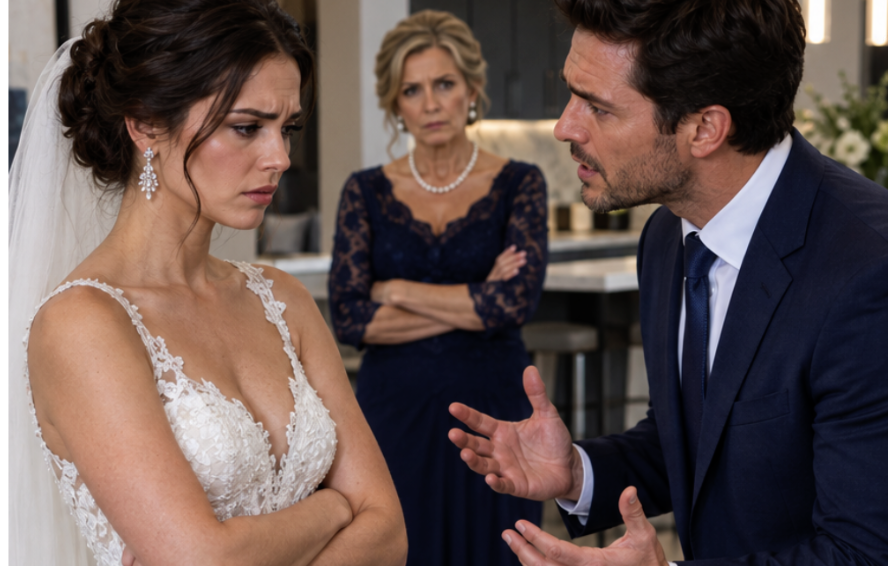
— After the wedding, we’ll register my mom at your place, — the groom said offhandedly. A week later, the wedding was called off.
Eight days before the big day, Sofya discovered that the real issue in their upcoming marriage wasn’t Uncle Gennady after all.
Just five minutes before, he seemed like the biggest disaster threatening their family.
She and Leonid were sitting in a small cafe near the banquet hall where, after work, they’d come to finalize the seating chart. A printed diagram lay on the table, two cooling cups of coffee by their sides, as Sofya moved name cards around with the focus of someone negotiating international relations.
— Gennady can’t sit with your aunt, — she said. — They had a huge fight about the dacha at dad’s birthday.
— Then he’ll sit with my boss.
— You want your boss to hear all about Gennady’s bad foundation on his dacha at the first toast?
Leonid thought it over.
— Good point. Poor boss.
They moved Uncle Gennady to sit with some distant relatives on Leonid’s mother’s side. Then they spent ten more minutes deciding who would sit next to Sofya’s grandma, who was hard of hearing and had a knack for asking about the most awkward details in any conversation.
Finally, Leonid leaned back in his chair.
— That’s it. Only a small thing left.
— What thing?
He picked up Gennady’s card, moved it two seats, and said casually:
— After the wedding, we’ll register my mom at your place.
Sofya kept looking at the chart.
It didn’t even register at first that what he said had nothing to do with the seating arrangement.
— Who?
— My mom.
— Which mom?
Leonid laughed.
— How many do you think I have?
Sofya looked up.
— And why do we have to register Rimma Pavlovna at my place?
— Because she’s selling her apartment. I did mention it.
He had talked about his mom selling her place: she lived alone in a small one-bedroom apartment in an old brick building. The area was nice, but Rimma Pavlovna wanted to move closer to her sister, hopefully into a newer place with an elevator and a decent kitchen.
She found a buyer quickly. She was just starting to look for a new apartment.
— And what does my apartment have to do with it? — Sofya asked.
— She’ll need registration somewhere. Until she buys a new one. Then we’ll see. My mom wanted to make sure there’d be no gap in her official residency between selling the old place and buying a new one.
This “then we’ll see” was even less appealing to Sofya than all the rest.
— What does ‘we’ll see’ mean?
Leonid shrugged.
— Once she buys a new place, she’ll change her registration. If she doesn’t get one right away, she’ll stay registered with us. What difference does it make?
— Hold on. When you say ‘us,’ you mean my apartment?
— Sonya, we’re getting married in eight days.
— I remember. That’s why, for the last eight days, people have called me asking if they could swap the shrimp salad for Olivier. But a wedding doesn’t change who owns the apartment.
Leonid frowned.
Clearly, this wasn’t the conversation he’d wanted.
Sofya had owned her three-bedroom apartment for seven years—long before she met Leonid. She saved some money herself, got more after selling a small place from her grandmother, and covered the rest with a mortgage, paid off two years before she met her future husband.
When they met, Sofya was thirty-three; Leonid, thirty-five.
They dated almost ten months. Then Leonid moved in. There was no big “Let’s live together” talk: first his charger showed up, then two shirts, then his razor, then a box of winter shoes; after three weeks in a row never sleeping at his place, Sofya finally asked if he planned to ever go home.
Leonid looked at her and said:
— Well, where am I now?
That was, more or less, how they started living together.
A year later, they filed for marriage.
Leonid actually wasn’t without his own home.
Four years ago, he inherited a 27-meter studio from a childless uncle. Not nearby, but in a decent area near the subway. Leonid did a cheap renovation and rented it out to a young couple.
He was very proud of this apartment.
Especially the phrase “passive income.”
If the tenants transferred the rent on the 5th at 8:14 AM, Leonid could check the bank notification at breakfast and say, contentedly:
— That’s how property should work.
Sofya never really poked fun at this. The studio really did belong to him and brought an income. Good for him.
But now, things got interesting.
— Why can’t your mom register at your studio? — she asked.
Leonid straightened up immediately.
— People are living there.
— And?
— And what? They’re good tenants. Nice young couple. Always pay on time. Why would I mess that up?
— Is she planning to move in with them?
— Of course not.
— Then what does it matter?
— Sofya, it’s an investment property. I rent it out. Everything runs smoothly, why create extra trouble?
Sofya gave him a look and nodded slowly.
— I see. So your place is an “investment property,” and mine is a family registration office?
Leonid didn’t smile.
Usually, her wordplay amused him.
— Don’t turn a normal question into a circus.
— I’m just trying to figure out when this even became a question. You’re not asking me. You’re telling me.
— What’s there to ask? Registering someone doesn’t take up space.
— Great, then why are you so reluctant to register your mom in your place?
— I told you.
— No. You explained why your apartment is too valuable for that.
Leonid rubbed his forehead, annoyed.
— Are we seriously going to argue a week before the wedding over a residency stamp?
— We’re not arguing yet. I’m trying to find out when you decided you had a say over my apartment.
He did what people do when they don’t have a good answer: reached for his cup, found it empty.
Then he said:
— I already promised my mom.
Sofya stopped sorting the guest cards.
— When?
— About a month ago.
— So a month ago, you promised your mother you’d register her in my apartment?
— Not in those exact words.
— Then how?
— I said that after she sells, the registration issue is handled.
— Where?
Silence.
— With us.
— Did you give her the address?
Another pause.
— I did.
Sofya leaned back in the chair.
Now it made sense why the groom had dropped that news somewhere between Uncle Gennady and the cake order. For him, this wasn’t a discussion.
He’d already discussed it.
Just not with the apartment owner.
— So your mom already knows my address as her future registration spot, and I’m only now finding out?… Continued in the first comment below
Just eight days before the wedding, Sofya realized that the main challenge to their future marriage wasn’t Uncle Gennady after all.
Even though just five minutes earlier, he seemed like a full-blown family disaster waiting to happen.
She and Leonid were sitting in a cozy little café next to the banquet hall, where they’d stopped by after work to finalize the guest seating. A printed diagram of the tables lay before them, with two cups of now-cold coffee nearby. Sofya was moving cards with relatives’ names with such intense concentration, it looked like she was negotiating international diplomacy.
“We can’t put Gennady next to your aunt,” she said. “They had a fight at Dad’s birthday over the dacha.”
“Then by my boss, maybe.”
“Do you really want your boss to hear all about Gennady’s crooked dacha foundation after the first toast?”
Leonid paused, thinking.
“You’re right. The boss doesn’t deserve that.”
So, they moved Uncle Gennady over to the maternal cousins. Then, for the next ten minutes, they debated who should sit next to Sofya’s grandmother—who was hard of hearing and had a knack for asking people to repeat only the most awkward piece of every conversation.
Finally, Leonid leaned back in his chair.
“All done. Now just the easy stuff.”
“What easy stuff?”
He picked up Gennady’s card, shifted it two places over, and said casually,
“After the wedding, we’ll register my mom at your place right away.”
Sofya kept staring at the diagram for a moment.
It didn’t sink in at first that his statement had nothing to do with the seating chart.
“Who again?”
“My mom.”
“Which mom?”
Leonid burst out laughing.
“How many moms do you think I’ve got?”
Sofya looked up.
“But why do we need to register Rimma Pavlovna at my place?”
“Because she’s selling her apartment. I told you about this.”
He actually had mentioned the apartment sale before. His mom lived alone in a small one-bedroom in an old brick building. The neighborhood was nice, but Rimma Pavlovna wanted to move closer to her sister, preferably to a newer building with an elevator and a real kitchen.
She found a buyer quickly. She was still looking for a new place to buy.
“So what does that have to do with my apartment?” Sofya asked.
“She’s going to need to be registered somewhere until she buys a new place. That’s all. My mom really wanted no break at all between selling her old apartment and getting registered permanently somewhere else.”
That “we’ll see” part unsettled Sofya even more than everything else.
“What do you mean, we’ll see?”
Leonid just shrugged.
“If she buys a new place, she’ll re-register there. If she doesn’t right away, she’ll stay registered with us. What’s the difference?”
“Wait. When you say ‘with us,’ do you mean my place?”
“Sofya, we’re getting married in eight days.”
“Trust me, I remember. That’s why for eight days straight, people have been calling me to ask if they can swap the shrimp salad for Olivier. But the apartment doesn’t change owners just because of a wedding.”
Leonid frowned.
The conversation was clearly not going the way he’d planned.
Sofia had owned her three-room apartment for seven years. She bought it well before she met Leonid: part of the money she saved up herself, part came from selling a small flat she inherited from her grandma, and the remaining amount she covered with a mortgage—which she managed to pay off two years before she ever met her future husband.
When they met, Sofia was thirty-three, and Leonid was thirty-five.
They dated for almost ten months before Leonid moved in. There was no grand ‘let’s move in together’; first his charger showed up at her place, then two shirts, then a razor, then a box with winter shoes—and after he didn’t spend a single night at his own place for three weeks straight, Sofia finally asked if he had any plans to go home at all.
Leonid looked at her and replied:
“Where am I right now?”
And just like that, their life together began.
A year later, they applied for their marriage license.
Leonid wasn’t exactly without a place of his own, either.
Four years earlier, he inherited a 27-square-meter studio from a childless uncle. It wasn’t close by, but it was in a nice area near the metro. Leonid did some budget renovations and rented it out to a young couple.
He was really proud of his apartment.
Especially the phrase “passive income.”
If the tenants transferred the rent on the fifth of the month at 8:14 AM, Leonid could see the bank notification over breakfast and announce with satisfaction:
“That’s how real estate is supposed to work.”
Sofia never really teased him about it. The studio truly was his property and did bring in money. Good for him—he had it figured out.
But now things had gotten interesting.
“Why can’t your mom register her address at your studio?” she asked.
Leonid immediately straightened up.
“Because people live there.”
“And?”
“And what? They’re good tenants. A young couple, pay on time. Why get my mom involved there?”
“Is she planning to move in with them?”
“Of course not.”
“Then how would she be in the way?”
“Sofia, it’s investment property. I rent it out. Everything works just fine there, no need to create unnecessary problems.”
Sofia looked at him and nodded slowly.
“I see. So your apartment is an investment, but mine is the family government services office?”
Leonid didn’t smile.
Even though her clever remarks usually amused him.
“Don’t turn a normal question into a circus.”
“I’m just trying to figure out when this even became a question. You’re not asking me. You’re informing me.”
“What’s there to ask? Registering an address in the apartment doesn’t take up space.”
“Great. Then why are you so reluctant to register your mother in yours?”
“I already explained it to you.”
“No, what you explained was why your apartment is too valuable for that.”
Leonid rubbed his forehead, annoyed.
“Are we really going to fight about paperwork a week before the wedding?”
“We’re not fighting. I’m just trying to find out when exactly you decided to make decisions about my apartment.”
He did what people often do when they don’t have a real answer: he reached for his cup and realized his coffee was gone.
Then he said:
“I already promised my mom.”
Sofia stopped arranging the guest cards.
“When?”
“About a month ago.”
“A month ago, did you promise your mother to register her at my apartment?”
“Not exactly in those words.”
“So how did you put it?”
“I said that after we sell the place, the registration issue would be sorted.”
“Where exactly?”
Leonid stayed silent for a moment.
“At our place.”
“Did you give her the address?”
Another pause followed.
“Yes, I did.”
Sofya leaned back in her chair.
Now it became clearer why her fiancé had slipped that comment in between talking to Uncle Gennady and ordering the wedding cake. To him, this really hadn’t been a discussion.
He had already discussed everything.
Except with the actual owner of the apartment.
“So your mom knows my address as her new registration spot, and I’m just now finding out?”
“You make it sound like I gave her the apartment as a gift.”
“So far, you’ve only given her the right to make use of someone else’s choice.”
Leonid started rolling up the seating chart.
“Let’s not ruin the evening.”
“Good idea. So I’ll say this right now: I am not going to register your mom in my apartment.”
He looked at her as if she’d just announced the wedding reception would be in a field kitchen instead of a restaurant.
“Are you serious?”
“Absolutely.”
On the drive home, they barely spoke.
Leonid twice tried to start a conversation, but settled for mentioning the traffic jams. Sofya didn’t want to argue in the car either.
It wasn’t even the situation with Rimma Pavlovna that Sofya needed to figure out.
That part was actually pretty straightforward.
What really bothered Sofya was something else.
Why did Leonid think he could give such a promise without consulting her?
The next day, the answer partly came on its own.
Around eleven in the morning, Rimma Pavlovna called.
“Hello, Sonechka. Are you busy?”
“At work, but I can talk.”
Sofya worked as a financial analyst at a major logistics company. She shared a room with three others, so she took the call out into the hallway.
“I’m calling about the registration,” her future mother-in-law said. “Leonid says we’ll deal with it after the wedding. Do you know if I need to get an apartment statement in advance, or do they see all that information automatically now?”
Sofya leaned her shoulder against the wall.
There was no gentle introduction.
Rimma Pavlovna didn’t even ask if Sofya agreed.
She was just clarifying the procedure.
“I’m not preparing any documents for registration,” Sofya said.
“Is it because you don’t have time?”
“It’s not about time. I never gave my consent to the registration.”
It went quiet on the other end.
“What do you mean you didn’t agree?”
“Exactly that. Yesterday was the first time Leonid and I talked about it.”
“That’s odd.”
Rimma Pavlovna’s voice had no anger or the typical mother-in-law triumph you hear in jokes.
She was genuinely surprised.
“Lenya told me you had decided together.”
“No. Leonid decided.”
“But you’re going to be a family.”
“We will be. But that doesn’t automatically make my apartment shared property.”
Rimma Pavlovna paused for a moment.
“After the wedding, things like this are solved together anyway.”
“Exactly. Together. Not one person deciding, another learning about it a week before the wedding, and a third already choosing which office to go to.”
That came out harsher than Sofya intended.
Rimma Pavlovna picked up on it too.
“Alright, let’s not do this over the phone. You and Lenya sort it out.”
“We will.”
That evening, Sofya told her fiancé about the conversation.
She expected at least some kind of acknowledgment, like, “Yeah, I got ahead of myself, I’ll talk to my mom myself.”
Instead, Leonid took off his watch, placed it on the nightstand, and asked:
“Why did you even tell her that?”
“Tell her what? The truth?”
“You could have spared me from looking like some sort of villain.”
“And what exactly did my words make you look like?”
“Like I make all the decisions for you.”
Sofya looked at him.
“Leonid, you did make all the decisions for me.”
“Come on. My mom is not a stranger.”
“I never said she was a stranger.”
“She’ll be your mother-in-law in a week.”
“And?”
“And sometimes you could treat family less like an accountant would.”
Sofya even smirked.
“Now it’s getting interesting. Because when it’s about my apartment, we’re family. But when it’s about your studio, suddenly it’s an investment property with sacred boundaries.”
“Here you go again.”
“Alright. Let’s test that.”
She sat down on the edge of the couch.
“After the wedding, let’s register my dad at your studio.”
Leonid responded so quickly that Sofya barely finished her sentence.
“No.”
“Why not?”
“What for?”
“It won’t bother him to have registration there. It doesn’t take up space. It’s just a formality. You explained that yourself yesterday.”
“Your dad has his own apartment.”
“Your mom also has hers until she sells it.”
“These are completely different situations.”
“How?”
Leonid opened his mouth, but couldn’t come up with a convincing answer.
So he tried a different approach.
“The studio is mine. Maybe I’ll want to sell it in a year. Or two. Why should I have registered relatives there?”
Sofya looked at him silently for a few seconds.
Then she smiled.
Not a mocking smile. She genuinely found it amusing.
“See? You do understand the principle after all.”
“What principle?”
“That the owner gets to decide who is registered in their apartment.”
“I never said you couldn’t decide.”
“You never even asked.”
Leonid walked into the kitchen.
“I don’t get why you dragged my dad into this.”
“Because I wanted to hear exactly what you just said.”
That night, for the first time, they went to bed hardly speaking.
Sofya stared at the ceiling for a long time.
There were six days left until the wedding.
The dress was hanging in the closet. A deposit had been paid at the restaurant. The photographer sent the final plan for the shoot. Mom texted in the morning that she’d picked up the dress after alterations. Her friend was coming from another city.
Canceling all of it over a conversation about registration seemed crazy.
And at the same time, Sofya realized this was no longer about registration at all.
The next day, Leonid came with flowers.
Not a giant bouquet as a sign of surrender, just simple chrysanthemums—Sofya’s favorite.
“Let’s end this war,” he said.
“Are we at war?”
“The last two days—absolutely.”
He put the flowers in a vase and took pastries out of the bag.
Sofya was waiting for what would come next.
What came next was very familiar.
“Honestly, Sonya, the registration won’t hurt you. Mom will buy an apartment and move out.”
“Have you already told her that I’m against it?”
“I told her that we’re discussing it.”
“No, that’s not what I’m asking. Did you take back your promise?”
Leonid sighed heavily.
“Why bother her right now? She’s got the deal in a few days. Then the wedding. After that, the three of us can sit down calmly and decide.”
“And what exactly will we be deciding after the wedding, if I’ve already said ‘no’?”
“You’re just stressed right now.”
Sofya slowly turned to face him.
“What kind of stress?”
“Pre-wedding stress. You’re fixating on everything—seating arrangements, the host, and now this.”
“So, you’re saying my ‘no’ isn’t a decision as the owner of the apartment, but just a nervous bride’s moment?”
“I didn’t say that.”
“That’s exactly what you just said, only with more words.”
Leonid felt offended.
The next day, he changed his tactics.
In the morning, he made breakfast—even though he usually left for work first on weekdays. By evening, he offered to stop by her parents’ place to help deliver drinks to the restaurant.
Sofya didn’t push him away.
She really didn’t want a scandal at all.
There was only one thing Sofya wanted: for Leonid to call his mother and admit he’d made a mistake by promising something he had no right to give.
He did everything except that.
On the fourth day after their café conversation, there were four days left until the wedding.
That evening, while Sofya was checking the contractor payment list, a message arrived from Rimma Pavlovna.
First, she received a photo of documents prepared for registration.
Then came a text message:
“Sonechka, I made an appointment for Tuesday at 11:20. Lenya told me not to worry about your pre-wedding nerves—you’ll both calm down after the wedding. If you need any documents from me, just let me know.”
Sofya read the message twice.
Then a third time.
The appointment at the registration office was real, but without Sofya’s passport and presence as the owner, nothing could actually go through. The real threat wasn’t Leonid secretly registering his mother, but the way he was creating pressure and circumstances, hoping to get her agreement after the wedding.
Now everything was crystal clear.
Leonid hadn’t just failed to revoke his promise.
He told his mother Sofya’s refusal was just a temporary bout of nerves and basically suggested she wait until after the wedding.
After the wedding, it would be much easier to apply pressure.
Then, they could start saying:
“Well, we’re husband and wife now.”
“Well, mom has already sold her apartment.”
“Well, she’s made an appointment.”
“Well, where could she go now?”
So it turned out they were planning to get Sofya’s agreement only after making it difficult and heartless for her to refuse.
She closed her laptop.
Leonid came home around nine.
“Did you tell your mom that I’m just nervous before the wedding?”
He stopped by the hallway.
“Did she message you?”
“Answer me.”
“Sofya, I just asked her not to get involved in our argument for now.”
“No. You told her not to pay attention to what I say.”
“I said we’d work it out.”
“She made an appointment at the registration office for Tuesday.”
“So what? Appointments can always be canceled. And without your passport and signature as the owner, she can’t be registered anyway.”
Sofya nodded.
“True. But it’s not about the paperwork.”
Leonid seemed to think the conflict was finally dying down.
He took off his jacket and asked,
“Is there anything to eat?”
“There is.”
Sofya warmed up his dinner.
She sat across from him with a cup of tea.
They talked about the restaurant, about how the host was asking for another list of relatives, and about finding a car for the parents.
The next morning, Sofya started canceling the wedding.
The first person she called was the restaurant administrator.
Part of the advance payment in the contract was non-refundable, and Sofya knew this, so she didn’t argue. At least she didn’t have to pay the remaining balance, which was due two days before the banquet.
Then she messaged both the photographer and the MC.
She had also left a deposit with the photographer.
The MC agreed to return half since there was already another booking request for that same date.
Sofya called her relatives herself. At first, her mother thought someone had gotten sick.
“Mom, no one is sick. There won’t be a wedding.”
“Did you two have a fight?”
“Yes.”
“Was it serious?”
“Serious enough.”
Her father just asked,
“Are you sure?”
“Yes.”
“Then we’ll talk about everything else later.”
That was exactly what Sofya needed right now.
No pleas of “maybe you’ll make up,” no lamenting the money spent, no dramatic recounting of invited relatives.
Canceling the marriage registration was even easier than the banquet: without mutual consent, it wouldn’t happen anyway. Sofya contacted the registry office, let them know she was withdrawing, and they explained the procedure. By lunchtime, the issue was resolved.
Leonid found out around two in the afternoon.
He called first.
Then he called again.
After missing five calls, Sofya received a message:
“Did you really cancel the restaurant?”
Sofya replied,
“Yes.”
Her phone rang almost immediately.
This time, she picked up.
“What are you doing?”
“I canceled the wedding.”
“Because of the registration issue?”
“No.”
“Then why?”
“We’ll talk tonight.”
Leonid showed up earlier than usual.
By then, Sofya had already put away the wedding
place cards, contracts, and guest list. It wasn’t for show—she just didn’t see any reason to look at them anymore.
“Do you even realize what you’ve done?” he asked, standing in the doorway.
“I do.”
“There are only three days left!”
“Precisely why I decided not to drag this out.”
“People have been invited. The restaurant is booked. My relatives have already bought tickets.”
“I’ve told mine. You’ll tell yours.”
“Over some registration issue?!”
That’s when, for the first time in days, Sofya raised her voice.
She didn’t shout, but said clearly,
“Stop calling it ‘just registration.’”
Leonid fell silent.
“If you’d come to me a month ago and said, ‘My mom is selling her apartment, let’s figure out where she’ll be registered,’ we really would have discussed the registration. But you did something else. You promised my apartment without talking to me. Gave my mom the address. Then told me about it in passing between arranging the seating and dinner. When I refused, you didn’t tell her the truth. You blamed it on my nerves and decided to wait till after we got married.”
“I just wanted to sort out a family issue calmly.”
“Family issues should be handled with family.”
“My mom is family to me, too.”
“Then register her in your own apartment.”
Leonid turned away.
That gesture spoke louder than all the conversations they’d had the previous week.
“You’re starting this again.”
“No, Leonid. I’m ending it.”
He walked into the room, sat down on the couch, and stared at the floor for a few seconds.
“So that’s it? Two years together, over this?”
“Two years didn’t end because your mom is selling her apartment. They ended because you think it’s fine to make decisions about things that aren’t yours. But when it comes to your own property, you protect it perfectly well.”
“I thought our apartment would become our home after the wedding.”
— It was my home, but not my property.
— Great. So all this time, I was basically nobody here.
Sofya looked at him tiredly.
— Come on, don’t start. You lived here because we were a couple. Nobody ever tried to kick you out, count every plate, or remind you whose apartment this is. But living together and having the right to make decisions for the owner are two different things.
— And what if Mom had really ended up without registration?
— You have your own apartment.
— There are tenants living there!
Sofya threw up her hands.
— And that’s the sum of our conversation this whole week.
Leonid fell silent.
For the first time, it seemed he struggled—not with Sofya, but with his own logic.
If registration was really just a meaningless formality, then his studio apartment would have worked just as well.
But if registration could actually cause problems for the owner, then Sofya had every right not to want those issues.
There wasn’t any convenient third option, where his property demanded respect but hers called for a family’s generosity, anymore.
That evening, Leonid didn’t leave.
There were just three days left until the wedding that now wasn’t going to happen. Packing up your whole life in just a few hours was impossible anyway—and Sofya wasn’t demanding it.
They came to a calm agreement: he’d pack up and move out by the end of the week.
His studio apartment was still rented out.
When Sofya asked if he was going to let the tenants know and clear it out for himself, Leonid looked at her, almost offended.
— Why kick them out? They just renewed their lease.
Sofya couldn’t help herself.
— Exactly. You can’t just spring changes like that on people when it comes to their home.
He shot her an unhappy look.
— Very funny.
— A little bit.
The next day, Rimma Pavlovna called.
This time, her voice sounded completely different.
— Sofya, so there won’t be any registration, right?
— There won’t.
— Lenya said you called off the wedding.
— Yes.
Rimma Pavlovna sighed.
— I never thought things would turn out like this because of me.
— It’s not because of you.
— How is it not? It’s all about this apartment…
— You asked your son if it was okay. He said it was. You trusted him. In your place, I would’ve assumed he cleared it with me, too.
Rimma Pavlovna was silent for a moment.
— I did ask him, you know—I said, are you sure you talked this over with Sofya?
— And what did he say?
— He said: “Mom, don’t worry. This is our home.”
Sofya closed her eyes.
Even now, Leonid managed to add a new detail to the story—one that changed nothing.
— Please cancel the appointment.
— It’s already canceled.
Rimma Pavlovna didn’t argue, lecture, or demand that Sofya take her son back.
Maybe, for the first time in days, she understood that her son had overstepped his authority a bit.
On Saturday morning, Sofya woke up without an alarm clock.
This was supposed to be their wedding day.
The original plan: the makeup artist would come at ten, the photographer at eleven-thirty, then the parents, then the car.
Instead, there was Leonid’s half-finished cup of coffee in the kitchen, and in the hallway—two big suitcases and a box of his things.
He was getting ready to move in with his mother.
The irony was that Rimma Pavlovna hadn’t actually managed to officially sell her one-bedroom apartment yet—the deal was only scheduled for next week. So, for a few days at least, mother and son could comfortably live together.
What would happen after that, Leonid planned to figure out on his own.
“You still don’t want to move into the studio?” Sofia asked as he checked that he had packed everything.
“No. Like I said, there are people there.”
“I remember.”
“I’ll stay with my mom for now. Later, maybe I’ll rent something else.”
He took the last bag.
He stood by the door for a moment, as if he wanted to say something.
“You know, I still think you canceled everything way too abruptly.”
“Maybe so.”
Sofia had no intention of trying to convince him otherwise.
“But about my mom, I really should have talked to you first.”
It was the first direct admission he’d made all week.
Late, but at least with no talk of “nerves,” “the family,” or any “formalities.”
Sofia nodded.
“You should have.”
“And I shouldn’t have made promises.”
“You shouldn’t.”
He was silent for a while.
“But I still wouldn’t have registered your dad at the studio, no matter what.”
Sofia laughed.
This time, it was absolutely genuine.
“Leonid, trust me, Dad will survive.”
He smiled unexpectedly, too.
And that was how they parted.
No grand speeches at the door, no smashed photos, no promises to someday understand it all.
A few weeks later, Sofia heard from a mutual friend that Rimma Pavlovna had successfully sold her apartment and almost immediately put a down payment on a new one. Between deals, she spent a few days at her sister’s place, and after buying the new apartment, she registered at her new address.
Nothing disastrous had happened.
Leonid rented a small apartment near his job, and the studio continued to be leased out to the same couple.
When Sofia found out, she wasn’t even surprised.
Their investment property had survived after all.
At the end of the month, the restaurant manager called Sofia and said they’d actually managed to refund more money for the canceled banquet than she’d expected—another couple had taken their date.
“Would you like us to send it to the same card?” the woman asked.
“Of course.”
After the call, Sofia opened her banking app, saw the refund, and smiled.
Out of the entire canceled wedding, this turned out to be the most unexpected bonus.
Uncle Gennady never did find out which table he was supposed to be seated at.
Leonid’s boss kept his peace of mind.
Sofia’s grandmother didn’t ask any awkward questions at dinner.
And Rimma Pavlovna’s appointment at the municipality office—the one that supposedly started it all—disappeared from the calendar with a single click.
It turned out to be harder to break Leonid’s habit of treating his own property as personal, and everyone else’s as family property.
But Sofia had decided she wasn’t going to deal with that anymore.