“You’re Rich—You Can Buy New Ones!” My Mother-in-Law Took the Appliances From My Apartment. So I Changed the Locks
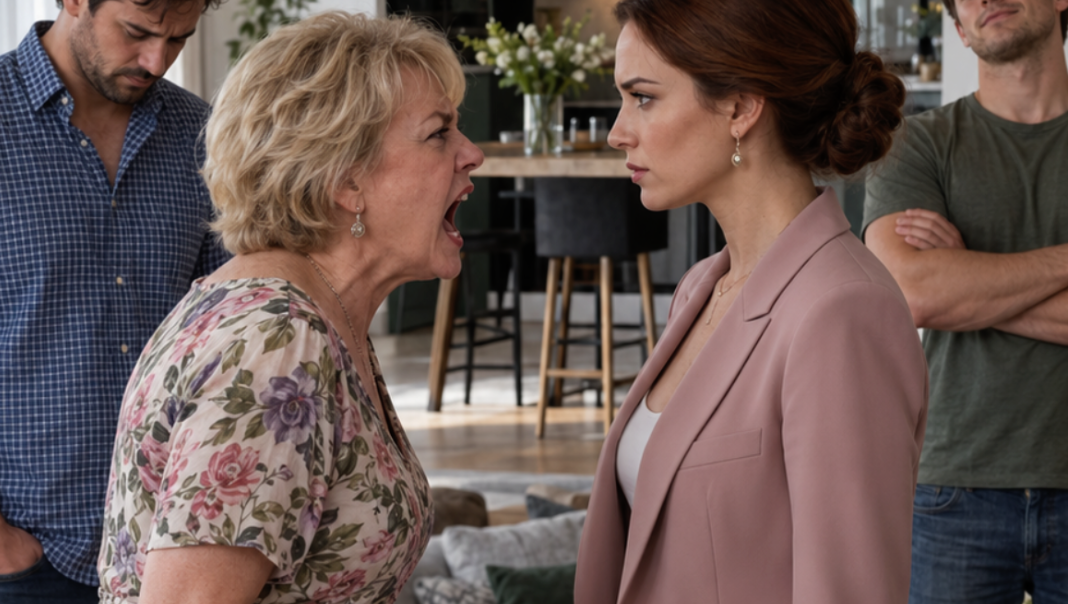
“Where is your wife hiding? Inna! Come out here!”
Zinaida Petrovna stormed into our apartment without warning.
She hadn’t even called first. She had simply buzzed from downstairs, and my husband, Matvey, had let her in.
Behind her came his younger brother, Vitalik, twenty-four, muddy sneakers and all.
I stood in the living-room doorway, watching them walk through my home as if they owned it.
“Matvey told me you’re renovating the kitchen,” my mother-in-law announced. “Perfect timing. Vitalik just rented a house in the village, and it’s completely empty.”
She headed straight for the kitchen.
“You’re replacing everything anyway,” she continued. “So he can take the old appliances. You two have money. It won’t hurt you.”
I slowly turned toward my husband.
Matvey avoided my eyes.
That was when I understood.
He knew.
This wasn’t some spontaneous idea his mother had dreamed up that morning.
They had planned it.
“Matvey?”
He gave me an apologetic shrug.
“Inna, come on. Vitalik needs help. We’ll buy new stuff.”
From the kitchen came his mother’s voice.
“We’ll take the refrigerator! The oven too. And this induction cooktop.”
I walked in.
The refrigerator was a built-in Liebherr. The Bosch oven had been installed three years earlier.
I had bought both.
With my own money.
Before I had even met Matvey.
“Zinaida Petrovna,” I said carefully, “those appliances are built in. We’re not replacing them. We’re only changing the cabinet fronts.”
She looked at me as though I were being ridiculous.
“So buy new ones. Matvey told me what kind of bonuses you get. You live well. Vitalik is starting from nothing.”
Then she turned toward Matvey.
“Why are you standing there? Get your tools.”
And my husband actually went to get the screwdrivers.
That was the moment something inside me went completely quiet.
I watched him kneel beside his brother and begin removing the refrigerator fittings.
No argument.
No hesitation.
Not even a glance in my direction.
I walked into the bedroom, closed the door, and sat on the edge of the bed.
Outside the window, the September sky was gray.
Then I noticed a cargo van parked below.
Its doors were open.
They had brought a truck.
So this had been arranged beforehand.
Matvey hadn’t merely failed to stop them.
He had participated.
I picked up my phone.
My father had worked in construction for years and knew half the city. One of his longtime acquaintances, Sergey Andreyevich, happened to own the house Vitalik was renting.
I called him.
“Sergey Andreyevich, I need to warn you about something.”
I explained that Vitalik was bringing powerful built-in appliances to the house. The wiring there was old, and installing an induction cooktop and large oven without checking the electrical system could be dangerous.
He listened quietly.
Then he said, “Understood. Thank you.”
My next call was to a lawyer who worked with the restaurant where I was employed.
After that, I stayed in the bedroom.
I heard tools clinking.
Furniture scraping.
My mother-in-law giving orders.
Then the front door slammed.
A few minutes later, the van drove away.
When I returned to the kitchen, the refrigerator was gone.
So was the oven.
Wires stuck out from the cabinets.
The kitchen I had carefully designed looked mutilated.
Matvey stood in the middle of it holding a screwdriver.
“Inna, don’t make this into a big deal,” he said quickly. “We’ll finance new appliances. It’ll be fine.”
I walked past him to the storage closet and pulled out two large travel bags.
I placed them beside his jackets.
He stared at them.
“What are those?”
“Your bags.”
He blinked.
“What?”
“Pack your things.”
He actually laughed.
“You’re joking.”
“No.”
I turned and walked away.
I had already texted a locksmith.
The locks would be changed the next morning.
Matvey spent nearly an hour packing.
I could hear him opening drawers, moving from room to room, clearly waiting for me to stop him.
I didn’t.
Eventually the front door closed.
From the window, I watched him carry the bags through the rain and put them into his car.
He sat behind the wheel for several minutes before finally driving away.
Strangely, I didn’t cry.
I felt like someone who had been carrying a heavy suitcase for miles and had finally put it down.
My arm still remembered the weight.
But I was free of it.
Around ten that night, Matvey called.
“Inna… we’ve got a problem.”
I said nothing.
“Sergey Andreyevich won’t let Mom and Vitalik unload anything. He says the wiring is too old and that the lease doesn’t allow modifications without his approval.”
I almost smiled.
“Mom says the appliances are outside in the rain,” he added.
“That isn’t my problem.”
“But they’re our appliances.”
“No, Matvey. They’re mine. I bought them before we got married.”
Silence.
Then he asked, “Did you arrange this?”
“I warned a landlord about a fire hazard.”
He had no answer.
The next morning, his mother called me at seven thirty.
“Do you know what you’ve done?!” she screamed. “We were up half the night! The refrigerator got scratched! Who’s paying for that?”
I calmly drank my coffee.
“You removed property from my apartment without permission.”
“Property? You’re married! Everything is shared!”
“No. It isn’t.”
She started telling me how much she had sacrificed for Matvey and how she had raised him alone.
“I respect that,” I said. “But I don’t owe you my refrigerator, my oven, or my apartment.”
Then I hung up.
Three days later, Matvey showed up downstairs.
“Inna, let me in. We need to talk.”
“Talk through the intercom.”
“This is ridiculous.”
“You spent three years communicating with me through your mother,” I said. “Compared with that, the intercom is progress.”
He was silent.
Finally he said, “I was wrong.”
“Yes.”
“I shouldn’t have let them take the appliances.”
“No. You shouldn’t have.”
“Give me a chance to fix it.”
I looked at his grainy face on the small screen.
His hair was wet from the rain.
For the first time, I didn’t feel sorry for him.
“The locks have already been changed,” I said. “The rest will go through lawyers.”
Then I disconnected.
A week later, my new kitchen was finished.
I chose matte gray-green cabinet fronts, a better oven, and a new refrigerator.
When the installers finished, one of them stepped back and said, “That turned out really nice.”
I stood in the doorway after they left and looked at the room.
It was quiet.
Mine.
The divorce was finalized two months later.
There wasn’t much to divide. The apartment had been mine before the marriage. So had the appliances.
Matvey didn’t argue.
After signing the papers, he stopped in the courthouse hallway.
“I know I messed everything up,” he said quietly.
I buttoned my coat.
“It’s good that you understand.”
Then I left.
Later, mutual acquaintances filled me in on the consequences.
The refrigerator had been transported lying down and its compressor failed.
The oven couldn’t be safely connected because the village house wiring wasn’t powerful enough.
The dishwasher couldn’t be installed because there was no proper drain.
Vitalik lasted barely a month in the house before moving back in with his mother.
Apparently, living independently was harder than taking someone else’s appliances.
Matvey, meanwhile, rented a room from a friend and discovered what life cost when my income was no longer available to him.
My former mother-in-law called once more in November.
Her voice was softer this time.
“Inna, you’re a smart woman. Why go this far? Matvey isn’t a bad man. He’s just… soft.”
“I know,” I said. “He’s kind. But he also needs someone else to make every decision for him. You raised him that way.”
She went silent.
Then the old bitterness returned.
“Well, live alone then!”
“I’m doing very well, thank you.”
I hung up and blocked her number.
Winter came.
One evening after work, I came home, switched on the kitchen lights, and took a slice of pear tart from my new refrigerator.
I made tea and sat by the window.
The apartment was completely silent.
But for once, silence didn’t feel lonely.
It felt peaceful.
By spring, my life had settled.
The restaurant menu I helped create was successful. My desserts sold well. I designed a new spring collection with citrus and fresh herbs.
I occasionally heard things about Matvey.
He had apparently rented his own room.
He saw his mother less often.
Maybe he was finally learning to make his own decisions.
I didn’t know.
And I realized I didn’t need to know.
One evening at my father’s house, he looked at me across the table.
“Are you happy?”
I thought about it.
Really thought.
“Yes,” I said.
And for once, there was nothing else to add.
I was.