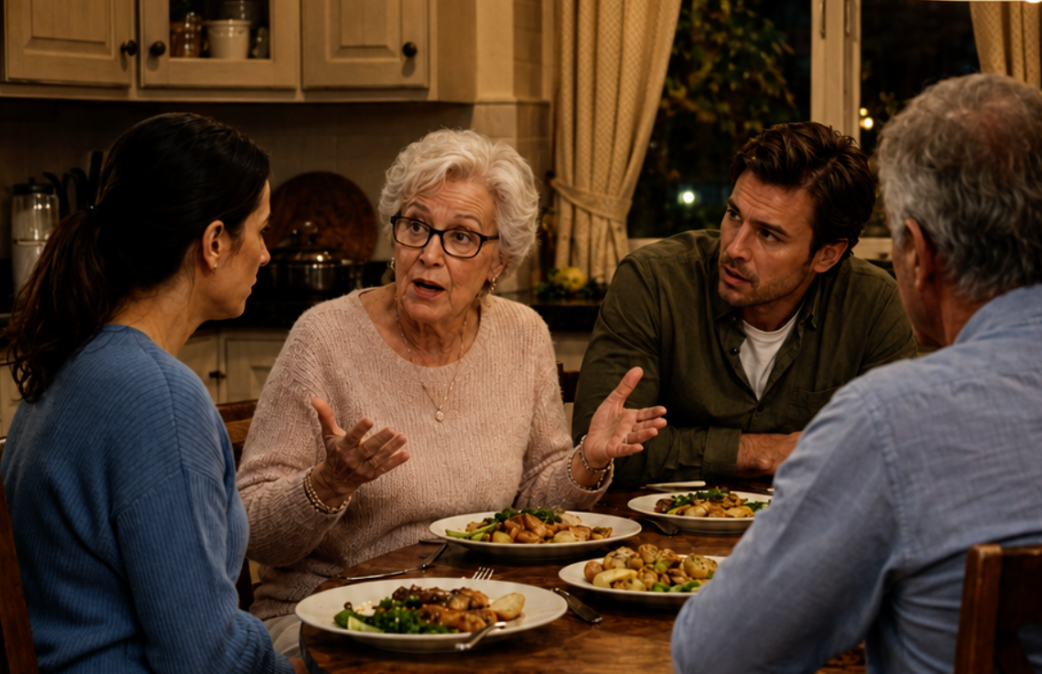
Why Did Your Parents Buy an Apartment? — the Mother-in-Law Cried Out. They Should Have Saved the Money for Something Useful; You Already Have a Roof Over Your Heads
— You hung the towel in the wrong place again. Mom told you to put it only on the rail by the radiator.
Vera, standing barefoot on the warm floor, flinched almost imperceptibly. She turned toward her husband, holding a plate with the remains of dinner in her hands.
— Anton, I just dried my hands. It isn’t even wet.
— So what? — He walked past her, lightly brushing her shoulder. — Why give her a reason to complain? She’ll spend the whole evening grumbling again.
Vera silently placed the plate in the sink. Outside the window, the neighbors’ air conditioner rattled, while the wall clock with its faded numbers ticked in the kitchen. Once again, none of it was hers.
They had been living here for five years now — in his parents’ apartment, together with his parents. And every evening she felt as though she were only a temporary tenant: everything belonged to someone else, from the furniture to the curtains. Even the bathroom mirror seemed to reflect someone else’s face.
— And clear the toys out of the living room, — he added from the doorway. — Dad said there’s a stain on the carpet. Petya must have spilled juice.
She didn’t answer. She picked up a cloth diaper and a toy car and went into the children’s room. Petya was sitting on the floor, building something with construction blocks.
— Mom, are you going to work tomorrow?
— Not tomorrow. We’ll be home. We’re only going to Grandma’s country house.
Petya grimaced.
— Can we not go? I want to watch cartoons with you.
Vera smiled, but sadly.
— We promised we’d come. There are strawberries there, and Dad will make barbecue.
He said nothing, continuing to stack the blocks into a tower. Vera could feel it — it was starting again.
The next morning, the apartment was in chaos. Anton nervously rummaged through the drawer where they kept the keys.
— Who touched my things? Where’s the key ring with the green keychain?
Petya ran barefoot through the hallway, carrying his sneakers into the bathroom and then back again.
— Mom, where’s my red car? I’m not going without it!
Vera held a box containing a pie wrapped in a bag against her chest.
— We’ll find everything. Come on, hurry up or we’ll be late.
Anton finally found the keys, slammed the door irritably, and headed toward the elevator. Vera locked the apartment behind them, lingering for a moment as she looked at the doormat.
“Not mine. Even the doormat isn’t mine,” flashed through her mind.
They drove in silence for a long time. Only quiet music and the hum of the road filled the car. Then Vera asked softly:
— Are you sure everything will go smoothly?
Anton didn’t answer immediately. His hands tightened around the steering wheel a little harder than necessary.
— I’ll talk to Mom. If anything happens. Don’t start worrying in advance, okay?
Petya suddenly lifted his head from his tablet.
— Dad, why don’t Grandma and Grandpa live with us now? Don’t they love us anymore?
Anton gave a slightly strained chuckle.
— Of course they love us. It’s just… they’re staying at the country house right now, growing vegetables for the winter.
Vera looked out the window. Green treetops, old roadside shop signs, and faded advertising banners rushed past.
At the country house, only Irina Pavlovna came out to greet them. Vladimir Andreyevich was in the yard, busy with the barbecue grill and seedlings. Vera had barely put the box with the pie on the table when she heard:
— Petya has a stain on his T-shirt. He needs to change. And what, the pie is already cold? I told you to wrap it in a towel.
— It is wrapped. It’s just… the drive was long.
— And don’t put the bags on the carpet, — her mother-in-law muttered. — They’ve been outside; they’re dirty.
Vera restrained herself. Anton pretended not to hear. Petya was already running into the yard.
A little later, Vera and Irina Pavlovna were cleaning vegetables in the kitchen. Each woman had her own cutting board and her own knife.
During their conversation on the veranda, Irina Pavlovna explained how zucchini kept better on an enclosed porch and how many jars of cucumbers they had already preserved — “for the winter, so we’ll have enough.”
Vera listened absentmindedly, barely paying attention. It was as though she were standing inside someone else’s household, where no place had ever been left for her.
— I see you didn’t peel the zucchini. I don’t like the skin.
Vera silently scraped away the peel. The dishes sounded different in this house, foreign metal against foreign tiles. Even the air in this kitchen seemed to belong to someone else.
At the table, once everyone had sat down, they talked about the weather and the garden beds. Petya accidentally knocked over a glass of fruit compote.
— Honestly, — Irina Pavlovna sighed loudly, — with you people, everything always misses the mouth.
Anton remained silent. Vera immediately reached for a napkin to wipe up the spill, while Petya lowered his head.
Then he quietly asked:
— Grandma, will you show me the strawberries?
— Later, sweetheart. Let them ripen a little more, — Irina Pavlovna said.
Suddenly Anton squeezed Vera’s hand beneath the table and said aloud:
— Mom, Dad, we have news. We’ve been given an apartment. We’re moving soon.
Vera felt everything inside her tighten. A pause hung in the air. Irina Pavlovna stared in shock, first at Anton, then at Vera.
— Who gave it to you? — she asked sharply.
— My parents, — Vera replied quietly but firmly.
— So you kept it from us? You were making decisions behind our backs all this time?
— We just… — Vera tried to speak gently. — We wanted to make sure everything would work out. At first, we could hardly believe it ourselves.
— Believe it? — her mother-in-law almost shouted. — You just didn’t want unnecessary discussions, did you? And no one needed to ask me?
Her voice grew sharp.
— Why did your parents buy you an apartment? They should have saved the money for something useful. For their grandson’s education, for example. You already have a roof over your heads. What else are you unhappy about?
Vera lowered her eyes slightly. Her heart pounded against her ribs.
— Well, now let your mother come over and wash your floors and look after Petya, — Irina Pavlovna continued. — Since everything is yours now. So apparently we were just unnecessary all along.
Silence.
Petya quietly buried his face in his napkin. Anton stood up with a heavy sigh. Vera remained seated, feeling heat rise from her cheeks toward her eyes.
Vladimir Andreyevich got up to meet Anton, placed a hand on his shoulder, and said:
— Come on. Help me with the grill.
Anton nodded and followed his father.
He sat down on a bench beside the barbecue grill and stared at a pile of wood that had not yet been lit. Beside him, his father slowly unrolled foil and laid out the meat. The air in the yard was thick with the smell of smoke and grass.
— You did the right thing, — he said quietly without looking at his son. — It’s time to grow up. It’s difficult for your mother right now, but you shouldn’t back down.
Anton nodded, almost as though reassuring himself. Then he reached for the fire starter and silently began lighting the wood. The flames burst to life abruptly, as though responding to all the tension that had built up inside him.
A door slammed behind the house. Vera stood on the porch holding a cup of tea that no one had touched. From around the corner came Irina Pavlovna’s muffled voice. She was talking irritably to someone, fragments drifting through the air:
“They don’t appreciate anything,” “they hid everything from us,” “nobody needs us,” and most importantly, “not a trace of gratitude…”
A neighbor from the garden nodded toward Vera and said something about the weather. Vera smiled politely, though she hadn’t heard the words.
She went back inside. Petya sat by the window, watching his grandmother walk out through the gate.
— Mom, is Grandma angry with us?
Vera sat beside him and wrapped an arm around his shoulders.
— No. It’s just difficult for her right now. She loves us very much, she just… doesn’t know how to let go.
Petya nodded and rested his head on her lap.
The smell of lunch still lingered in the kitchen. Plates cooled in silence. Vera looked around the table: someone had left a spoon in the salad bowl, someone hadn’t finished their compote. And there was that silence — the kind that comes after a long, difficult conversation.
A few minutes later, everyone gathered in the yard again. Vladimir Andreyevich was already grilling the meat. Anton was slicing bread. Vera put down a bowl of tomatoes and took out some juice for Petya.
Irina Pavlovna appeared by the fence as though nothing had happened.
— Where’s Petya?
— I’m here, Grandma, — he ran over and looked up at her. — Will you come visit us?
His grandmother froze. She looked at her son, then at her daughter-in-law, and finally at her grandson.
She nodded stiffly.
— I will. If you invite me.
Anton exhaled. Vera didn’t answer. She simply removed an empty cup from the table and went to get some napkins.
Lunch was tense. Petya talked about a cartoon, while Vladimir Andreyevich asked about the new apartment — what neighborhood it was in and which floor.
Vera answered briefly.
At one point, while almost automatically turning vegetables on the grill, Vera suddenly said aloud:
— I’m tired of being a guest in this house. I just want a home of my own. Even if it’s tiny. As long as it’s mine.
Anton turned and looked at her for a long moment. Vladimir Andreyevich looked away. Irina Pavlovna said nothing.
After lunch, Vera went inside to gather their things. She folded the towels, closed the jar of jam, and wiped the sink. Then she stopped by the window.
As she packed, footsteps sounded behind her. Irina Pavlovna appeared in the doorway, as though by accident.
— Don’t forget the jam. There’s a little left in the jar. It would be a shame if it spoiled.
Vera turned and nodded. But her mother-in-law didn’t leave.
— So now you’re going to do everything your own way, are you? Fine. Just don’t be surprised if there’s no way back. If you’re leaving, then leave completely.
She turned away and, without waiting for an answer, walked out of the room. A couple of minutes later, the gate slammed shut.
Vera went to the window. Irina Pavlovna was walking along the path toward the neighbor’s house without looking back.
No “goodbye.”
No “safe trip.”
On the way home, Petya asked again:
— Is Grandma going to come?
— Of course, — Anton answered. — Just a little later.
— Does she love us? — he asked.
Vera looked at her husband, then into the rearview mirror at her son.
— Very much. Just in her own way. Grandmothers can be like that sometimes.
Back home, Vera barely spoke. They took off their shoes and unpacked the bags.
Suddenly Petya remembered something.
— Mom, I left my red car at Grandma’s… I forgot it under the bed. Can we go get it?
Vera nodded.
— Of course. We’ll definitely get it.
He sighed with relief and went over to the boxes.
On the way home, Vera called her own mother and told her about the argument.
— You did the right thing, — her mother said. — But try to understand Irina too. This isn’t easy for her. I can hear how hard this is for you, Vera, but please don’t tear the family apart. Right now everyone seems to be suffocating, everyone’s at their limit. Just get through this, okay?
— All right, Mom, — Vera said quietly before saying goodbye.
The next day, they went to the new apartment, carrying boxes, bags, sacks of clothes, and toys.
Everything seemed unfamiliar: the smell of fresh paint, the empty walls, the echo of footsteps. But it was there that Vera felt for the first time that something of her own was beginning.
While unpacking, Vera suddenly found an old kettle in one of the bags — the same one Irina Pavlovna had given them for their first wedding anniversary.
It was gray, with a slightly chipped handle, but it still worked.
Vera ran a finger over it and unexpectedly smiled through her tears.
That evening, Vera, Anton, and Petya ate dinner sitting on boxes because the furniture had not yet been assembled. A candle burned nearby; the electricity meter had not yet been connected.
Petya got ketchup on himself, Anton wiped it off with his sleeve, and they all laughed.
— Now everything really is ours, — he said.
Vera nodded and, for the first time in a long while, felt how easy it was to breathe.
Morning in the new apartment greeted them with cold. The radiators still weren’t working, and the hallway smelled of fresh paint and some indescribable sense of a new beginning.
Boxes covered the floor. An old backpack containing documents stood by the entrance, while the kettle cooled on the windowsill.
Vera woke before everyone else, sat on the edge of the mattress, and looked around.
A home — still without curtains, with bare windows, unfamiliar, but for the first time in five years, nobody was stopping her from simply being herself.
Anton shifted in his sleep, burying his face in the pillow.
Vera went into the kitchen, poured herself some tea, and sat on an empty stool. From the landing came the sound of someone adjusting a doormat.
Then she heard Petya’s bare feet padding across the floor as he went to get some water.
— Mom, is Grandma coming today? — he asked, staring at a plate of bread.
Vera shook her head.
— I don’t know, Petya. Maybe not today. Shall we call her later?
Petya shrugged and reached for his toy car.
At breakfast, Anton looked thoughtful. He listed everything they still needed to buy: curtain rods, light bulbs, a rug.
He kept glancing at his phone, but he didn’t call his mother.
The silence was new and strange — no need to look over their shoulders, no one else’s rules to follow.
At lunchtime, Vera’s mother arrived carrying a pot of soup and a bag of apples.
She walked through the rooms, touching the walls and putting cups into the cupboard. The apartment smelled of pie, and steam from the kitchen drifted out through the open window.
— Do you like it here? — she asked when Vera, exhausted, lowered herself onto a box.
Vera smiled uncertainly.
— I’m not used to it. Everything feels so… empty.
— That’s all right. At least now you’re the lady of the house, — her mother said. — You’ll get used to it.
That evening, after Petya had fallen asleep, Anton finally called his father.
Vladimir Andreyevich answered quickly, almost as though he had been waiting for the call.
— So, are you settling in? — he asked.
— Yes, little by little. We’re getting used to it, — Anton spoke calmly, but Vera could hear from his voice how difficult it was for him. — Tell Mom… if she wants, she can come over. Petya misses her.
— I’ll tell her, — his father said quietly. — It’s still difficult for her, but you did the right thing, son.
Vera heard fragments of their conversation but didn’t interfere. Instead, she picked up a cloth, wiped the table, and arranged the forks inside a drawer.
Outside, evening darkness settled over the neighborhood.
The smells of other people’s dinners entered their new home. Voices from neighboring apartments drifted through the walls, and doors slammed somewhere in the building.
At one point, Vera caught herself listening — wondering whether someone might suddenly arrive, whether someone would enter the room without knocking.
But it remained quiet.
Only the familiar clock ticked — the same one she had brought from the parents’ apartment.
A familiar sound in an unfamiliar home.
A couple of days later, Irina Pavlovna called.
She asked about Petya, the curtains, and the electricity meter.
— How are you doing over there? — Her voice was restrained.
— We’re getting used to it, — Vera answered cautiously.
— Be careful with the kettle handle. It’s been cracked for a long time, — her mother-in-law added.
Vera smiled slightly.
— All right. Thank you, Irina Pavlovna.
— Don’t call me that. I’m not a stranger, after all, — she said almost in a whisper before hanging up.
Anton heard her and smiled.
— See? We’re still family.
Vera looked out the window at the gray sky and the balcony where the laundry was hanging exactly the way she wanted it.
For the first time in years, she wasn’t afraid of the silence.
That evening, Petya asked about his grandmother again.
— Is she going to come visit us?
Vera sat down beside him and looked at her son.
— She will. Sometimes adults need time to get used to changes too.
He wrapped his arms around her neck and stayed silent for a long time.
Before bed, Vera walked through the rooms, checked the windows, and arranged things on the shelves.
The kitchen smelled of apples and morning tea.
Everything still felt temporary, but with each passing day, it became a little more like home.
When Anton turned off the light, Vera lay down beside him, closed her eyes, and suddenly realized something she had not felt in a very long time:
Here, no one would tell her how she was supposed to live.
She could breathe freely.
She could make mistakes.
She could be herself.
The silence in their new home had become her ally.