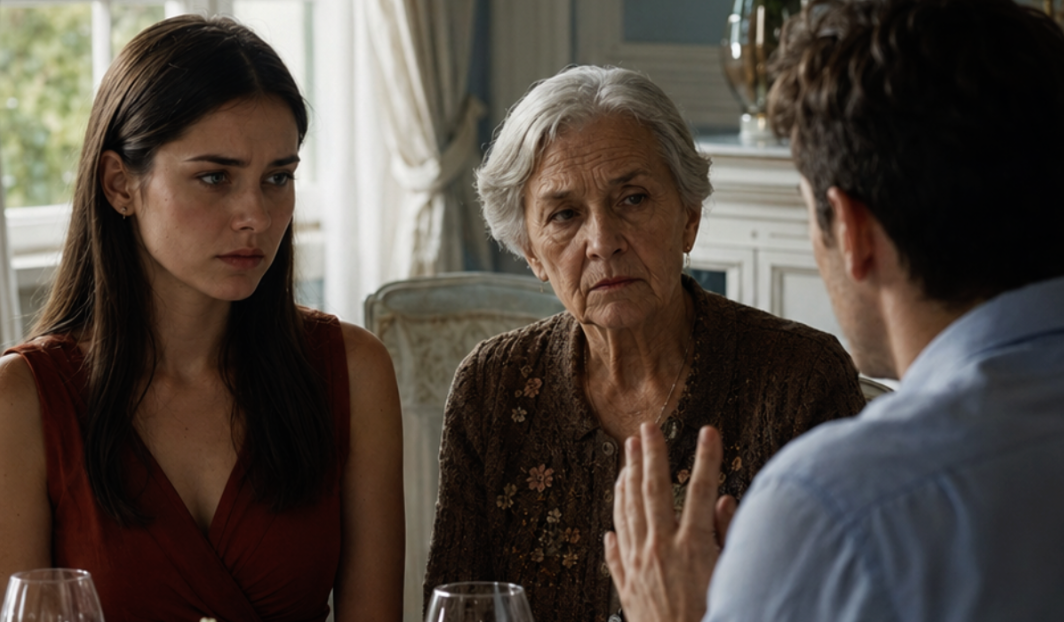
Do you have a minute?” Dmitry asked, scratching the back of his head and glancing guiltily toward the kitchen, where the smell of burned pasta was already drifting in.
Men’s Clothing
Svetlana tiredly took the laptop off her knees, got up from the sofa, and, without taking her eyes off her husband, reached for the stove. She managed to save the pasta after all, although life itself, it seemed, had long ago burned and stuck to the bottom of the pot.
“Talk,” she said, turning off the burner while oil hissed angrily in the pan. “But say it straight. No ‘do you have a minute’ nonsense. I can already smell bad news.”
“It’s about Mishka,” Dmitry swallowed air as if it were drier than the pasta. “He’s in trouble.”
“Again?”
Svetlana leaned against the refrigerator, gripping its door as if holding on to reality itself — a reality that creaked in the mornings, perhaps, but was at least stable.
Mishka was Mikhail, Dmitry’s younger brother. Always in debt, always tangled up in some “misunderstandings,” “accidents,” and “confusions.” A man with a severe allergy to responsibility and money that he somehow managed to lose before he even got it.
“He signed a contract for a plumbing supplies delivery,” Dmitry said quickly, as if afraid she would interrupt him and not let him finish. “But it was the wrong batch. By mistake. And now he owes money. A lot.”
“How much is ‘a lot’?”
“Five hundred.”
Svetlana blinked.
“Five hundred what? THOUSAND?”
“Well… yes.”
“You have got to be kidding me. He has no apartment, no car, he still lives on your mother’s sofa. What exactly was he planning to use to pay back that kind of money?”
Dmitry lowered his eyes. He stepped back toward the windowsill and began fiddling with the dried basil in the pot she had bought three months earlier from an online marketplace during one of those sudden fits of wanting “to live like normal people.”
“He asked… if we could help.”
“No.”
Svetlana said it immediately. Without a pause. Without reflection.
“Sveta, he’s my brother.”
“And I am your wife. For now. In case you forgot.”
Women’s Clothing
At that moment, of course, she should have turned around, slammed the door dramatically, gone to the bathroom, and cried quietly like women do in TV dramas. But instead, she took out a clean pot and began filling it with water for a new side dish. Because people still needed to eat.
The silence did not last.
“Mom called,” he continued, clearly at the wrong time — but then again, when else, if not in hell?
Svetlana swallowed her irritation.
“Let me guess whose side she’s on.”
“Sveta…”
“Don’t. I know. She’s on the side of the golden boy with loans.”
Nina Fyodorovna appeared that very evening, as soon as she heard that Svetlana “did not want to participate in helping the family.”
“Well, hello, my dear joy,” she drawled, entering the hallway like the mistress of the house, without removing her boots — boots in which she had clearly walked through every spring puddle in the city.
Svetlana clenched her teeth. She had neither the strength nor the time left for diplomatic smiles.
“Misha is ours. He is family. We will not abandon him,” Nina Fyodorovna declared, hanging her coat on their hook, under which Svetlana’s tights had been drying since morning.
“And what am I to you? Spare change from love?”
“You are a wife. And a wife supports her husband. And a husband supports his brother. It’s perfectly logical.”
Svetlana turned around.
Men’s Clothing
“Logical? So now the two of you decide who we owe money to and how much we should give? Maybe I should just sell one of my kidneys and make it easier for everyone?”
“Svetlana,” Dmitry interrupted, “don’t…”
“No, Dima. I will. I can’t always be the scapegoat whenever your brother does something stupid and your mother bats her eyelashes and says, ‘But he’s trying!’”
Nina Fyodorovna came closer, sat down at the kitchen table, and clasped her hands together as if preparing to pronounce a sentence.
“You know, Svetlana, I never liked you from the very beginning. You are very cold. Always counting everything, always doing things your own way. But family is not accounting. Family means sacrifice. It means thinking about someone other than yourself.”
“Then you sacrifice. I already do. Every day.”
Silence fell over the house. But not the cozy evening kind, with tea and TV shows. The kind that makes something tremble inside your chest.
By the time she packed, it was already past midnight.
“Where are you going?” Dmitry asked, standing in the bedroom doorway.
Svetlana zipped up her bag. Inside were only documents, a charger, and the poor little bottle of perfume she used whenever she needed to “pull herself together.”
“To my friend’s place. Olga’s. In Solntsevo.”
“But you can’t… don’t leave. We’ll… figure it out.”
“You’ve already chosen. You chose to be a son and a brother. I needed a husband.”
He did not answer.
Already standing on the stairwell landing, she heard Nina Fyodorovna’s voice:
“Well, there she goes, showing her true colors. I always said a woman like that wouldn’t last.”
Svetlana smiled sadly. Without malice. As if she had read the ending of a book that had been obvious all along.
It was cool outside. The streetlights shattered across the wet asphalt. Svetlana walked toward the metro, holding her umbrella like a shield against memories. The first step toward freedom turned out to be quite literal — a step away from the apartment where she no longer existed. Not in photos. Not in conversations. Not in decisions.
And Misha? Misha was probably already drinking tea in their kitchen.
From their mug.
The one with her inscription: “The Mistress of the House Can Do Anything!”
She gave a small laugh. Yes. She could.
But she did not have to.
Svetlana lived with Olga. Or rather, she slept on a folding bed in the children’s room, surrounded by plush hippos, children’s books, and a toy vacuum cleaner that mysteriously turned itself on at night. Olga had a son — Arseny, six years old, a child with the temperament of an Amazon parrot and the vocabulary of a taxi driver from Butyrka. But despite all the inconvenience, it was quiet there. And after a week in her former apartment, that already felt like a vacation in Switzerland.
“Are you sure you’re all right?” Olga asked one day, pouring coffee into a cracked mug with the inscription: “Pour it and don’t ask.”
“Yes. Almost. I’m just tired of being guilty,” Svetlana said, taking the mug in both hands as if she could warm herself with it. “Tired of proving that I’m not a rattlesnake, just a woman who wants… well, something ordinary: to live peacefully, with her husband, without endless ‘Mishka messed up again’ and ‘Mom didn’t like that.’”
Men’s Clothing
“Has he called you?”
“He has. Five times. And his mother too. Not ‘my mother-in-law’ — his mother. That’s my title now: ‘former daughter-in-law.’ Demoted. Like a captain who escaped a sinking ship.”
“Well, to be fair, you escaped just in time.”
Svetlana laughed. For the first time in a long while — sincerely.
A week passed. Then another.
Dmitry came by. First with flowers. Then with promises. Then with reproaches. He carried exhaustion and fear in his eyes. But not a solution.
“Sveta, you know I love you. I really do. But you can’t just leave. Everything was… normal between us!”
“It was convenient. For you. And I was like an ATM. Or a therapist. Or a shield against your mother. Maybe all at once.”
“Mishka is really being threatened. Debt collectors are leaving filth in his entrance hall. His car was scratched. They came after him. He’s panicking.”
“And you? Are you panicking too?”
He was silent.
Svetlana looked out the window. In the courtyard, children were riding bicycles, their laughter sounding as if everyone in the world had a home where they were expected and protected. Her home was empty.
“Sveta, I’m begging you. Help. Well… sell your apartment. Or use it as collateral. We’ll pay it back later. Properly. Like decent people.”
She turned around slowly.
“Are you serious?”
“Yes. Misha didn’t do it on purpose. He just… he doesn’t know how to live any other way. He’s just unlucky. That’s his fate.”
Svetlana laughed coldly.
“Your whole family has that fate. I’m the only idiot with responsibility and a mortgage.”
The next day, Nina Fyodorovna called her. She did not even say hello.
“I thought you were smarter. Do you really want your husband to live with shame on his face? Don’t you want the family to pull through? Don’t you want things to be easier for him?”
“Why is it always ‘him’? Why not me?”
“Because you are a woman. A wife. You must. So you left. And what of it? Do you think you’ll be happy alone with that independence of yours?”
“Better alone than stuck between the two of you and your loans.”
“Oh, so that’s how it is. And I thought you had a heart. But you’re just selfish. Don’t worry, though. We’ll manage without you. Just don’t you dare come crawling back later. Everything is already fine here without you.”
“Tell your son I agree to the divorce.”
The conversation ended with the click of the phone.
Svetlana did not cry. There were no tears left. They had ended somewhere between the wedding and Nina Fyodorovna’s last visit with the phrase: “I bought this dress, so I decide how you will look in it.”
She filed for divorce. On her own. Without scandals. Without demonstrations. She simply brought the papers, handed them through the window, and signed.
That evening, she sat at Olga’s, listened to cartoons from the next room, and scrolled through old photos on her phone. In one, she was in white, standing with Dmitry. In another, she was with her parents, who were no longer alive. Things had been complicated with them too, but at least no one had climbed into her life under the guise of “help.”
The phone rang. Dmitry.
“So what did you achieve?” His voice was sharp, breaking.
“Myself.”
He fell silent. Then said:
“Mom said you owe her money for the dress.”
Svetlana smirked.
“Let her send me the bill. I’ll attach her favorite saying about how ‘family means sacrifice.’”
That evening, she took the wedding dress, still hanging in its cover in Olga’s wardrobe, and sold it to a consignment shop. Without regret.
“Good fabric,” the saleswoman remarked. “Like new.”
“Practically unused for its intended purpose,” Svetlana replied, and walked out.
Outside, a light drizzle was beginning.
She opened her umbrella, which had the words: “Not Afraid of a Single Drop!”
And truly, she was not afraid anymore.
Three months passed. Svetlana rented a small studio near the metro station. Its windows looked out onto a gray garage cooperative and some construction site — eternal, like Russian bureaucracy. But it was quiet. And no one said:
“Why didn’t you call Artyom’s mother on March 8?”
“Why didn’t you make chicken broth the way Dmitry likes it?”
“Don’t you think working at an agency is just something to do between having children?”
Now everything was different.
No one demanded anything.
Sometimes the silence was hollow. Especially in the evenings, when no one called — not her ex-husband, not her friends tired of other people’s divorces, not Aunt Nina with the phrase: “And I thought you were a decent woman.”
Men’s Clothing
Svetlana learned to eat dumplings for dinner — not out of self-pity, but simply because it was convenient. The dress at the consignment shop was bought. She took the money to a café and ordered oysters for herself. She discovered they tasted like a rubber sock, but at least now she no longer had to want them.
And into that clear, almost sterile life, May arrived.
And with it — Misha.
The call came in the evening.
At first, the phone remained silent for a long time. Then came a text message:
“Sveta, hi. It’s Misha. I urgently need to talk. Please. It’s really important. It’s not about money. Well, not exactly. Can we meet?”
Svetlana exhaled.
“Good Lord, what now? Kidneys? A loan for a goat? Or has he decided to set himself on fire by the entrance?”
They met in a corner café that smelled of old grease and boiled carrots. Misha arrived with a crumpled face and a fresh bruise under his eye.
“Sveta… hi. You look great,” he said, shrinking into his chair.
“You look awful. What happened?”
He looked around like a hunted animal and whispered:
“They’re pressuring me. Seriously. These are serious people. Very serious. I didn’t know what I was getting into. And Artyom said that you… well, that you refused to help. But I came to you anyway. You see, you’re… you’re kind. And fair. I thought maybe you… sold the apartment?”
“Yes. But I bought myself oysters. I didn’t like them at all.”
Misha blinked.
“I’m serious. They have documents now, debts, some paperwork. They said they’ll sue Artyom if we don’t sort it out. Everything is on him now. And they might… well…”
“What?”
“They dragged your mother into it. Can you imagine?”
Svetlana stared at him for a long time. Then she took out a cigarette. She did not light it — just rolled it between her fingers.
“Why do all of you keep thinking I owe you something? Why am I the only one you can shake by the gills just because I was the most convenient person in that family?”
“Well, you don’t want Artyom to go to prison…”
She leaned toward him.
“Did he want me to break?”
Three days later, Dmitry called her. His voice was hoarse and strained.
“Sveta, Mom is in the hospital. Blood pressure, nervous breakdown. She says you destroyed all of us. Misha is scared. I don’t know what to do anymore. Do you even understand what you’ve done?”
“Yes. I survived.”
“You really won’t help? Not a single kopeck?”
“How much does my peace cost, Dima? Do you know? I know now. And it is not for sale.”
“But you… you still haven’t stopped loving us, have you?”
“And when you stayed silent, like an ostrich in socks, standing behind your mother’s back — did you love me? Or were you just waiting for me to become furniture again?”
He hung up. She did not cry. By now, that had become a habit.
A week later, a letter came. A paper one. From Nina Fyodorovna.
“I still believe you were not ready for family. You lacked patience. And family means sacrifice. I sacrificed. My youth, my health, my son. But you couldn’t. And if not for that dress, nothing would have come of it. And since you sold it, sell your pride too. After all, you never wore that once either.”
Svetlana smiled. And threw the letter away.
Along with the empty oyster boxes.
She was riding the metro, listening to Italian pop music in her headphones.
An elderly woman beside her nodded toward her book.
“Is it good? About love?”
“About divorce,” Svetlana replied. “But with a happy ending too.”
“Well, thank God. Everything these days is about suffering.”
“Oh, there’s plenty of suffering in this one. The heroine simply survived.”
“That’s rare.”
Svetlana nodded.
And for the first time in a long while, she wanted to buy herself flowers.
Just because.